Get Full Government Meeting Transcripts, Videos, & Alerts Forever!
Get email alerts on the Education Goals topic
No spam. Unsubscribe anytime.
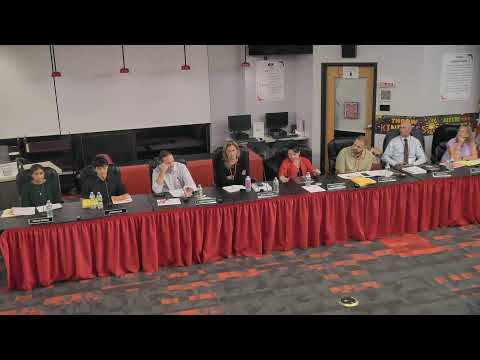
District outlines goals: profile of the graduate, literacy overhaul and digital literacy plans
Summary
The superintendent and cabinet presented district goals including a ‘profile of the graduate’ rubric, roll-out of an IMSE foundational literacy program at elementary schools, STAR assessment tracking, and implementation of New York State digital-fluency standards.
The district’s cabinet presented a coordinated set of goals designed to “elevate, engage and inspire students,” including a districtwide profile-of-the-graduate rubric, an elementary foundational-skills rollout and a broadened definition of literacy that includes digital and financial literacy.
The person introducing the presentations (Superintendent, identified only by first name “Brian” in the transcript) said the district vision is “to elevate, engage, and inspire students” and described a districtwide cycle of continuous improvement tied to those priorities.
Assistant Superintendent for Curriculum and Instruction Doctor Arrieta described the district’s literacy work: the district selected IMSE (a multi-sensory foundational-skills program) for implementation at William O. Schaefer and Cottage Lane this year, with fifth grade training to begin in the second semester. “This year is about establishing baseline data,” Arrieta said, noting teachers are administering IMSE assessments and tailoring instruction to student needs.
Arrieta said the district will resume review of its broader ELA reading-and-writing curriculum now that IMSE has been introduced, and that the goal includes remediation strategies for older students who did not receive multi-sensory instruction earlier.
Assistant Superintendent for Technology and Innovation Mister Brady outlined the district’s digital-literacy goal and connected it to the New York State Computer Science and Digital Fluency Standards implemented in February 2024. He described a scaffolded approach from kindergarten through high school that covers digital citizenship, online safety and, in later grades, critical evaluation of sources and AI literacy. Brady described a classroom practice called “pause and think online,” using a red-yellow-green mnemonic to teach students when to stop, check with an adult or proceed.
Assistant Superintendent for Human Resources Doctor Lloyd summarized building-level character and citizenship initiatives: Start with Hello Week at William O. Schaefer; the RULER program and mood meters at Cottage Lane; advisory small-group sessions at South Orangetown Middle School; and the RISE attributes (integrity, empathy, responsibility, critical thinking and leadership) embedded in high-school report cards.
Assistant Superintendent for Business and Operations Miss Espinal connected the goals to budget planning and described the district’s budget calendar: templates and budget-builder meetings in November and December, review of state-aid and tax-cap information in January and a preliminary budget presentation in March ahead of the May 19 community vote.
Board members and student ex officio members also commented: a student suggested adding emphasis on limiting nonproductive personal-device use at home to support literacy gains. Trustees praised year-over-year gains in early-grade reading proficiency presented during the session and urged continued focus on implementation and measurable outcomes.
The district did not adopt new policy language at the meeting but committed to continuing implementation work in schools and to presenting school-level goals in upcoming board meetings.