Get Full Government Meeting Transcripts, Videos, & Alerts Forever!
Get email alerts on the Housing Policy topic
No spam. Unsubscribe anytime.
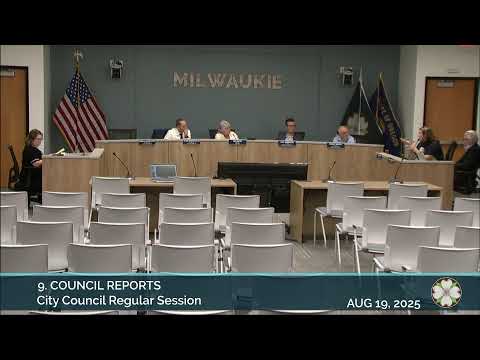
Milwaukie council adopts first reading of affordable‑housing incentives package after public hearing
Summary
City staff proposed a new MMC 19.511 package of zoning incentives intended to spur affordable housing; council held a public hearing, took public comment and approved the first reading and adoption motion with amendments and planning commission recommendations; second reading set for Sept. 2, 2025.
The Milwaukie City Council held a public hearing on proposed zoning amendments to create a single code section (MMC 19.511) offering a package of incentives for affordable housing — a step staff tied to the city’s state‑required Housing Production Strategy.
Planning Manager Laura Bridal and Senior Planner Vera Colias presented the package, which consolidates up to 10 variance requests into a single application and ties different incentive levels to tiers of income restrictions. Colias described a tiered affordability structure in which, for example, developments that target households at 60–80% of area median income (AMI) must make 50% of units affordable at that level, while deeper affordability tiers require fewer units at those lower incomes. Staff said income‑restricted rental units would need to remain affordable for 99 years under the draft code and ownership units for 60 years; the Planning Commission recommended aligning ownership and rental affordability periods (60 years) and recommended measuring townhouse runs by linear frontage rather than a fixed unit count (200 linear feet rather than a count of six units).
The incentive package includes: reductions in side, front and rear setbacks; a 25% reduction for common area / landscaping minimums (subject to the city tree code); increased maximum lot coverage; an optional building‑height bonus (one story or up to 20 feet) for mixed‑use and multifamily developments (planned for DMU/GMU and high‑density residential zones, not for middle‑housing cottage clusters or townhouses in lower‑density neighborhoods); allowance of ground‑floor residential in parts of downtown where it was previously restricted; flexibility on bike parking requirements; adjustment options for facade articulation and glazing area (up to a 30% adjustment with a 12% glazing minimum); and an expedited type 2 review (100 days) with priority processing among city departments.
Speakers at the hearing included residents and members of community groups who said they support more affordable housing but asked for stronger protections for tree canopy, better enforcement of affordability covenants, and limits on how far setbacks and open‑space rules should be reduced. Resident Dylan Cruz said the Harrison Street example illustrates where design and streetscape concerns can outpace the city’s expectations and urged the council to prohibit height increases for middle housing and to ensure stronger enforcement. Another neighborhood resident worried that developers could exploit variances to squeeze units close to property lines and reduce vegetation. Planning staff and city legal/administration staff said the proposal requires recorded affordability instruments and deed restrictions before final occupancy and that enforcement would rely on the city's standard land‑use conditions and recorded instruments.
During council deliberations, members discussed tradeoffs between accelerating affordable housing production and preserving tree canopy and neighborhood character. Several members said they supported the package overall but asked staff to revise language and implement the Planning Commission recommendations: (1) align the affordability term for ownership and rental units at 60 years (Planning Commission recommended 60 years for both); and (2) measure townhouse continuity by linear frontage (200 feet) rather than a fixed count. The council approved a motion to adopt the ordinance (file ZA‑2025‑003) for first reading, with the amendments and the understanding that a second reading and formal adoption would occur at the next council meeting on Sept. 2, 2025. The motion passed; because the vote was not unanimous the ordinance will be read again at the next regular meeting for final adoption.
Ending: Council members said they want follow‑up analysis and monitoring of how the incentives affect tree canopy, streetscape design and enforcement outcomes; staff said they would incorporate the Planning Commission suggestions and bring revised language for the next hearing.