
McHenry County mental health board votes to invest funds with county treasurer; approves annual funding recommendations
Get AI-powered insights, summaries, and transcripts
Subscribe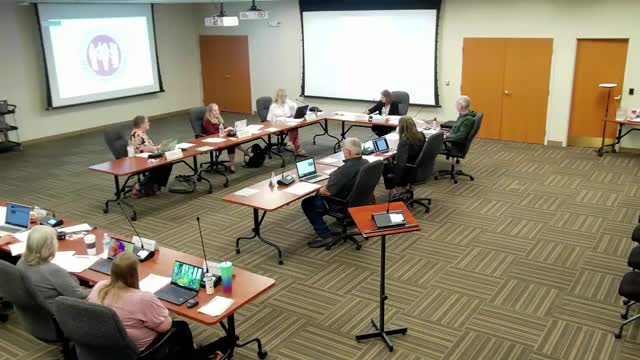
Summary
The McHenry County Mental Health Board voted to move its investments to the McHenry County Treasurer’s office and reviewed FY‑26 funding recommendations that largely keep programs at flat funding with targeted increases and an unallocated reserve.
The McHenry County Mental Health Board voted to invest the board’s funds with the McHenry County Treasurer’s office and approved a set of annual funding recommendations that largely maintain flat funding for providers while keeping a $310,991 reserve for emergent needs.
The decision to move board investments followed a presentation from McHenry County Treasurer Donna Kurtz and a recommendation from the board’s Finance and Audit Committee. Board members said the treasurer’s approach should produce higher returns that can be distributed to local mental health providers. “Basically, we will be investing with the county treasurer’s office and more money that we can make, more money we can give out to the agencies, basically,” a board member said during the discussion.
Why it matters: The investment change could increase the funds available for local programs, while the board’s annual allocations determine operating revenue for dozens of service providers in McHenry County. The board’s funding decisions affect access to crisis services, court diversion programs, outpatient treatment and youth services across the county.
Board action and immediate context - The Finance & Audit Committee recommended moving the Mental Health Board’s cash from the existing account arrangement into investments managed by the McHenry County Treasurer’s office. The committee also asked staff to develop an internal Mental Health Board policy to supplement the county investment policy; that draft policy is scheduled for committee review in October. - The board voted to adopt the committee’s recommendation and the treasurer’s amendments to the decision memo; the motion passed. - The board also approved standard meeting business during the session: approval of the Aug. 26 minutes and the consent agenda (financial reports, the opioid fund report, and monthly mental health bills).
How the funding recommendations were developed Board staff described a multi-step review of applications: reviewers scored each application using a rubric, checked budgets and compliance histories, reviewed prior meeting attendance and program outcomes, and then proposed allocations. For fee‑for‑service programs, staff recommended flat funding or reductions tied to actual utilization; grants and purchase‑of‑position requests that had no material issues were recommended for either flat funding or a 6% cost‑of‑living adjustment. Staff recommended leaving unallocated funds in reserve for emerging needs.
Key program decisions and examples - Staff recommended flat funding or modest increases for most long‑standing providers based on utilization. Examples noted in the presentation included Live for Lolli (flat funded) and several access grants recommended for flat funding. - New or small requests were more often not recommended: staff recommended not funding Easterseals of DuPage’s small $9,000 request because the application showed McHenry County clients as a small share of the agency’s caseload and reporting requirements could be difficult to meet under the usual grant agreement. Staff suggested the board could consider a smaller intergovernmental/contract arrangement (ICA) instead. - Rocking the Spectrum received a partial recommendation ($50,000 fee‑for‑service) with a request for a presentation to clarify program details. - Staff recommended funding multiple substance‑use disorder and opioid‑related programs from the board’s allocated opioid settlement funds; those allocations and the annual funding combined used the full amount of opioid funds designated for these programs. - Staff recommended keeping $310,991 unallocated as a contingency for emergent needs.
Clarifications and next steps Staff said agencies may submit revised budgets during the year if utilization differs from projections; fee‑for‑service programs have more flexibility to shift funds between fee lines than do discrete grants. The treasurer will provide the board a copy of any proposed changes and staff will draft the supplementary internal policy for October committee review. Several board members asked that certain applicants (for example, Rocking the Spectrum and the Chris Lake Teen Center) be invited to present more detail at an upcoming meeting.
Operational notes and related items Board staff also reported on ancillary items: the Community Connections summit drew more than 240 attendees; Amanda Teachout is scheduled to start as deputy director later this month; and facilities updates (painting, carpet) are planned for the board office.
Votes at a glance - Motion to approve minutes of Aug. 26: approved. - Consent agenda (financial reports, opioid fund report, monthly mental health bills): approved. - Motion to adopt Finance & Audit Committee recommendation to invest board funds with the McHenry County Treasurer’s office (incorporating treasurer edits to the decision memo): approved. - Motion to adopt proposed budget adjustments reflecting personnel reclassification and moving $46,366 from personnel to client services in the FY‑27 budget: approved.
The board will consider any requested presentations and finalize its funding plan at the next regular meeting on Oct. 8.