Get Full Government Meeting Transcripts, Videos, & Alerts Forever!
Get email alerts on the Education topic
No spam. Unsubscribe anytime.
Olathe teacher describes hands-on, blended approach to engage eighth‑grade science students
Summary
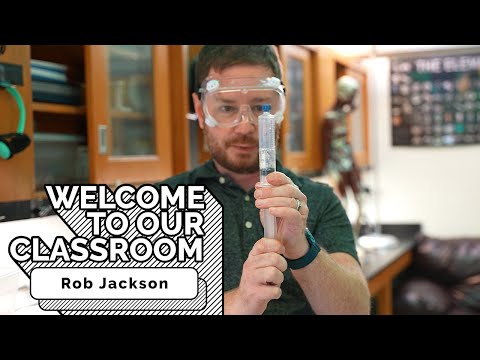
Rob Jackson, a science teacher at Chisholm Trail Middle School, told meeting attendees he uses blended learning, self‑paced units and hands‑on labs to foster curiosity and long‑term engagement among eighth graders.
Rob Jackson, a science teacher at Chisholm Trail Middle School, told meeting attendees he uses blended learning, self‑paced units and hands‑on labs to engage eighth‑grade students and encourage curiosity.
Jackson said middle school is a time when students "are kind of developing their own identity and they're developing independence and they just want to be treated with respect." He described science as a field for curious individuals and said his teaching emphasizes hands‑on activities that students remember: "You can walk in and immediately you're struck by the science nature of it. And that even the people who are in my classroom for 3 to 5 minutes are gonna remember it 20 years from now."
Why it matters: Jackson framed his methods as tools for building relationships and long‑term interest in STEM at a formative age. He said giving students choice and ownership in learning helps them regulate pace and pursue topics that interest them.
Jackson described specific classroom practices. He said he uses "blended learning" and "diverse lessons where students can choose how they best learn," including self‑paced units that allow students to move ahead or dig deeper. "For some of my units, I use self pacing so that if students really want to move on ahead with the material and learn more, they're able to — it gives them the chance to take ownership of their own learning," he said.
He offered examples of the effects he has observed: students who return years later recalling labs and lessons, and current students who take activities home to show family members. "Anytime that I hear from former students, that's very impactful," he said. Jackson said those responses indicate he is "really connecting with the students, I'm engaging them in science and getting them very excited."
Jackson emphasized that science is "a way of thinking more than it is a set of concepts," and said his goal is to teach students to approach the world with that mindset. "Science is how we discover new information. It's how we explore the world around us," he said.
The transcript shows Jackson spoke for roughly three minutes about classroom methods, student engagement and the role of inquiry in science instruction. No formal actions or policy changes were recorded in the provided transcript.