Get Full Government Meeting Transcripts, Videos, & Alerts Forever!
Get email alerts on the Utilities Rate Study topic
No spam. Unsubscribe anytime.
Milwaukie staff say rate study and state loan options could reduce water/wastewater costs
Summary
City staff told the council the utility cost-of-service and rate-design study will return draft recommendations in November and that state revolving funds could supply low-interest loans or principal forgiveness for wastewater work, though the timeline stretches several years.
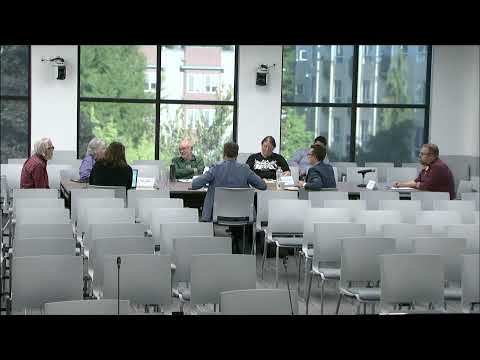
City staff updated the Milwaukie City Council at its Sept. 2 work session on the status of a utility cost-of-service and rate design study and on potential state funding options for water and wastewater projects.
The City’s consultant-led rate study is underway and staff said draft recommendations will be presented in November. Staff described the November product as recommended rate increases tied to the capital improvement plan (CIP); final rate design would follow, and council-level action on rates is expected during the next budget cycle.
Why it matters: the study will shape water and wastewater customer charges and fixed fees that determine how costs are shared across customer classes. City staff emphasized the study may recommend different percentage changes for different customer classes rather than a flat across-the-board increase.
Staff noted two state financing avenues under active consideration for wastewater work. The city has engaged with Business Oregon and the program administrators for the Safe Drinking Water State Revolving Fund and a separate Clean Water revolving fund. Staff said one funding bucket could provide roughly $6 million of eligible funding, with perhaps $3 million immediately doable under certain scenarios. In addition, a more narrowly targeted treatment fund might offer up to $6 million and could include a mix of low-interest loans and possible principal forgiveness once projects are completed and program conditions are met.
City staff cautioned that the loan and forgiveness mechanics will affect cash-flow and rate modeling: applications and loan approvals occur before construction, interest is paid during construction, and principal repayment (or forgiveness decisions) happen after construction and program review. Staff said work to fit those funding scenarios into the rate model will continue with the consultant over the next three to four years.
Timing and next steps: staff plan a major update on the rate study and CIP at November budget and committee meetings. A draft of recommended rate increases — not a final rate design — is expected then; the consultant will present adjustments that could tweak fixed charges, consumption tiers and class-specific subsidies. The council will see final CIP and rate materials in February before final budget and rate votes in April–May.
Council-level context: Council members told staff they want transparent assumptions linking CIP needs, debt levels, and rate adjustments; several said the city should avoid holding unnecessarily large utility reserves if that prevents rate relief to customers. Staff also flagged upcoming items that relate to rate setting: an annual WES presentation (Oct. 21) and a planned PGE executive briefing targeted for November.
Ending: Staff recommended council members use the November budget committee and QUAC meetings for detailed questions about recommended increases, and signaled that more rate design detail will follow after council direction on the November recommendations.