Get Full Government Meeting Transcripts, Videos, & Alerts Forever!
Get email alerts on the Lodging Tax topic
No spam. Unsubscribe anytime.
Mountlake Terrace outlines lodging-tax grant process and options after Studio 6 closure
Summary
City staff described how the lodging-tax grant program works, explained a $50,000 2025 budget, and answered questions about eligibility, timeline, reimbursed payments and how the impending closure/repurposing of the Studio 6 motel will affect future revenue.
Mountlake Terrace city staff held an informational session to explain how the city’s lodging-tax grant program works, how applicants should document expected economic impact and overnight stays, and how allocations will be handled after the city’s only motel, Studio 6, is repurposed.
The information session, led by Andrew, events coordinator for the City of Mountlake Terrace, Jeff Betts, recreation and parks director, and Sarah Kitzelman, finance director, reviewed eligibility, the application window, how awards are selected and paid, and options for applicants if local lodging inventory changes.
The city budgeted $50,000 for lodging-tax allocations in 2025, up from a prior $25,000 annual allocation, Andrew said. The fund is supported by lodging taxes collected within city limits; “Studio 6 is our only hotel or motel within our city limits,” Andrew said, noting the property’s planned repurposing. Jeff Betts, recreation and parks director, confirmed the motel property has been sold and “it’s going to be repurposed.”
Why it matters: lodging-tax allocations are intended to support events and facilities that increase overnight stays, which generate the tax revenue that sustains the program. With Studio 6’s change in use, city staff said short-term rentals and any future lodging developments would be the other sources of lodging-tax revenue. “So that would not happen because whatever hotel is in the city, then the state collects that tax,” Sarah Kitzelman said when asked whether taxes could be shared with other jurisdictions.
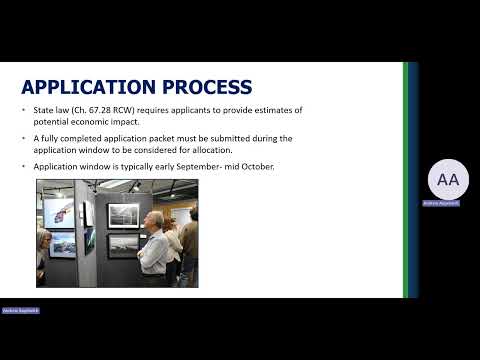
Who can apply and what the money can pay for: the application packet (15 questions) asks applicants to document projected attendance, expected overnight stays and estimated economic impact as required by state law. Lodging-tax funds can be used for tourism promotion, marketing and operations of special events or tourism-related facilities; they may also be used for capital expenses for tourism-related facilities and for operations of nonprofit-run tourism facilities. The city emphasized that the funds are reimbursements: grantees receive payment only after they submit receipts and a final report within 90 days of the event’s close.
Application timing and selection: Mountlake Terrace’s application window is typically early September through mid-October. After the window closes LTAC (the lodging tax advisory committee) reviews applications, checks completeness, and determines whether proposals are permitted uses of lodging-tax funds and have potential to increase overnight stays. LTAC then forwards recommendations to city council; council may approve or request more information but cannot change LTAC’s recommended expenditures without LTAC reconvening. Staff then prepares contracts and issues reimbursements after events conclude.
LTAC composition and implications of the motel’s repurposing: LTAC is a five-person committee consisting of one council liaison, two representatives from entities that collect lodging tax (previously Studio 6), and two members from organizations eligible to apply for lodging tax. The city staff liaison attends but does not vote. Because Studio 6 is being repurposed, staff said they would seek two representatives among short-term-rental hosts (for example, Airbnb/VRBO operators) if necessary to meet LTAC’s composition requirement.
Common applicant questions and clarifications: staff encouraged applicants to pursue other revenue and sponsorships so events are not solely dependent on lodging-tax funds. Snohomish County also runs a lodging-tax program with multiple application windows; applicants may apply to both the county and Mountlake Terrace for the same event. The city noted there is no fixed minimum or maximum award per applicant beyond the total budgeted amount; allocation decisions are made by LTAC based on need, completeness of applications and other funding sources. Staff warned that lodging-tax funds cannot be used to purchase alcohol and must be supported by invoices/receipts for reimbursement.
Staff help and resources: the events coordinator said staff will assist applicants with the packet and can answer questions during the application process. Staff pointed attendees to the Municipal Research and Services Center (MRSC) lodging tax guidance (mrsc.org) for additional reference and said the city posts the application packet and final-report forms on the city’s events page. Andrew said applicants should expect LTAC to meet one to two times for reviews and that LTAC will make recommendations to council at least 40 days after the application window closes.
The session closed with staff encouraging potential applicants to contact the events office, review the packet posted on the city website, and prepare complete budgets and economic-impact estimates before submitting applications.