Get Full Government Meeting Transcripts, Videos, & Alerts Forever!
Get email alerts on the Zoning Code Changes topic
No spam. Unsubscribe anytime.
Planning commission forwards sweeping growth-management and zoning changes to commissioners after public input
Summary
Planning staff presented a package of proposed changes to the county code intended to slow residential growth and tighten development standards; the commission voted to recommend the changes to the Board of Commissioners for final consideration.
Dawson County planning staff presented a broad package of proposed changes to the county development code intended to slow residential growth, tighten standards for new development and make several previously advisory provisions enforceable. After a public hearing and comments from residents, the Planning Commission voted to recommend the draft changes to the Board of Commissioners.
Community director Richard Osborne summarized results of a three-month, individualized community survey that drew 1,367 responses from county residents: 83% of respondents said the county was growing “too fast,” 68% selected single-family homes as the most appropriate housing type, and 57% prioritized lot or property size when single-family homes are built. “The highest percentage was 44%,” Osborne said, “that when residential growth occurs, the most appropriate location would be near Highway 400,” while concerns most frequently cited were traffic (54%).
The proposed code changes (the staff packet runs several hundred pages) include: tighter standards and minimum lot size recommendations for short-term rentals (new short-term rentals generally limited to lots of at least one-half acre and existing short-term rentals to become legal nonconforming), a requirement that new event centers come through a zoning case rather than be allowed by right, converting many Highway 400 Overlay District “should/may” recommendations into “shall/must” enforceable standards, reducing the number of townhomes allowed in new developments, increasing open-space and architectural standards for projects of a certain size, and larger buffers where nonresidential zoning touches single-family districts.
Osborne said staff also proposes limiting variances and eliminating exemptions that would permit wholesale departures from standards, changing density calculations to a gross-acre method, requiring pre-application community meetings for residential rezonings of 50 or more units with notifications to property owners within 500 feet, and capping the number of residential rezonings of 50+ units to one per month (maximum five rezonings of any type per month). He said the Board of Commissioners' attorney reviewed the draft and suggested revisions that staff incorporated.
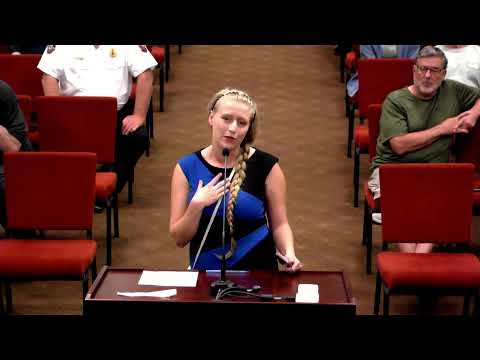
During public comment, longtime residents urged caution and supported slowing growth. Ruby Daniel, who said she worked with staff on the proposals, said the changes close loopholes developers have used, raise standards to attract developers aligned with the county’s vision and aim to preserve rural character. Tony Bradley urged commissioners to remember the county’s rural character and warned of crime and other consequences that can follow rapid growth.
Following discussion, the commission moved and seconded to forward the draft code changes as a recommendation to the Board of Commissioners; the chair announced the motion carried. Osborne told commissioners that the Board's earliest opportunity to act would be a Sept. 4 work session and, if the board proceeds, a vote could occur at the Sept. 18 voting session.
The detailed draft text and staff packet were posted online; staff offered to provide hard copies or one-on-one briefings for residents and commissioners who want more information.