
Public Works presents $486 million 2026 proposal; $74 million general fund portion and targeted cuts proposed
Get AI-powered insights, summaries, and transcripts
Subscribe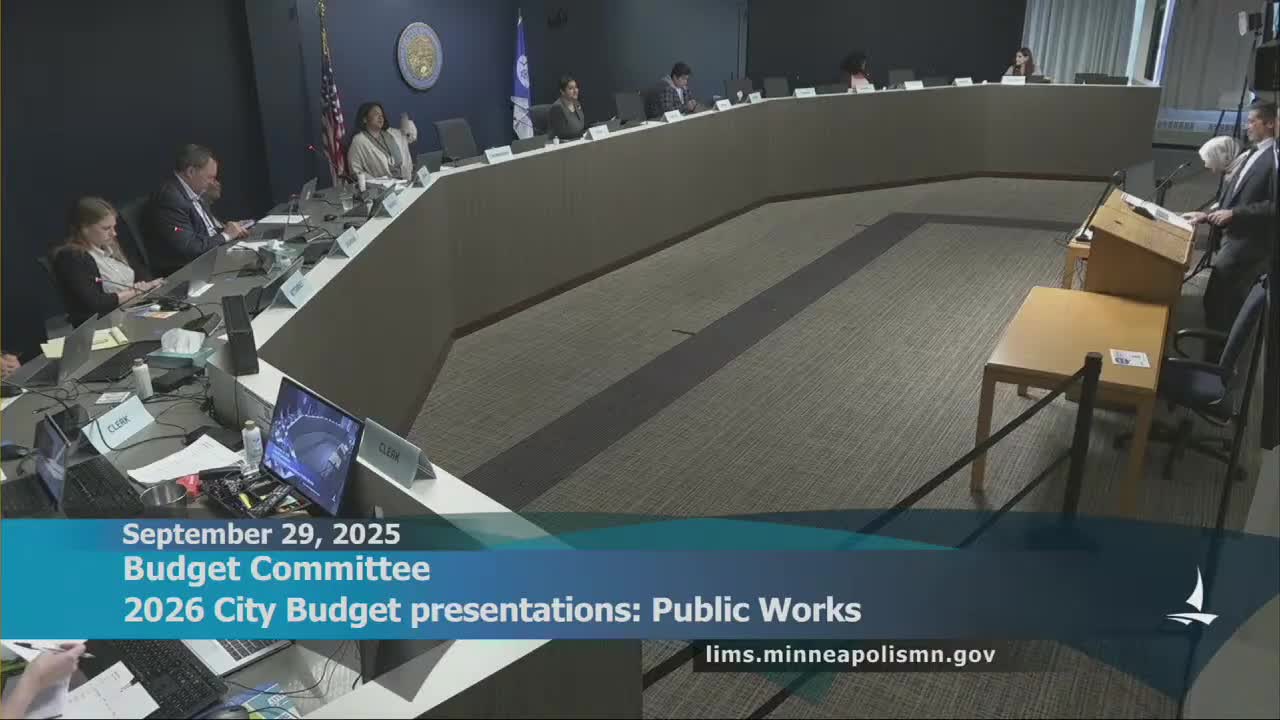
Summary
Director Tim Sexton told the Budget Committee the Public Works proposed 2026 budget is approximately $486 million overall, with about $74 million from the general fund; proposed service‑level reductions are targeted and staff flagged staffing vacancies and capital funding uncertainty tied to federal grants.
Tim Sexton, director of Minneapolis Public Works, presented an overview of the department and the mayor's recommended 2026 budget to the City Council Budget Committee on Sept. 29.
Sexton said the department's total proposed budget for 2026 is just over $486,000,000, of which about $74,000,000 is funded from the general fund and the remainder comes from enterprise and capital funds. He told the committee the recommended operating budget is essentially flat year over year (a proposed decrease of approximately $550,000) while broader cost drivers include wage and fringe increases, rising Met Council wastewater treatment charges and higher materials costs.
Public Works described its structure (nine divisions across three business lines), staffing and key accomplishments. Sexton highlighted recruitment gains (about 60 new trainees and nearly 50 interns/urban scholars in 2025), safety improvements that reduced preventable worker injuries, and capital wins including a $35 million federal bridge grant for the Nicollet Bridge project and the Hennepin Avenue South project scheduled to open in November.
Sexton identified risks: inflation and rising construction costs (signals and streetlights have roughly doubled in cost since 2019), supply‑chain delays, the potential loss of institutional knowledge with more than 282 employees eligible for retirement, and uncertainty about federal discretionary grants the department pursued. He said the department is on track to replace up to 10 lead service lines per workday in 2025 toward the state goal to replace about 38,000 lines by 2033.
On utilities and divisions: Public Works reported 1,061 funded positions in operating budgets and an additional roughly 213 capital‑funded positions (about 1,275 total), with 138 current vacancies (about 10% of the department). Divisional budget drivers include a proposed $3.5 million increase for Met Council wastewater treatment charges and about $4 million in increased internal service and contractual costs. The presentation showed an estimated 9% of the city fleet is electric (rising to 25% when excluding vehicle types without electric options); fleet staff told the committee supply‑chain and upfitting delays affected greenhouse gas accounting for 2023–24.
Sexton proposed a limited number of general fund reductions that would affect visible services. Examples include eliminating one vacant service‑worker FTE in Transportation Maintenance and Repair (T M R), shifting neighborhood traffic calming funding from a small ongoing general fund allocation into the capital improvement program (adding $500,000 in capital funding while reducing a $100,000 general fund allocation), and a $200,000 delay to hiring for the traffic safety camera pilot to allow the program to ramp up. Sexton warned that additional reductions to service‑worker FTEs would begin to affect core services such as snow plowing and pothole repairs.
Committee members asked follow‑up questions about FTE increases funded by enterprise and capital funds, long‑term vacancies and transit signal priority. Alan Klugman, division director for Transportation Operations and Mobility, said the city now has about 820 signals, 190 with bus transit signal priority and 40 with light‑rail priority (about 30% of signals have transit priority, one of the higher percentages nationally). Fleet staff explained EV deployment is constrained by upfitting and charging infrastructure and described a surge of vehicle deliveries once supply chains reopened in 2024.
Why it matters: The bulk of the department's budget is paid by utility and enterprise fees; changes to general‑fund allocations have immediate visible impacts on neighborhood services. Council members stressed that while the department holds a large total budget, only a portion is under direct general‑fund control and reductions to that portion can directly change service levels for residents.
Follow‑ups and next steps: Sexton and deputies committed to provide additional vacancy‑duration data and to continue reporting on federal grant outcomes and capital staffing tied to awarded grants.