
Minneapolis civil rights department outlines 2026 budget, flags cut to co‑enforcement funding
Get AI-powered insights, summaries, and transcripts
Subscribe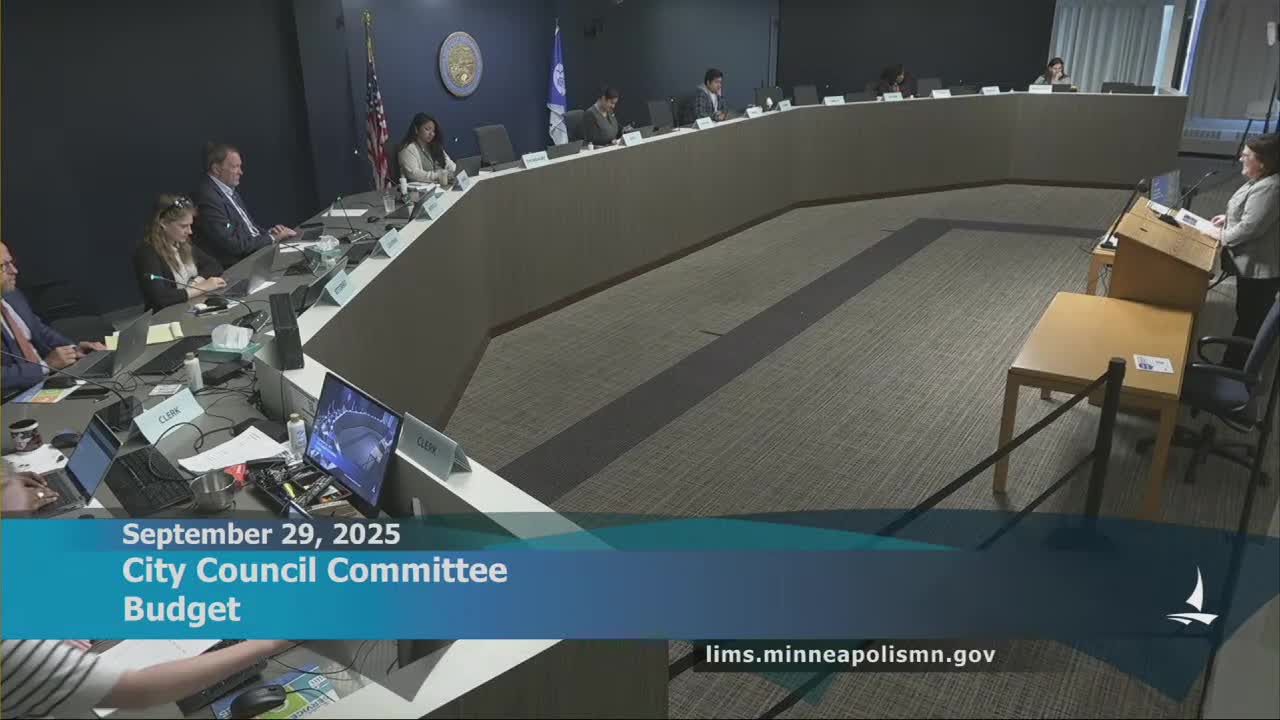
Summary
Interim Civil Rights Director Kayla McCanendera presented the department's recommended 2026 budget, workforce changes, and program results; the mayor's proposal reduces co‑enforcement funding by about $349,000, leaving roughly $309,000 ongoing and prompting staff to work with partners to adjust targets.
Kayla McCanendera, interim director of the Minneapolis Civil Rights Department, told the City Council's Budget Committee on Sept. 29 that the department's recommended 2026 budget includes personnel restructuring and a proposed reduction to co‑enforcement funding for labor standards work.
McCanendera said the recommended cut to co‑enforcement is approximately $349,000 and that "approximately $309,000 remains in the department budget to complete this work." The department will work with community co‑enforcement partners to adjust performance targets in response to the reduced funding.
The presentation summarized organizational changes made during 2024 and 2025, including reclassifying a senior project manager into a quality assurance and compliance manager, adding a manager of grants and community engagement, and creating new supervisory levels in the contract compliance and Office of Police Conduct Review divisions. McCanendera said those changes were intended to add oversight and centralize community engagement functions.
The department reported progress on investigative backlogs and ordinance changes. McCanendera said the Office of Police Conduct Review had reviewed and investigated nearly all of a prior backlog of 234 complaints and that four remained to be completed by the end of September. The complaint investigations division reported receiving 421 complaints in 2024 and 279 through August 2025; monetary settlements in that division totaled about $105,000 through August 2025, the director said. The department set an internal target of completing 75% of investigations within 150 days in 2026 (up from a 2025 target of 70%).
McCanendera highlighted ordinance amendments that added three protected classes to the city civil rights ordinance: housing status, justice impact status and height and weight. She said the department had already begun receiving complaints filed on those bases and that staff are implementing outreach and training to publicize the changes.
The presentation included division summaries and metrics: the department proposes 48 full‑time equivalent positions in 2026 (up from 47.5 in 2025 and 46.5 in 2024) and reported six current vacancies, a vacancy rate the director calculated at about 8%. Contract compliance staff noted increased investigations after creating a wage theft investigator position in 2024; the unit has certified 22 small businesses with the Minnesota Unified Certification Program and reported wage theft recoveries of roughly $104,000 through August 2025. The Labor Standards Enforcement Division reported collecting more than $300,000 in back wages in 2025 through August and monitoring 44 settlement agreements affecting more than 2,500 workers.
Committee members asked how the co‑enforcement reduction would affect service delivery. McCanendera said the exact impacts were not yet known but that, because the department piloted performance‑based contracting this year, she and staff will "work with our co enforcement partners to make reasonable adjustments to those targets," including outreach, trainings and navigation services for workers.
Council members asked for follow‑up data. McCanendera said she would provide additional details by staff memo on numbers not available during the meeting, including the exact count of wage‑theft cases handled by the department this year and the expiration date of current co‑enforcement contracts.
Why it matters: Committee members noted that cuts to co‑enforcement will likely reduce outreach, trainings and enforcement capacity that benefit workers across Minneapolis. Council members also praised the department for clearing the police‑conduct investigative backlog and for expanding outreach to historically underserved communities.
Staff work and follow‑ups: Committee members requested written follow‑up on (1) the number of wage‑theft cases the department has handled in the last year, (2) the expiration date and procurement cycle for the co‑enforcement contract, and (3) vacancy durations in public‑safety‑adjacent positions the department referenced during questioning.
The committee filed the presentation and moved to the next agenda item.