Get Full Government Meeting Transcripts, Videos, & Alerts Forever!
Get email alerts on the Coastal Flooding topic
No spam. Unsubscribe anytime.
Port Richey committee to pause formal activity; members urge small pilots for Sunset Boulevard flooding
Summary
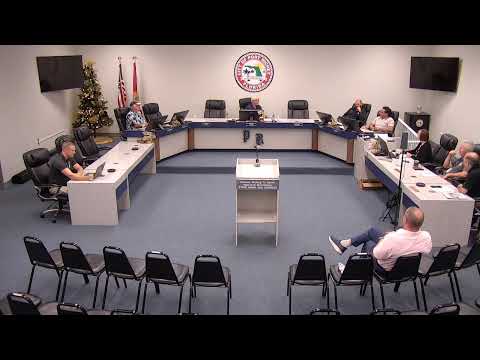
The Port Richey Coastal Resiliency Committee agreed to ask staff to consult the city attorney about alternative structures and make the committee inactive while members pursue ad hoc efforts, after an extended discussion of flooding on Sunset Boulevard, boat ramps and possible low-cost pilot fixes.
The Port Richey Coastal Resiliency Committee voted to direct staff to consult the city attorney about alternative committee structures and to bring recommendations to city council, effectively making the committee inactive for now. The committee discussion that preceded the motion focused on recurring high-tide flooding along Sunset Boulevard, the condition of roughly 20 boat ramps across the city and a range of possible mitigation steps from low-cost pilots to larger engineered projects.
Committee members said they want the city to pursue near-term, lower-cost experiments — for example, adding pavement layers over low spots, installing storm drain boxes that discharge through a new flap into the bayou, or deploying temporary flood barriers such as water-filled “Tiger Dams” during events — while continuing longer-term planning and engineering studies. Members and invited speakers also discussed coordinating with external partners on larger work, including dredging and shoreline projects.
Why it matters: Sunset Boulevard is a low-lying corridor where high tides and stormwater intrusion have repeatedly flooded the road and nearby properties; committee members said the saltwater exposure is damaging vehicles and municipal equipment and that homeowners and businesses are already affected. Committee discussion tied the local problems to larger issues — dredging, seawall condition, ownership and use of private boat ramps, and the city’s ability to leverage county, regional and federal assistance.
Discussion highlights
- Sunset Boulevard and boat ramps: Committee members described persistent high-tide intrusion on Sunset Boulevard and several older boat ramps they said are points where saltwater enters the roadway. One member said there appear to be about 20 ramps scattered across the city that create localized pathways for water to reach roads and properties.
- Candidate short-term fixes: Suggestions heard included (a) placing an additional 6 inches (speaker estimate) of pavement in low-lying sections, (b) adding local storm boxes and pipes through seawalls so pooled rainwater drains back at low tide, and (c) using deployable flood barriers (referred to in the meeting as “Tiger Dams”) that a regional agency might supply for critical infrastructure. Members repeatedly emphasized these measures are partial fixes that may reduce routine high-tide flooding but would not prevent extreme "king tides." Cost estimates discussed ranged from small pilot projects of roughly $15,000 to $50,000 up to larger engineering studies costing much more.
- Dredging and shoreline work: Several speakers tied the discussion to upcoming dredging activity and to earlier requests to the U.S. Army Corps of Engineers for a comprehensive coastal review. The committee noted dredged material could be reused locally but that property ownership and permissions (private boat ramps, marina facilities) must be clarified before work begins.
- Regional partners and water supply: The committee reported outreach from Tampa Bay Water; the transcript records that Warren Hogg, identified in the meeting as Tampa Bay Water’s chief science officer, is interested in coordinating on measures to reduce saltwater intrusion into the city’s wells. Participants discussed the potential for stormwater retention or other freshwater "curtain" ideas to protect production wells.
- Structure and next steps for the committee: Members debated whether to keep the formal, Sunshine Law–covered committee in place, convert to an ad hoc or business-led working group, or pursue a separate nonprofit model to help pursue grants (for example, a 501(c)(3) coastal improvement council). Concerns included difficulty maintaining quorum and the constraints Sunshine Law places on informal collaboration.
Votes at a glance
- Motion: Staff directed to consult with the city attorney on alternative committee structures and to bring recommendations to city council; committee to be made inactive in the interim. - Mover: not specified in the audio record - Second: not specified in the audio record - Outcome: Approved by voice vote; all present voiced “Aye” (no opposing votes recorded). Notes: Staff indicated they will act quickly and that meeting(s) may be canceled while the city attorney reviews options.
What the committee did not decide
The committee did not adopt any specific construction or funding plan for Sunset Boulevard, nor did it commit city funds to a pilot project. Members urged staff to return with legally vetted options and to explore low-cost pilots and partnerships with local businesses, regional agencies and the Community Redevelopment Agency (CRA).
Looking ahead
Staff will work with the city attorney to identify permissible committee or working-group structures, report back to council with recommendations and — in the meantime — circulate information to committee members and interested business leaders. Several speakers said they plan to pursue ad hoc outreach to local business owners and subject-matter volunteers to vet measures such as Tiger Dams, small drainage pilots and seawall repairs before any formal council action.