Get Full Government Meeting Transcripts, Videos, & Alerts Forever!
Get email alerts on the Over Criminalization topic
No spam. Unsubscribe anytime.
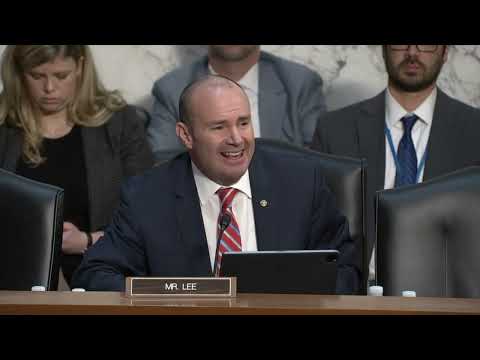
Senator raises over-criminalization concerns, asks nominee to help address regulatory criminal penalties
Summary
At a Senate hearing, an unnamed senator warned that the number of federal criminal offenses may be at least 300,000, criticized criminal penalties embedded in federal regulations and ambiguous mens rea standards, and asked the nominee, if confirmed, to work on reforms.
An unnamed senator told a Senate hearing that federal criminal law has grown into an "over-criminalized" system and cited a Congressional Research Service finding that the number of federal crimes and criminal penalties is "unknown and unknowable, but at least 300,000." The senator asked the nominee, if confirmed, to work with Congress and others to address the problem.
The senator said much of the expansion comes from regulatory rules that carry criminal penalties without Congress enacting the criminal statutes directly. "A lot of the reason for this is that there are a lot of instances in which federal regulations impose criminal penalties," the senator said, adding that agencies incorporate criminal elements into rules published in the federal register and the Code of Federal Regulations. The senator said the CFR grows by what he described as "around a 100,000 pages a year," a rate he called "highly problematic."
The senator also raised concerns about mens rea, the mental-state element required for many crimes. "Oftentimes, when this happens, you end up with an either absent or hugely ambiguous mens rea," the senator said, arguing that unclear intent standards and regulatory criminalization harm defendants and "the liberty interests of the American people." The senator cited Article I, Sections 1 and 7 of the U.S. Constitution, saying those provisions require Congress — not agencies acting alone — to enact or change federal law.
The nominee responded briefly, saying, "Yes, senator." No formal motion or vote followed; the exchange was a request by the senator for the nominee's cooperation if the nominee is confirmed. The hearing record contains no additional detail about specific legislative proposals, timelines, or commitments from the nominee.
Why it matters: Delegating criminal penalties to regulations and unclear mens rea standards can expand the range of conduct punishable by federal law without clear congressional enactment or explicit intent elements, according to the senator. That combination, the senator argued, raises constitutional and liberty concerns and may require legislative or administrative fixes if pursued.
Details recorded in the hearing: The senator attributed the estimate of at least 300,000 federal crimes to the Congressional Research Service (CRS) and described the CFR growth rate as "around a 100,000 pages a year." The senator explicitly referenced the U.S. Constitution, Article I, Sections 1 and 7, when arguing that Congress must be the body to make or change federal law. The transcript records the nominee's reply as a single, affirmative phrase: "Yes, senator."