Get Full Government Meeting Transcripts, Videos, & Alerts Forever!
Get email alerts on the Indigent Defense Caseloads topic
No spam. Unsubscribe anytime.
Spokane County weighs code change to align indigent‑defense standards with Washington Supreme Court; debate over case‑weighting follows
Summary
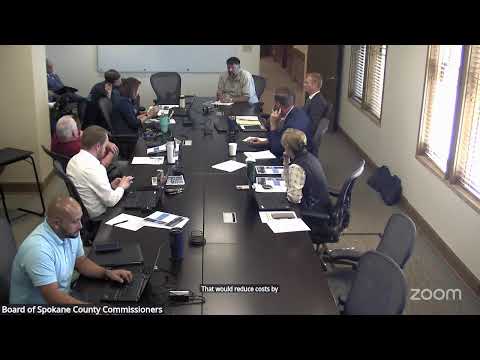
Spokane County commissioners on Sept. 23 were briefed on a proposal to amend County Code 1.17A to align local standards for public defense with a Washington State Supreme Court order and related rules.
Spokane County commissioners on Sept. 23 were briefed on a proposal to amend County Code 1.17A to align local standards for public defense with a Washington State Supreme Court order and related rules.
The proposal would update county code language to reflect the court’s new caseload guidance — including the court’s statement that implementation “may be implemented, in phases, 10% reduction annually” with full compliance no later than 10 years — and to reference criminal rule CR 3.1 and the rules of professional conduct that govern defense counsel.
County staff said the intended code changes mostly replace outdated numeric caseload references in the existing ordinance with current statewide authority so the county’s local rules are consistent with the court’s orders and state rules. Scott (county staff) briefed the board on the court order and the rule references affecting county code.
Colin, representing the public defender’s office, told the board the ethical question for trial lawyers remains central. “I think the ethical problem isn’t an effective assistance of counsel problem,” he said, adding that the two issues are intertwined and that local adoption of a case‑weighting policy is the practical route to reduce risk and to give attorneys a clear workplace standard.
Public defenders and county staff told commissioners they need a local, published policy that explains how cases are credited or weighted, because CR 3.1 prohibits using a case‑weight system “unless pursuant to written policies and procedures that have been adopted and publicized by the local government entity.” Without a local policy, attorneys will default to the Washington State Bar Association (WSBA) recommendations, they said, which the Supreme Court adopted as one compliance path.
Several commissioners said they wanted the county to move deliberately. Commissioners asked staff to return with a case‑weighting proposal based on local data and examples other counties have adopted, and with options for phased implementation that would be affordable for Spokane County while addressing attorneys’ ethical concerns. County staff and defense counsel said they will collect and present additional local time‑tracking data to inform that proposed policy.
The county placed a notice on the consent agenda to schedule a public hearing for the code amendment; staff indicated a hearing date of Oct. 17, 2025, is being targeted and that the formal notice would appear on the commissioners’ consent agenda later the same day.
Commissioners and staff emphasized that adopting code language alone will not eliminate workload or staffing needs; they said a locally adopted case‑weighting policy combined with staffing and budget adjustments would be part of a longer implementation plan.
The board did not take a final vote on code text at the briefing. Staff will return with a draft local case‑weighting policy and supporting data for further review before any final code adoption.
Ending
County staff said they will bring back more detailed case‑time data, options for a locally calibrated weighting schedule, and cost estimates for staffing to meet whichever weighting standard the county adopts. A public hearing on the draft code change is scheduled to be noticed to the board’s Oct. 17 legislative agenda.