Get Full Government Meeting Transcripts, Videos, & Alerts Forever!
Get email alerts on the Land Use Rezoning topic
No spam. Unsubscribe anytime.
Snellville council reviews Lenoir Church Road rezoning; buffer, culvert and parking raised by neighbors
Summary
At a May 12 work session, Snellville City officials discussed outstanding questions on a proposed rezoning for Lenoir Church Road, including tree protection in proposed planted buffers, culvert design subject to federal/state approvals, and no-parking curb treatments at tight internal corners. No motion is currently on the table.
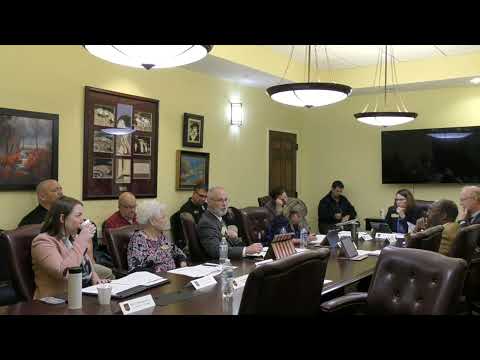
Snellville City Council members discussed the proposed rezoning for Lenoir Church Road at their May 12 work session, focusing on tree protection in a planned buffer, whether the new road crossing will use a box or open-bottom culvert, and a request for no‑parking red curbs at tight inside corners.
The item comes after a public hearing at a previous meeting; the presiding official said, "I don't see any reason why we need to have additional public comment," and reminded colleagues that a prior motion to approve had been withdrawn and that "we currently have no motion on the table." That means council must open the item with a new motion before taking a formal vote.
Neighbors represented by Ms. Krieger asked whether a planted buffer would require clearing to the property line and whether specimen trees on adjacent properties would be protected. Jason Feder, city staff, said the city will identify important trees and protect their drip zones, typically with tree fencing, and that usual buffer plantings tend to be fast-growing ornamental species rather than large specimen trees. Feder said, "They would just get some some tree fencing around" specimen trees when roots extend into the construction zone.
Council members pressed the applicant and staff on which culvert type would be installed where the subdivision crosses a stream. Staff said engineers have studied both options and that the final design will depend on approvals from multiple agencies, including the U.S. Army Corps of Engineers, the Georgia Environmental Protection Division and FEMA. Staff described the permitting requirement as a "no rise certification," meaning the chosen crossing must not raise the stream or floodplain levels upstream.
Council also discussed on-site circulation and safety: with the proposed tighter radii at some inside corners, a councilmember asked that those northwest and southwest inside corners be painted red so vehicles cannot park there and restrict travel for large and emergency vehicles. The council discussed placing a low-maintenance fence at the rear lot lines of homes that back to the HOA buffer so homeowners do not use the buffer as private yard or a dog run; staff said the fence would sit at the property line so the planted buffer remains on HOA property.
Council members cited uneven results from past projects when buffers abutted private yards and discussed alternatives used elsewhere (recorded examples included a plat note at closing showing the buffer and use of a fence to delineate HOA land). With multiple questions still on the table, staff and the applicant were asked to provide clarified plans; the presiding official reminded the group that when the item is reopened it must start with a motion.
Next steps: the rezoning remains pending; council signaled it wants clarified plans showing tree protection measures, culvert options tied to permitting outcomes, and mapped curbing limits before placing a motion on the floor.