Get Full Government Meeting Transcripts, Videos, & Alerts Forever!
Get email alerts on the Courts Budget topic
No spam. Unsubscribe anytime.
District Court warns of staff shortages, $75,000 Valley courtroom lease and rising filings in 2026 budget presentation
Summary
Presiding Judge Patrick Johnson and court administrators told commissioners the district court faces staffing constraints, rising filings, and a $75,000‑a‑year lease for a Spokane Valley courtroom currently charged to the court’s budget; the court outlined proposed reductions and potential service impacts.
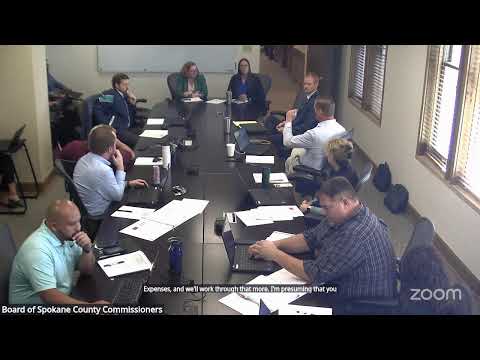
Patrick Johnson, presiding judge for Spokane District Court, told the Spokane County Board of County Commissioners on Sept. 22 that the court is projecting a $7.3 million operating budget for 2026 and is facing staffing shortages, growing filings and a set of hard choices to meet the county’s budget target.
“This is kind of a breakdown, our budget. You see we're at $7,300,000,” Johnson said as he reviewed the court’s personnel and expense picture. Court staff told commissioners the department includes 74 total positions (57 paid from the general fund) and processes roughly 48,000 filings a year; filings are up about 6% year‑over‑year, and certain case types — including driving‑under‑the‑influence and unlawful‑detainer (eviction) filings — have increased substantially.
Johnson and court staff outlined a $51,713 shortfall the department must close to meet the board’s target. The court’s preferred approach is to use unspent 2025 salary savings and normal attrition to close the gap; court leaders said that would be less disruptive than cutting active positions. If salary savings are insufficient, staff identified other options, including temporary funding shifts and reductions to non‑statutory services.
Court officials raised a recurring concern: the district court pays about $75,000 a year to lease courtroom and administrative space in Spokane Valley. Johnson told commissioners the agreement dates to earlier contracts (the most recent signed in 2014) and that district court staff are not signatories to the lease even though the cost currently appears in the court’s budget. Commissioners and staff discussed options including redirecting the charge off the court’s budget, terminating or renegotiating the lease, or centralizing services on the county campus. Staff said the county’s contracts office would prepare a cohesive presentation on lease costs and termination requirements for a future meeting.
The court also warned that continued staff reductions would reduce customer‑service hours and could force the court to stop doing collections on civil infraction fines — a non‑statutory function that nevertheless generated about $1.4 million in fiscal 2024. Johnson said the court must prioritize statutorily required work and that collection activity or other discretionary services might be curtailed if staff and revenue decline.
Judges and administrators described several operational changes and efficiency efforts: greater use of technology for juror orientation, consolidation and code simplification in Workday budget reporting, and cross‑coverage of court reporters and other staff during vacancies. The court also described a statewide procedural change that shortens some timeframes for arraignment and release decisions (the “72‑hour” change discussed in the meeting): court officials said they have added 24/7 judicial coverage to handle the new timelines and are monitoring whether the change creates notice issues for crime victims or transport and attorney capacity problems.
Johnson and his staff asked the board to consider a vacancy/salary‑savings adjustment in the court’s budget to reflect typical in‑year vacancies rather than using carryovers or one‑time accounting treatments. They also flagged technology options for transcript recording and noted that machine‑assisted transcripts remain legally limited for appellate purposes.
The court’s presentation closed with commissioners and staff agreeing to follow up on the Valley lease, vacant‑position accounting and the court’s proposed vacancy adjustment for the board’s next budget version.