Get Full Government Meeting Transcripts, Videos, & Alerts Forever!
Get email alerts on the Mental Health Sales Tax topic
No spam. Unsubscribe anytime.
Spokane County staff project mental-health sales tax reserves will fall to $7 million; board briefed on stabilization center funding gap
Summary
County presenters told commissioners the mental-health sales tax fund will shrink to about $7 million in reserve in 2026, discussed a $8 million capital allocation for stabilization center expansion and legislative work to cover non‑Medicaid operating costs.
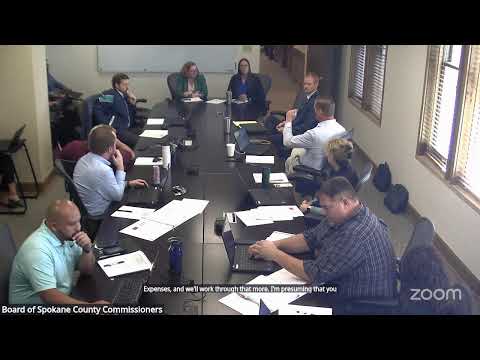
Spokane County staff told the Board of County Commissioners on Sept. 22 that the county’s dedicated mental-health sales tax fund will have a preliminary beginning balance and projected 2026 sales-tax revenue that together leave limited uncommitted reserves as the county stages a stabilization-center expansion.
Justin (mental‑health program lead) said the fund began the year with about $15.7 million, expects roughly $16.8 million in sales-tax revenue for 2026, and has programmed roughly $15.4 million in annual operating expenses. The 2026 budget also includes about $8 million in capital investment for a stabilization-center expansion; staff reported an ending fund balance around $9 million on the preliminary sheet but explained part of that is committed and Justin’s program-level reserve would reduce to approximately $7 million once obligations are considered.
Staff emphasized that past years of state funding helped offset program costs and that state allocations are less certain for 2026. Commissioners were told the county has been planning the stabilization-center project with an eye to operational funding: staff plan to pursue a state legislative ask to secure non‑Medicaid 23‑hour crisis funding and noted the Behavioral Health Administrative Organization and other statewide requests seek coverage for some non‑Medicaid components.
Justin explained program lines in the mental-health fund, including detention‑based behavioral health services, therapeutic courts, mental‑health positions inside pretrial and juvenile services, a $100,000 mental‑health clinician contract for the sheriff’s office and step‑down and residential supports. Staff also described several pilot programs (including a juvenile pilot funded in 2025 for $145,000) and ARPA‑funded transitions into the sales-tax funding stream for some programs that end in 2026.
Commissioners asked about the timeline and sustainability of the stabilization center and cautioned against committing capital without secured operating funds, citing examples from other jurisdictions where facilities were constructed but not staffed. Staff said they were doing concurrent planning for billing and operations and would seek legislative help; they estimated roughly 60% of operating costs could be covered by Medicaid, about 25–30% by the county’s sales tax and the remaining delta by commercial or other sources, but said the estimate is preliminary.
Pat Abel offered three potential facility names for the board to consider — “CARE,” “PATH” and “CEDAR” — and staff said they would circulate the name options and continue deliberations on branding and trademarks before making a final recommendation.
Staff said they will return as the project and legislative timeline firm up and that Justin would remain available to commissioners for follow-up questions as other court and public-safety items on the agenda proceed.