
Norfolk schools highlight restorative approach, clarify discipline steps and data tracking
Get AI-powered insights, summaries, and transcripts
Subscribe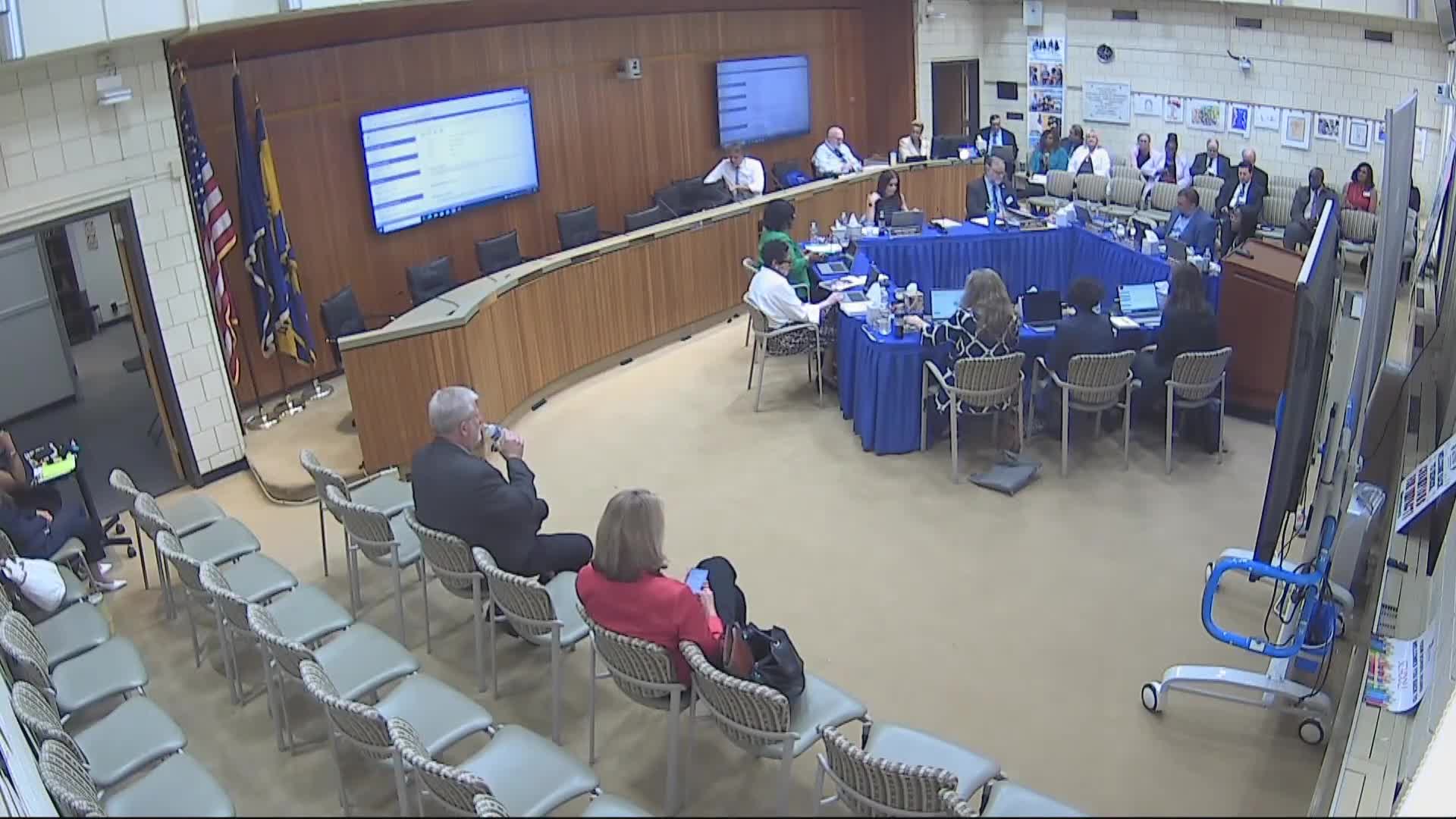
Summary
At a Norfolk Public Schools work session, staff outlined the district's discipline pathway emphasizing restorative practices, data reporting to the state via Synergy and school-level supports including the ACES elementary alternative classroom.
Norfolk Public Schools staff outlined the district's discipline pathway and said they are prioritizing restorative approaches and data-driven decision making during a school board work session.
The update, presented by staff members Miss Plude and Miss Hamlin, described a tiered discipline system aligned with the Virginia Board of Education model guidance and a local code of student conduct. "Our goal is not to suspend students," Plude said, saying the district matches interventions to infractions and seeks proportional responses.
The presentation explained how incidents move through a defined pathway: teacher-managed classroom responses for lower-level behavior; office-managed investigations for repeated or safety-related incidents; and referrals to tribunal for possible long-term suspension or expulsion. Staff said all incidents and the resulting documentation are entered into the district's Synergy student information system and reported to the state.
Why it matters: the board pressed staff on equity, tracking and supports. Board members asked whether teachers can place informal notes in Synergy before a referral, how restorative practices are timed in the pathway, how the district tracks interventions at the school level, and whether demographic data on short-term suspensions are available. Plude and Hamlin said teachers can add notes in Synergy to document building history and that the state reporting fields include interventions used. They also said demographic breakdowns by incident are collected and can be provided to board members in a condensed form.
Key details from staff: the district uses a four-level local coding system. Examples given: level 1'level 2 responses can include detention, restorative practice and loss of privileges; levels 3'level 4 can include in-school suspension (ISS) or out-of-school suspension (OSS) for one to 10 days at the school level and possible referral to tribunal for longer removals. Staff emphasized that when a student with an Individualized Education Program (IEP) or a Section 504 plan is at risk of exceeding 10 cumulative suspension days, a manifestation determination review (MDR) must be held. Plude said the MDR and tribunal materials include statements, video and cumulative-folder information so hearing officers have a full record.
The update described districtwide supports: an administrator's guide and trainings, Multi-Tiered Systems of Support (MTSS) and Positive Behavioral Interventions and Supports (PBIS) as the behavioral backbone, and school wellness teams that include counselors and behavioral specialists. Staff said principals receive periodic reports and may run their own Synergy or PowerSchool queries to identify hotspots by location, time of day or teacher.
Board members pressed on equity and outcomes. Inge asked whether race and English-language learner status were tracked; staff said the demographic fields are in the data set and that they had narrowed the export for board distribution to avoid an unmanageably large file of incident-level rows. Plude said the district encourages principals to sort and analyze for disproportionality by race, special education status and other subgroups.
Elementary alternative supports: staff described ACES, an elementary-level alternative classroom housed at Crossroads for students who face long-term suspensions. Presenters said the ACES program typically serves very few students each year ("less than five," they said) and that principals and program staff prioritize returning students to their home schools when appropriate.
Resources and next steps: staff said they provide ongoing coaching, summer trainings and a regular newsletter (referred to as "Plude's News") for principals and school teams. They told the board they are pressing to make restorative or in-school options more consistently available across schools but cited staffing and budget constraints as limiting factors. The presentation closed with staff offering to provide condensed demographic breakdowns and school-level follow-up reports to the board.
The board did not take formal action during the presentation; the discussion informed later agenda items.