
Alumni recall Bailey Johnson School as community anchor amid Jim Crow and forced displacement
Get AI-powered insights, summaries, and transcripts
Subscribe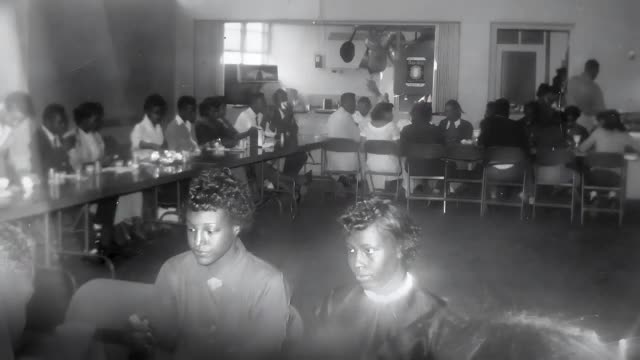
Summary
Former students and community members at an Alpharetta reunion described Bailey Johnson School as a family-centered focal point for North Fulton’s Black communities, recounted segregation-era hardships including the 1912 Forsyth County expulsion, and celebrated the school’s 1965 state basketball title and lasting community ties.
Alpharetta — Former students and community members gathered to honor Bailey Johnson School described the segregated-era school as a “safe haven” and a social and cultural center for North Fulton’s Black communities, while recounting histories of racial violence, restricted opportunity and the mixed consequences of later school integration.
“For 16 short years, there was a magical place. A true community. A safe haven,” Commenter 2, a Bailey Johnson alumna, said during the program. The event collected oral histories about daily life, teaching staff, extracurriculars and the school’s role in uniting residents of Alpharetta, Roswell, Sandy Springs and Duluth.
The accounts sketched why the school mattered to residents who had been forcibly displaced from Forsyth County in 1912 and who later lobbied the Fulton County Board of Education for local schooling. “Finally, in 1949, the Fulton County Board of Education announced … a new county [colored] school will open,” Commenter 2 said, adding that the building was constructed for $100,000 and opened as Alpharetta Colored School in 1950 before being named Bailey Johnson.
Speakers described Bailey Johnson as more than classrooms. Teachers and staff were remembered by name and role: Miss Simmons, Miss Naomi Bush, Maisie Strickland, Coach Hobbs and others were credited with nurturing students and providing academic and extracurricular opportunities. “The teachers were excellent. They were patient,” Commenter 5 said, recalling instruction and mentoring that students said was more personal than experiences after integration.
Panelists also traced the wider legal and social context. Commenters referred to the Emancipation Proclamation and the 1896 Plessy v. Ferguson decision when explaining how Jim Crow-era laws limited Black economic and educational opportunity. Several speakers recounted an 1912 episode in Forsyth County in which Black residents were driven from the county after a lynching and violent threats, describing it as a defining trauma for families who later formed the Bailey Johnson community.
Athletics and social life featured prominently in speakers’ memories. The school’s basketball program, coached by Hobbs, drew large community support; alumni marked the team’s 1965 Class B state championship as a high point. “When Bailey Johnson won the state basketball championship in ’65, there was no city ceremony, parades, or handshakes with the mayor. But 58 years later, in 02/2023, that all changed,” Commenter 2 said, referencing the reunion and recognition event.
Speakers who integrated into nearby white high schools after Bailey Johnson closed described mixed outcomes. Some alumni said integration broadened long-term opportunities; others said early integrations brought social isolation, greater class sizes and less individualized teaching. One alumnus said he went from being an A–B student at Bailey Johnson to feeling invisible and earning lower marks after moving to a white high school.
The event also recalled community institutions that supported students: local churches (Pleasant Hill, Zion, Clear Springs, Saint James), Boy Scouts troop 206, and volunteer fundraising for church and school activities. Panelists described the school building’s current condition as of the film’s production: exterior disrepair and interior use as overflow storage, though alumni said the site continues to hold meaning.
Organizers and participants consistently framed the stories as testimonies to resilience—of parents who lobbied for a school, teachers who commuted long distances to teach, and students who went on to military service and higher education. “It was a safe haven and a place of joy,” Commenter 2 said of Bailey Johnson.
The program concluded with alumni plans to continue reunions and to maintain the school’s memory through events and a recently placed historical marker in downtown Alpharetta commemorating George Hard Bailey’s land contribution for the original school site.
"We are here tonight to honor the 1965 state basketball champion," Commenter 2 said, reflecting both pride in athletic achievement and in the school’s broader community legacy.