Get Full Government Meeting Transcripts, Videos, & Alerts Forever!
Get email alerts on the Transportation Infrastructure topic
No spam. Unsubscribe anytime.
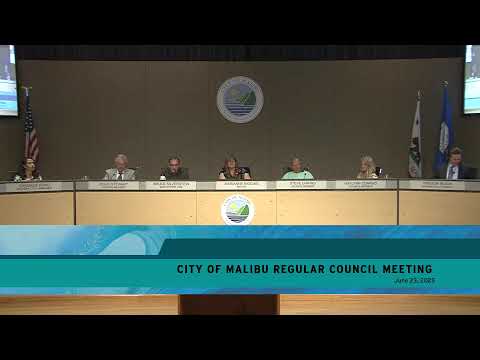
Caltrans outlines multi‑year PCH pavement rehabilitation plan, drawing local pushback on bike lanes, lighting and property impacts
Summary
Caltrans presented a multi‑phase Pacific Coast Highway pavement rehabilitation project on June 23 that includes rubberized asphalt overlays, sidewalk infill, 37 new street lights, and segmented Class 2 bike lanes. Residents and council members sought more data on safety tradeoffs, construction staging and property easements.
Caltrans officials presented a two‑phase pavement rehabilitation project for Pacific Coast Highway in Malibu on June 23, describing a design‑to‑construction schedule that begins with design completion in late 2025 and construction for the first phase in summer 2026. The work is meant to extend pavement life, improve ride quality and add safety elements including new ADA curb ramps, crosswalk enhancements, audible pedestrian signals and segments of striped Class 2 bike lanes.
The presentation said the northern phase would run from just south of Cross Creek to the Ventura County line and the second phase from McClellan Tunnel south to Cross Creek. Caltrans described resurfacing by milling and overlay with a rubberized hot‑mix asphalt and added bicycle detection, guardrail upgrades, quick curbs for channelization and about 37 new street lights in specified locations within the city. The agency proposed about 7.2 miles of northbound and 8.3 miles of southbound segmented Class 2 bike lanes (striping only), and sidewalk infill around selected bus stops and intersections such as Heathercliff, Malibu Canyon/John Tyler and Cross Creek to Webb Way.
Caltrans staff said the work will be done primarily at night to minimize daytime lane closures and that lanes will be reopened outside of active work periods. They estimated each phase as multi‑year: design completion in 2025, construction of Phase 1 in summer 2026 with a target completion around 2029 for the northern portion; Phase 2 design was expected to finish in 2026 with construction in 2027.
Residents and local cyclists pushed back during public comment and the council Q&A. Cyclists and cycling advocates said discontinuous striped bike lanes create a false sense of safety and urged Caltrans to study a fully protected lane on one side of PCH. Several speakers, including Ryan Embry and Scott Dietrich, cited earlier engineering studies that recommended wider vehicle lanes (12–14 feet) and warned of known PCH “choke points” and high‑severity crash history. Scott Dietrich and others urged the city to route the Caltrans presentation through the City’s Public Works Commission and to provide more detailed lane‑width, parking and continuity analysis before design is finalized.
Council members also pressed Caltrans on lighting choices—Malibu is a dark‑sky community—and asked the agency to use the city’s low‑glare fixture standards; Caltrans staff agreed to coordinate with Public Works. Caltrans said the lighting locations were selected where collision histories met Caltrans lighting warrants.
Property impacts were another focus. Caltrans disclosed potential temporary construction easements and drainage easements affecting privately owned parcels and said outreach to affected owners would begin after the meeting. Staff emphasized most easements were temporary construction easements, not permanent fee takes, but acknowledged some segments might require permanent rights to resolve drainage outlets. Caltrans also said some right‑of‑way documentation is missing where private development extended drainage pipes without recorded easements; it will contact owners to “perfect” those drainage rights.
Council members and speakers requested more data and follow‑up: collision histories at intersections that would be retuned to T intersections, a map and specification for the 37 proposed street lights (Kelvin/fixture type), the geotechnical status of PCH in recent burn areas and a timeline for shoring or sea‑protection planning for coastal segments. Several councilors asked Caltrans to return for a more detailed workshop with the Public Works Commission and with a refined cost/impact analysis that includes staging, localized traffic closure timing and clearly mapped easement impacts.
Caltrans officials said they will finalize project approval/environmental documents and continue design; the city will receive additional right‑of‑way notices and Caltrans will coordinate community outreach prior to construction. Council members asked staff to request an additional Caltrans presentation focused on long‑term shoring options for fire‑impacted shoreline segments and on how the agency will ensure consistency with Malibu’s dark‑sky and other local standards.
Ending: Caltrans’ PCH pavement rehabilitation program proposes a mix of pavement preservation, safety upgrades and active‑transportation accommodations, but the council and residents asked for more site‑specific data, design alternatives for protected bicycle facilities, and clearer plans for temporary easements and drainage access before the city allows the project to proceed to final design and construction.