
Planning staff gives ‘Zoning 101’ refresher and reviews recent state changes affecting local land use
Get AI-powered insights, summaries, and transcripts
Subscribe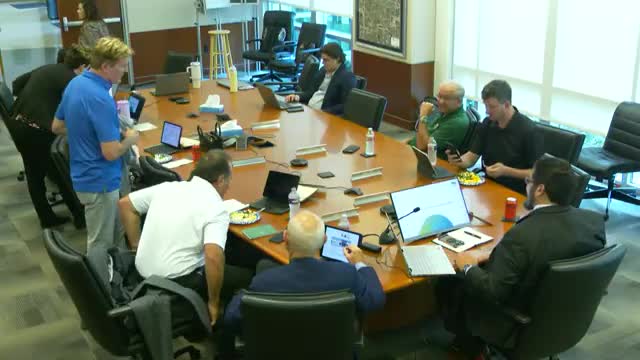
Summary
City planning staff provided a multi-part training covering zoning basics, the future land use plan, subdivision/platting processes, site planning, and several recent state legislative changes that affect local regulation, including changes to notice/protest thresholds and home-based business rules.
At the City of Color Planning and Zoning Commission’s Aug. 26 premeeting briefing planners delivered a Zoning 101 refresher and a summary of recent state legislation that bears on local land-use review.
Planner Yvonne Gonzales led the presentation, describing roles in the development process (applicant, staff, legal, Planning & Zoning Commission as a recommending body and City Council as the decision maker) and the common sequence of land development: zoning -> variances/SUPs -> subdivision/platting -> site plan -> building permits. Gonzales emphasized that the future land use plan (FLUP) is a policy/vision document used for capital planning, impact fees and infrastructure, and that floor/zoning consistency is often desirable so that entitlements, public works planning and the FLUP align.
The training clarified frequently confused terms. Gonzales and staff explained that a specific-use permit (SUP) is a use-by-exception described in the zoning code (a property owner may request it when the code allows that review), while a variance is a numerical or dimensional relief typically heard by a zoning board of adjustment under state criteria. The speakers also discussed differences in bodies that hear variances and inconsistencies in Keller’s UDC that sometimes route variances to different decision bodies.
Staff reviewed subdivision/platting rules (ministerial approvals when code criteria are met), the state’s ‘‘shot clock’’ for plat decisions, and how plats are recorded at the county as the legal lot of record. They also reviewed site planning, planned developments (PD), concept vs. detailed site plans, and the role of engineering and drainage in later stages.
On legislation, staff summarized several recent bills the commission should know about as they affect local review practices: a bill that raises protest thresholds and changes notice requirements for rezonings that increase residential opportunities (staff referenced the new higher protest threshold moving from 20% to 60% within a 200-foot buffer); provisions restricting city regulation of “no-impact” home-based businesses; limits on local moratoriums; and a state-level ratification requiring local zoning to permit HUD-code manufactured homes in residential districts (staff cited a Senate bill and referenced HUD). Staff noted that how a municipality implements or interprets these state changes often depends on legal counsel and local code updates.
Commissioners asked practical questions about SUPs, variances, flag lots, the interaction of FLUP and zoning at the time of a rezoning/PD, and enforcement limitations for home-occupation complaints. Staff said the city has code-amendment work planned (for example, clarifying home-occupation standards) and anticipated a future FLUP update and workshops within five years.
The training concluded with staff offering to circulate slides and a legislative summary to commissioners for reference.