
Council holds public hearing on Everett Transit Development Plan; no council action required
Get AI-powered insights, summaries, and transcripts
Subscribe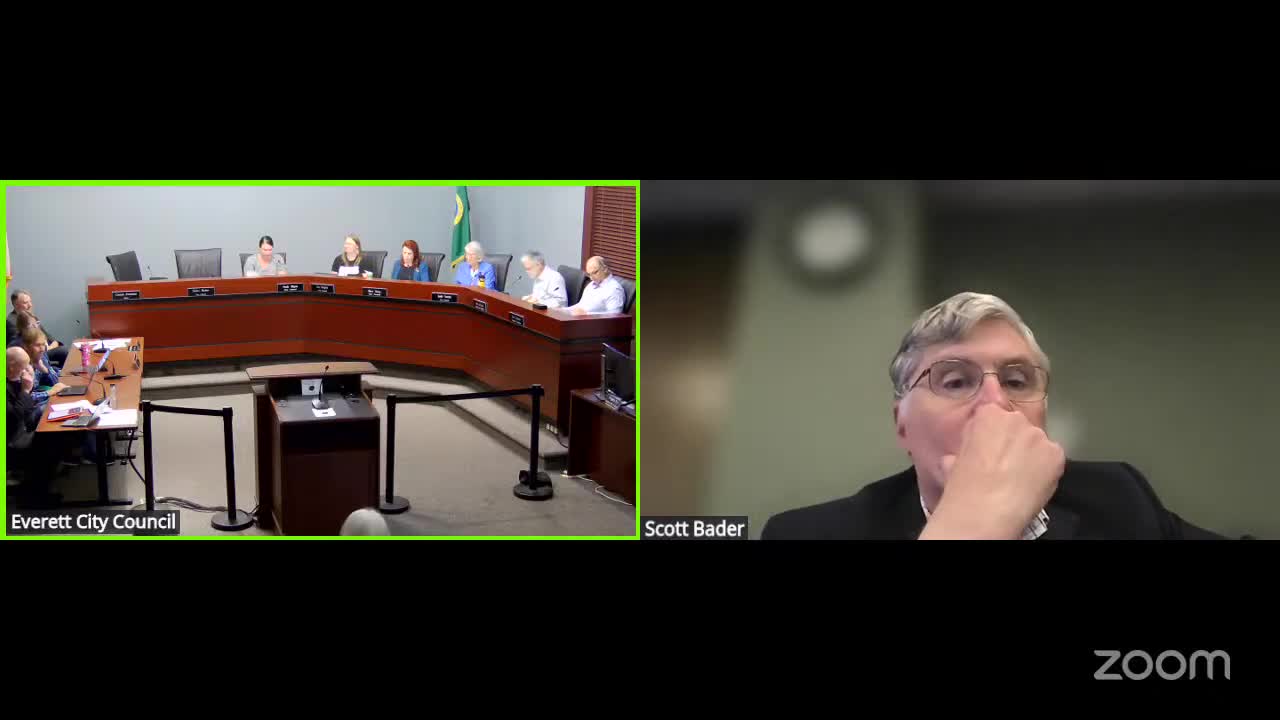
Summary
The Everett City Council held a public hearing Aug. 27 on Everett Transit's Transit Development Plan, a state-mandated annual report and six-year planning document; the hearing was informational and did not require council action.
The Everett City Council held a public hearing Aug. 27 on Everett's Transit Development Plan (TDP), a state-mandated annual report that summarizes the previous year's transit activities and sets a six-year look-ahead. The hearing was informational and did not require a council vote; staff said the plan will be formally submitted to the state on Sept. 1.
Acting Everett Transit staff described ridership growth, fleet work and planned capital projects. The presentation noted three consecutive years of strong fixed-route ridership growth (staff cited repeated 32% year-over-year increases for the agency's fixed-route service during the rebound from the pandemic), progress on fleet electrification, and awards recognizing the agency's performance. Staff said Everett Transit reached 1,000,000 miles of service on battery-electric buses in early 2024 and has introduced R-99 renewable diesel for some vehicles.
Brandon Helby, Everett Transit fares and finance manager, reviewed the agency's financial position. He said federal pandemic-era operating grants helped the agency build reserves intended to smooth future fiscal shocks; the agency also maintains a capital reserve for bus replacement. Helby told the council reserves are projected to decline slowly over the next five years but remain healthier than pre-pandemic levels.
Staff described near-term facility and capital work: relocation and reopening of the mall station to a site about 450 feet west (work expected to conclude in November), installation of 10 inductive charging stalls at the operations base and design work for inductive charging at the Seaway Transit Center and College Station, elevator rehabilitation at Everett Station, HVAC replacement design, security badge upgrades and wayfinding improvements. The plan also includes funding for about $430,000 in grants to add and replace bus shelters over the next two years.
On fleet planning, staff said Everett Transit will cap the battery-electric bus fleet at 24 vehicles under the presented long-range plan. If the agency's total fleet reaches about 48 buses, staff said the remainder would be hybrid diesel-electric buses operating on R-99 renewable diesel to balance zero-emission goals with operational resiliency in extreme conditions. Everett Transit also plans a pilot of two electric paratransit vehicles in 2026 and steady paratransit van replacement from 2026'29.
The briefing addressed safety and operator protections. Staff described existing safety barriers on buses, conflict de-escalation training, a new road supervisor role to support operators in late shifts, radio and emergency-response upgrades, and completion of a federally grant-funded threat-and-vulnerability assessment expected in 2025. Council members asked about incident tracking; staff said the agency reports collisions and injuries to the National Transit Database, which now includes expanded definitions for assaults and operator incidents.
Council members asked several substantive questions during the hearing, including how Move Ahead Washington and youth-fare programs contributed to ridership growth, the agency's shelter- and stop-improvement plans, and how the mall-station relocation will improve accessibility and operations. Staff said public outreach and coordination with Community Transit and regional partners will continue as the long-range plan and service adjustments evolve.
Because this was a public hearing on a plan required by state law, the city will post the final TDP packet on Everett Transit's website and submit the plan to the Washington State Department of Transportation by the Sept. 1 deadline.