
Jury selection begins in Bexar County case accusing Carlos Perez of possessing identifying information
Get AI-powered insights, summaries, and transcripts
Subscribe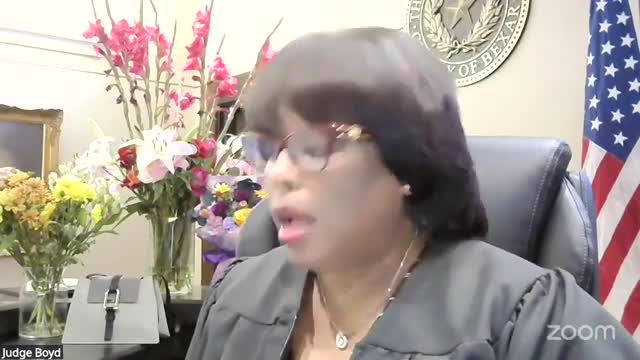
Summary
Judge Stephanie Boyd opened jury selection Sept. 24 in the 187th District Court for State v. Carlos Perez, a case in which prosecutors said Perez is accused of fraudulent use or possession of identifying information of fewer than five items; voir dire covered the elements of the offense, juror biases and scheduling constraints.
Jury selection began Sept. 24 in the 187th District Court in State of Texas v. Carlos Perez, the court announced, with prosecutors telling prospective jurors the charge is fraudulent use or possession of identifying information involving fewer than five items.
The case was called by Judge Stephanie Boyd, who introduced the proceedings and asked the state to identify itself. "This case is the state of Texas versus Carlos Perez," she said as the court introduced the parties. Prosecutors Laura Espinosa and Megan Galloway identified themselves for the record.
Prosecutors told jurors what the charge can include. "The code defines it as information that alone or in conjunction with other information identifies an individual including name, Social Security number, date of birth, government ID number," the prosecutor said during opening explanation of the elements, listing other items that can qualify as identifying information.
In a standard voir dire format the court instructed jurors on legal concepts and questioned them on potential biases. Judge Boyd emphasized that an indictment itself is not evidence: "An indictment is just a piece of paper. That's it," she said, explaining to the panel that the indictment only notifies an accused person of what they must answer in court. The judge and counsel reviewed burdens of proof, the right to remain silent and the difference between fact and circumstantial evidence.
Prospect questionnaires and oral questioning addressed language needs, work and travel constraints and prior experiences with police. The judge explained the parties' agreed procedure for jury selection: the state would have 20 minutes for its initial address and then the defense 20 minutes, followed by questioning and exercise of strikes. Defense attorney Roberto Ambrosino and others asked follow-up questions to panels about prior exposure to issues such as identity theft, checks and police contacts.
Judge Boyd said the trial is expected to proceed this week and estimated the court could conclude the matter "at the earliest, probably Thursday; at the latest, Friday," depending on jury selection and evidence. The defendant made an election that, if found guilty, the court would decide punishment rather than a jury.
The court recessed jurors briefly to complete selection and to call back the panel for final empanelment and instructions.