
Marshall County health board to attend sewer-district meeting amid E. coli concerns
Get AI-powered insights, summaries, and transcripts
Subscribe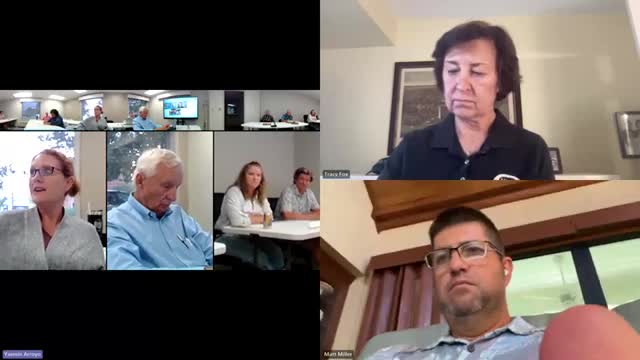
Summary
Marshall County health officials said they will attend a sewer-district meeting the night after the Aug. 19 board meeting to answer questions about failing on-site sewage systems, potential alternatives and contamination in lake areas.
The Marshall County Board of Health said during its Aug. 19 meeting that board members and staff will attend a sewer district meeting the following night to answer questions about failing home sewage systems and lake contamination.
The board emphasized that its role is to define public-health need rather than operate sewage infrastructure. "We do support the addition of a sewer system around the lakes," Dr. Holm, Marshall County health officer, said when asked how the health department would participate. The department plans to be on hand to "answer questions," Faith, interim administrator, told the board.
Why it matters: board members and staff flagged two immediate problems: a high number of nonconforming on-site systems and evidence of human E. coli in lake water samples. Faith told the board she had done preliminary research showing "there's 60 dry wells in this county, which are not approved systems," and that commercially promoted secondary treatment devices would not be suitable for many properties because "you still have to have a soil absorption field" that meets code.
Health department staff and board members said alternatives to a full sewer system exist but have limits. Dr. Holm described so-called aerobic systems as "one of the most expensive types of systems to put in" because they require continuous electricity and ongoing monitoring. He also warned that grant funding has been limited this year and may be contingent on political and interagency agreements: "The biggest concern right now is as long as there is a discord between the regional sewer district and the commissioners, we probably won't get any grant money until that's settled," he said.
Board members noted the county commissioners announced the sewer meeting with little public notice; Faith said the health department learned about the meeting when Commissioner Tim Harmon mentioned it at a council meeting. The county will stream the sewer-district meeting on the county website, staff said.
What’s next: health department staff said they will provide the board's 2019 statement on the need for sewer infrastructure to the group attending the district meeting and answer technical and public-health questions but will not administer a sewer utility. The board recommended that questions about funding, project scope and final engineering go to the sewer district and county commissioners.
Ending: The board scheduled no formal vote on sewer policy during the Aug. 19 meeting; members indicated they will act as technical advisers and provide recommendations where appropriate.