Get Full Government Meeting Transcripts, Videos, & Alerts Forever!
Get email alerts on the Traffic Calming topic
No spam. Unsubscribe anytime.
Hickory council approves first traffic-calming measures for Falling Creek Road after residents’ safety complaints
Summary
After accounts of speeding, knocked-down mailboxes and a past fatality, the council unanimously approved initial speed-reduction pavement markings on Falling Creek Road and directed staff to measure effects and pursue further measures if needed.
The Hickory City Council voted unanimously Aug. 19 to install speed-reduction pavement markings on Falling Creek Road after residents described hazardous speeding and past crashes.
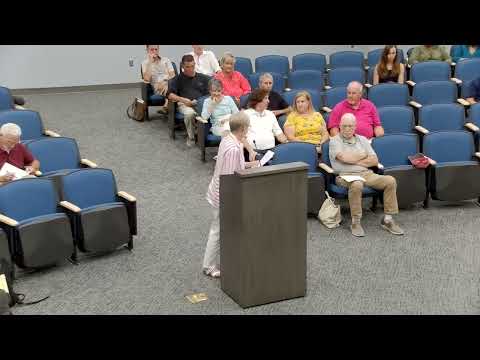
Residents called the road unsafe and asked for physical changes. "People cannot walk along the road without taking their life in their hands," said Dr. Helen Fowler, who lives on Falling Creek Road. Neighbor Neil Hudson said speeders have knocked down mailboxes, damaged driveways and that the road has seen several wrecks.
City Manager Warren Wood and staff told the council the street was originally designed for 45 mph and later reduced to 35 mph; recent counts show about 3,000 vehicles a day and an 85th-percentile speed between 45 and 50 mph in the 35-mph zone. Wood said the city gathered a petition signed by 14 residents, police issued 124 traffic citations over three years in the corridor and staff recommended an incremental approach starting with reflective thermoplastic speed markings placed in both travel lanes.
"These traffic markings ... make the road feel smaller, and it makes the driver uncomfortable to go a certain speed," Wood said, describing the 12-by-18-inch reflective hashes the city would place and the plan to remeasure speeds after installation. Staff also described rumble-strip options to be installed with a future resurfacing and noted that speed tables were not appropriate given the street's role as a fire/EMS run route.
Council members emphasized the city would treat the markings as a first step and continue to evaluate data. One councilmember asked whether approving the initial treatment would prevent residents from pursuing a 4-way stop through the petition process; staff answered it would not. Staff explained a 4-way stop would require a broader, 75% petition from area residents and additional study, and that signalization or major changes can be costly and not always slow corridor speeds.
Council approved the staff recommendation to proceed with speed-reduction markings and directed staff to collect follow-up traffic counts and speed data after installation. Staff estimated striping could be done within weeks of approval; rumble strips would be installed with repaving work scheduled in future years.
The council and staff urged residents to stay in communication and to report ongoing problems so the city can pursue additional measures if the initial treatment does not meet safety goals.