Get Full Government Meeting Transcripts, Videos, & Alerts Forever!
Get email alerts on the Education topic
No spam. Unsubscribe anytime.
Platteville superintendent outlines instructional priorities and explains $800,000 operating referendum to council
Summary
Platteville School District Superintendent Jim Babel presented the district's instructional priorities and explained an $800,000 recurring operating referendum that will appear on the November ballot, describing how the levy and state aid interact and the district's plan for community engagement.
Jim Babel, superintendent of the Platteville School District, briefed the Platteville Common Council on Oct. 22 about the district's instructional framework and an operating referendum voters will decide in November.
Babel said the district's work centers on two long-standing "big rocks": a professional learning community model that emphasizes collaboration, results and high-quality instruction, and a district-developed "You Belong" statement intended to guide decisions and recruitment. "Everything has to tie back to high levels of instruction," Babel said.
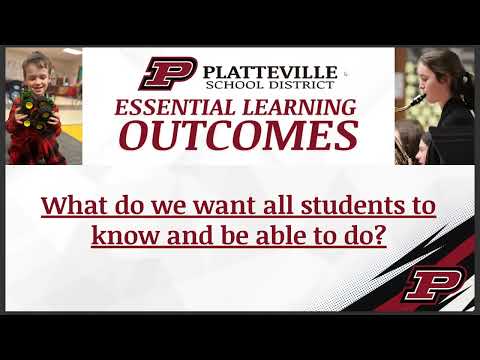
The presentation included the district's approach to curriculum and assessment: defining essential learning outcomes by grade and subject, using common formative assessments, tiered interventions (classroom instruction as Tier 1, small-group Tier 2 supports, and more intensive Tier 3 interventions) and expansion opportunities such as dual-enrollment partnerships with UW-Platteville and Southwest Technical College. "We're guaranteeing that every kid gets at least a year," Babel said of student growth expectations.
On finance, Babel described the operating referendum question the district will ask voters: a recurring $800,000 request (he repeated the figure as "800,000, 800,000, 800,000" in explaining the recurring nature). He said that because state aid and the revenue limit rules interact, the district's total levy in the referendum scenario would differ from a no-referendum scenario. He cited last year's total levy of $9,583,899 and said the district's proposed levies for the coming year are shown in the annual meeting packet. "In the state funding formula, if your community wants more than that state revenue limit, you have to ask the community," he said.
Babel outlined the district's community engagement plan, including an annual meeting with a budget hearing and a community conversation event at the high school the following week, where staff and board members will sit at tables to answer questions. He said the packet materials and levy numbers are posted on the district's BoardDocs site.
The council asked no follow-up substantive questions at the meeting.
Why it matters: The operating referendum would add recurring revenue only if approved by voters; Babel framed it as a way to increase the revenue limit through local voter approval so state aid can supplement overall funding. The presentation also provided local context on how the district measures instruction and student progress.