Get Full Government Meeting Transcripts, Videos, & Alerts Forever!
Get email alerts on the Mount St Helens Sediment topic
No spam. Unsubscribe anytime.
Experts urge broader federal‑state‑local plan after Mount St. Helens workshop on sediment retention
Summary
At a County‑hosted Mount St. Helens workshop, scientists, state fish managers and elected officials reviewed results from engineered log‑jam pilot projects upstream of the Corps’ Sediment Retention Structure (SRS) and discussed downstream erosion and levee protection. Presenters said wood structures and beaver colonization have increase
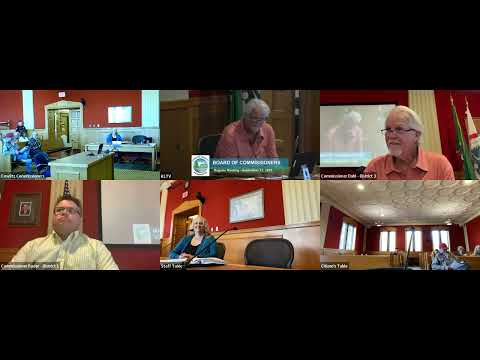
Scientists, state fish managers and elected officials used a public workshop hosted during the Cowlitz County commissioners’ meeting to press for coordinated federal, state and local action on sediment coming off the Mount St. Helens debris avalanche and its effects on the Sediment Retention Structure (SRS) and downstream levees.
Colin Thorne, a river-science researcher and resident, summarized a decade-plus pilot program that installed large engineered log jams (ELJs) and other grade-building structures upstream of the SRS. Thorne said the pilot structures helped roughen the sediment plane, encourage vegetation and beaver re-colonization, and raise the plant’s trap efficiency after previous declines. “The ELJ’s are building great through vegetation and deposition, and phase 2 is underway,” Thorne said during his presentation.
Department of Fish and Wildlife staffman Dave Howe told the meeting the agency shares long-standing concerns about how backed-up sediment and raised water levels affect fish and wildlife, and said the Tootle–Spirit Lake collaborative convenes tribes, state and federal agencies to weigh tradeoffs. “Our agency is on and has been on record for many years, sharing our concerns about how backed up sediment and water does have an impact on fish and wildlife,” Howe said.
Several speakers, including local residents and county officials, pushed commissioners to press Congress and the U.S. Army Corps of Engineers for a coordinated action plan that covers upstream capture, bank stabilization between the SRS and the lower Cowlitz, and targeted dredging or spoils management downstream. Panel discussion at the workshop noted the SRS’s trap efficiency has changed over time: early decades showed high trap efficiency, later runs dropped as low as the mid-teens in years reported to the board, and that a 2012 spillway raise temporarily restored higher trap performance.
Attendees discussed technical limits on future spillway raises. Participants at the meeting said recent Corps analyses identify seismic constraints that limit the number of safe future raises for the SRS; speakers at the workshop said two further raises remain possible under those constraints and that engineers have discussed a potential 10-foot raise (a figure of about $56 million was mentioned during discussion). The workshop presenters and several public commenters emphasized those raises are not a long-term, stand-alone fix and that additional measures — including ELJs, bank stabilization and reduced upland erosion — are needed to reduce material reaching the lower river.
Public commenters raised ecology and infrastructure concerns. Ecopark Resort owner Mark Smith and longtime resident Bruce Barnes pressed for upstream ‘catcher’ measures and faster action to protect downstream habitat, private property and municipal infrastructure. Several speakers said the sediment is already degrading levee-levels of protection (LOP) at communities including Castle Rock and Lexington and causing costly riverbank erosion that threatens private property, trails and wastewater infrastructure.
County officials and state legislators at the meeting urged a coordinated lobbying strategy. State Sen. Jeff Wilson and county leaders said they aim to compile shared priorities and formal requests to federal delegations and the Army Corps. County staffers described convening the collaborative as the forum to coordinate agency positions and requested participants endorse a unified approach to authorization and funding decisions.
No formal county action or vote occurred at the workshop; commissioners and staff said they would pursue follow-up briefings with Corps personnel and continue to press elected representatives for authorization and appropriations to address both upstream and downstream needs.