Get Full Government Meeting Transcripts, Videos, & Alerts Forever!
Get email alerts on the Fort Idaho Conveyance topic
No spam. Unsubscribe anytime.
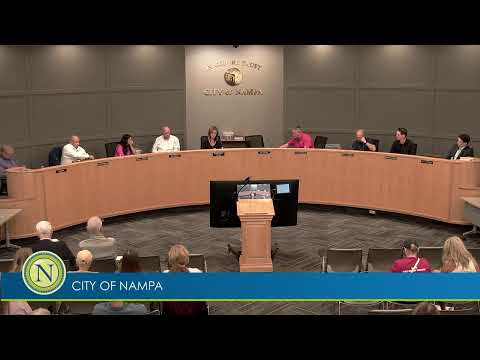
Nampa town hall hears divided public on possible conveyance of Fort Idaho Center to College of Western Idaho
Summary
At a tense town hall, city leaders reviewed legal authority to convey the Fort Idaho Center, answered questions about $25 million in estimated deferred maintenance and a possible levy override, and heard strong public concerns about preserving the Snake River Stampede and the horse park.
Nampa elected leaders and residents spent a packed town-hall session debating whether the city should transfer ownership of the Fort Idaho Center to the College of Western Idaho, with legal counsel, a neutral facilitator and civic groups answering questions about authority, costs and protections for long-running events.
The meeting focused on three practical questions: whether the city may legally convey the property; how much deferred maintenance and other costs the venue needs; and whether the council should put a levy override before voters to keep the asset under city ownership.
The issue matters because the Fort Idaho Center hosts long-standing events that officials said bring economic and cultural activity to Nampa. At the same time, city officials say maintenance and capital needs exceed available routine revenue and have proposed considering a transfer or other funding options to avoid a larger tax burden.
Mayor Kling opened the meeting by stressing that "the decision has not been made" and that the town hall is part of a public, phased process to gather input. Shannon McGuire, an independent facilitator hired by the city, summarized community workshops and public comments that showed mixed views: many respondents called the center a "treasure" and urged preservation of rodeo and equine events, while others opposed any conveyance and some favored selling the land.
City legal counsel Preston reviewed Idaho law and relevant court rulings, telling the audience that municipal authority to convey real property is granted by the Idaho Constitution and state statutes. "The legislature has empowered the city," he said, citing Idaho Code provisions and a recent Idaho Supreme Court decision. Preston described the court's treatment of municipal property conveyance as giving "sweeping authority" and broad discretion to local elected officials, but he also outlined procedural steps the council must follow if it chooses to convey—public declaration of intent, a noticed public hearing, adoption of an ordinance with required findings, then execution of the conveyance.
Cost and funding questions dominated public comment. College of Western Idaho officials and their supporters said CWI could expand educational use and access while preserving events; CWI's president, Gordon Jones, told the meeting the college would not intend to change the center's existing uses and said the school could pursue donors and partners to help with capital needs. Mike Pena, president of CWI's foundation board, said CWI would pursue outside fundraising and partnerships to help stabilize the site.
CWI has submitted an independent estimate for deferred maintenance that the college and some city staff summarized as roughly $25 million. Several residents, elected officials and consultants disputed the size and scope of that estimate and urged more detailed, itemized cost work. Finance staff described a fund-balance (operating cushion) that was about $5.0 million at one point and said it had been drawn down to roughly $3.6 million; presenters warned that available cash is reserved to keep operations running year to year.
Councilman Haverfield and others suggested alternate revenue ideas, including a proposed three-acre land lease along Idaho Center Boulevard that council members estimated could generate roughly $400,000–$600,000 a year if developed. Other commenters urged careful limits on any conveyance—such as deed restrictions guaranteeing the Snake River Stampede and horse-park events—if the city transfers ownership.
Representatives of the horse park and the Snake River Stampede argued strongly against any sale that would remove city protections. "The Fort Idaho is the official and forever home of the Snake River Stampede," said Clint Child, president of the rodeo's board, while horse-park advocates and the Idaho Horse Park Foundation urged written guarantees for continued use and a binding plan for maintenance and access for local groups.
Speakers also clarified how the Auditorium District can be used: board members said district funds can help pay for improvements but are governed by restrictions and are not an automatic source for deferred maintenance. Multiple attendees urged more and earlier public engagement and better detail on appraisals, maintenance line items and precise levy impacts.
The council did not vote on any conveyance tonight. Mayor Kling said a levy-override item would appear on the council agenda for the next meeting (a date the mayor said is the eighteenth on the calendar) and that staff would publish more specific levy projections later in the week. City counsel and the college both said they would continue negotiating and answering follow-up questions; Preston repeated that any conveyance would still require the public procedural steps spelled out in Idaho Code and court precedents.
"This is a process," Mayor Kling said. "We're in the public phase right now of putting it before the public and getting feedback." The town hall concluded with a pledge from council members to publish more financial details, and multiple speakers urged continued public meetings so residents can suggest alternatives to both a conveyance and a tax increase.