Get Full Government Meeting Transcripts, Videos, & Alerts Forever!
Get email alerts on the Land Use topic
No spam. Unsubscribe anytime.
Council reviews alley vacation at 373 W. American Ave.; developer offering easement along planned Orange Line
Summary
Salt Lake City staff and a development applicant briefed council on a proposal to vacate a city alley at 373 West American Avenue in exchange for a pedestrian easement that aligns with the planned Orange Line; staff said appraisal indicates an equal-value exchange and five adjacent owners support the request.
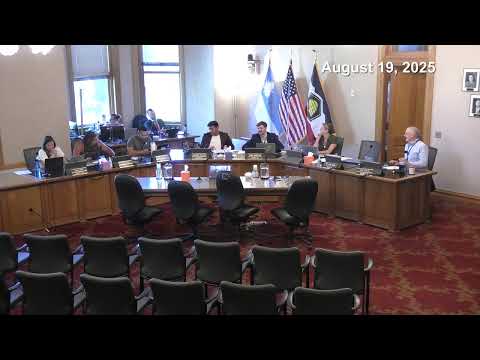
Salt Lake City Council members received an update on Aug. 19 on a developer-led request to close and vacate a city-owned alley at approximately 373 West American Avenue to facilitate redevelopment of an adjacent parcel. Planning staff and the applicant said the proposal would exchange the vacated alley (about 1,417 square feet) for a 2,227-square-foot pedestrian easement along the east edge of the site; both the alley and the easement were appraised at $65,000.
Megan Booth, principal planner, said all five adjacent property owners support the vacation and that the city currently retains the alley in public ownership pending council action because of a 2022 quiet-title claim. Booth described the swap as consistent with the city’s station-area goals for the future Orange Line and said the easement would improve the site’s development potential while aligning with community connectivity objectives.
Council discussion focused on activation of the east-facing corridor that would front the proposed Orange Line. Council members expressed support for the exchange but sought guarantees that the future pedestrian corridor be activated rather than become a blank service edge. Council member Romano asked whether the existing single-family house on the front parcel would be preserved; planning staff said the MU11 rezoning and related code do not require design treatments along the tracks and that any preservation or activation requirements would need to be written into a development agreement.
Applicant Justin Earl told the council the development team’s current concepts do activate the eastern frontage and that they intend to beautify and program that edge once the alley swap is resolved. Planning staff and the applicant agreed to work on draft development-agreement language that would require activation (for example, requiring ground-floor uses or design elements facing the easement) and to return with that language to the council for review.
Staff noted a recommended condition from the city attorney that would delay final ordinance effectiveness to allow time to finalize the transaction and related easement documents. Booth also said that the property is slated for rezoning to MU11 and that trails and pedestrian connections tied to the Orange Line would be developed as part of that larger project’s implementation. No vote was taken during the briefing; the planning commission previously recommended approval with conditions, and staff said the council would receive refined language ahead of a future action date.
Ending: council members instructed staff to work with the applicant on development-agreement language to require activation along the Orange Line easement before finalizing the alley vacation approval.