Get Full Government Meeting Transcripts, Videos, & Alerts Forever!
Get email alerts on the Transportation topic
No spam. Unsubscribe anytime.
Wasatch Front study outlines multimodal projects for Power District; council raises stadium, equity and connectivity concerns
Summary
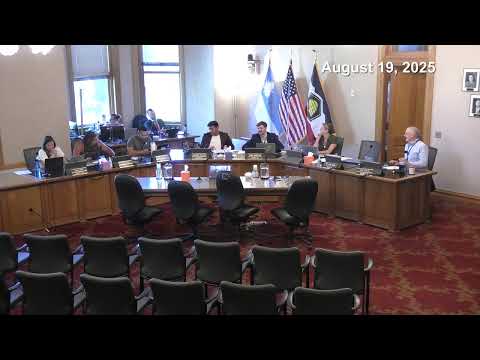
A regional transportation study presented to the Salt Lake City Council on Aug. 19 laid out two dozen projects to improve walking, biking, driving and transit access to the Power District, including new bridges, a 200 South undercrossing and a proposed mobility hub; council members praised the scope but raised concerns about assumptions tied to a possible stadium and asked for coordination with a broader East–West study.
A regional transportation study presented to the Salt Lake City Council on Aug. 19 laid out two dozen projects to improve walking, biking, driving and transit access to the Power District along North Temple, including new street connections, a Navajo Street bridge over railroad tracks, extensions of South Temple, a proposed grade-separated undercrossing at 200 South near Salt Lake Central and a mobility hub east of Redwood Road. Ted Dalton, planning manager at the Wasatch Front Regional Council, said the work is intended to inform future project decisions; the council was briefed but was not asked to take action.
The study, led by the Wasatch Front Regional Council with participation from Salt Lake City, UDOT, UTA, the Larry H. Miller Company and State Fairpark, maps projects within about a one-mile radius of the Power District and categorizes them as roadway connectivity, interstate interchange access, UTA operations/infrastructure and active-transportation and Jordan River Trail work. Consultant Brent Crowther described an illustrative list of priority projects, including a Navajo Street extension with a new bridge structure over Union Pacific and Patriot Rail corridors to connect Second South directly into the district, South Temple extensions linking into Tenth West and Orange Street, a 200 South undercrossing to allow reliable bus access to Salt Lake Central, and facilities for UTA staging and a mobility hub adjacent to the Power District.
Why it matters: council members said the plan provides detailed options that could reduce vehicle widening needs while improving pedestrian and bicycle connectivity, but they pushed back on several assumptions and urged broader coordination. “I’m concerned that, first of all, it’s based on an assumption that we get a baseball team,” Council member Dugan said during questions. “I’m not sure what the assumption is on some of these projects…is it a 30,000 per for 86 home games, or is it 7,000 for home state games?”
Council members questioned which projects are justified independent of private development and raised specific implementation concerns. Dugan flagged a steep roughly 8–9% grade for the proposed 200 South underpass and warned that “people are gonna run across the railroad tracks” rather than use an arduous crossing. Councilwoman Guilpreetra asked the study team for existing transit use rates in the area and noted the plan’s event scenarios included assumptions of up to 20% event transit mode share based on analysis by the Miller team; the consultant said the figure came from a separate traffic analysis prepared for the developer.
Other council members pressed for integration with the broader West–East connections study, which some described as a larger, federally funded effort. Dalton and Brent said the Power District study is a technical plan intended to feed recommendations into broader efforts, and noted Brent Crowther is also the project manager for the West–East study, which will allow recommendations to be vetted alongside community engagement. Several council members and staff emphasized projects will require additional funding and interagency coordination; Dalton said much of the study’s funding came from a state appropriation and that implementation will depend on agencies taking “their piece” forward and seeking funding.
Project specifics and uncertainties: the Navajo Street link would require a new bridge to cross active rail corridors and accommodate heavy transit, sidewalks and bicycle facilities. The 200 South proposal sketches a sub-rail vehicle undercrossing with about a 9% grade that would allow buses to avoid at-grade rail delays; consultants said the alignment is tight and will need further engineering and coordination with UTA and the city. The mobility hub concept has been developed with Larry H. Miller’s team and Salt Lake City staff and could be split from bus layover and operator facilities to better integrate passenger amenities with operations.
What comes next: the final report was described as nearly complete and expected to be distributed within about a week of the briefing. Council members asked staff to ensure project recommendations are coordinated with the West–East study and with neighborhood engagement processes before advance to design or funding requests. Dalton said the study is intended as a platform to move projects into each partner agency’s planning and funding cycles.
Council reactions and next steps: several members urged that the study’s event-driven assumptions be made explicit and that neighborhood impacts be assessed as projects move from conceptual study to design and funding. The presentation underscored a range of multimodal projects seen as beneficial whether or not a stadium is built, but the council requested clearer assumptions, more community engagement and explicit coordination with regional plans before committing city resources.
Ending: the report will be circulated to council staff and stakeholders, with project-level follow-up and funding steps to be advanced by Salt Lake City, WFRC, UTA, UDOT and private partners as appropriate.