Get Full Government Meeting Transcripts, Videos, & Alerts Forever!
Get email alerts on the Public Safety topic
No spam. Unsubscribe anytime.
City attorney advances draft to ban new canine hybrids, register existing animals as "dangerous"
Summary
City staff circulated a draft ordinance to bar new wolf/coyote hybrid (canine hybrid) ownership in Roanoke and to require owners of existing hybrids to register, obtain heightened licensing and meet containment standards; staff said registered animals would be treated like dangerous dogs and could be destroyed if they cause harm.
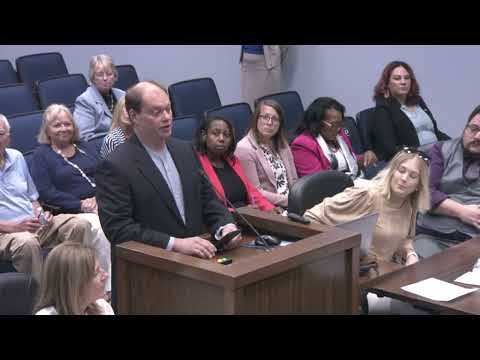
Roanoke’s city attorney presented a draft ordinance Wednesday that would prohibit new canine hybrids in the city and require existing hybrids to be registered, licensed and contained under rules similar to the city’s dangerous‑dog process.
City Attorney David Spencer said the draft focuses specifically on canine hybrids — commonly described in the briefing as wolf and coyote hybrids — and does not attempt to regulate all exotic animals. Spencer told council the draft follows models used in other Virginia localities and offers a “grandfathering” pathway for hybrids already in the city, subject to registration and stricter oversight.
Under the draft, existing hybrid animals would be registered with the city, inspected and treated under the same heightened rules as dangerous dogs. Spencer said those animals would not receive what he characterized as the usual ‘‘free‑bite’’ tolerance: if an animal attacks another animal or a person, city enforcement could treat it as a dangerous dog with the penalties and disposition that follow. “These are types of animals that will not get a free bite,” Spencer said.
Spencer said the draft includes standards for housing and containment and that staff will work with animal control, the Commonwealth’s Attorney and the treasurer’s office to finalize inspection, registration and fee details. He said some specifics — including whether certain hybrids can receive rabies vaccination certificates and how insurance or registration fees should mirror state dangerous‑dog registrations — remain under development with staff.
Council members raised related enforcement concerns beyond the ordinance language. Several councilmembers asked whether a separate business‑license or zoning review should be used to address complaints that a residence may be operating an animal‑related business in a residential zone; Spencer and staff said that is a separate issue to be handled through zoning and business‑license enforcement and that city staff would coordinate across departments.
Council members urged residents to document incidents with 911 calls so police and code officials have contemporaneous records; staff said the ordinance will return to council for possible adoption after additional review and coordination with enforcement offices. Spencer said the goal is to present a finalized ordinance on the council agenda on Aug. 18 if the staff review is complete; otherwise it would return Sept. 2.