Get Full Government Meeting Transcripts, Videos, & Alerts Forever!
Get email alerts on the Economic Development topic
No spam. Unsubscribe anytime.
Roanoke EDA outlines new grants, loan programs and an equipment incentive that moved fast
Summary
The Roanoke Economic Development Authority told City Council it used conduit-bond revenue and other EDA funds to back grants, a disaster-recovery pool and a fast-moving equipment incentive; staff said one new program’s $200,000 allocation was fully committed in six days and the EDA increased funding to $250,000 for the current year.
Roanoke’s Economic Development Authority summarized a year of activity to City Council on Wednesday, highlighting conduit bonds, performance agreements and several new grant and loan programs that EDA staff said are already producing downtown and neighborhood investment.
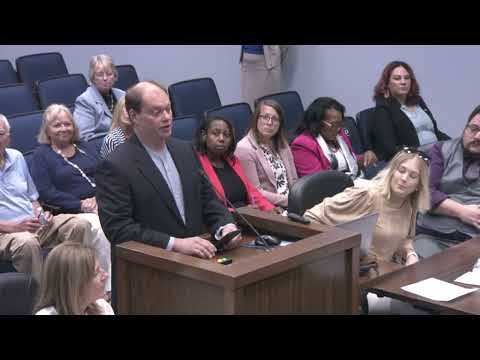
The presentation, delivered by Alisa Cundiff, the city’s economic development specialist and EDA staff liaison, described how conduit (private activity) bonds and administrative fees help fund the EDA’s discretionary grants and incentives, and outlined several recently created programs and awards.
Cundiff told council the EDA used conduit-bond transactions as a revenue source and that those revenues support the EDA’s incentives and grants. She described a new Business Equipment Incentive Program that launched with $200,000 and was fully committed in six days; the EDA increased the program to $250,000 and added separate funding categories for manufacturing/industrial and commercial/retail applicants to expand eligibility for small restaurants and retail businesses. “The money was fully committed in just 6 days,” Cundiff said, noting the program requires recipients to have payroll and tax compliance and offered a 50/50 match up to $20,000.
The EDA also reported these actions and programs this fiscal year:
- A $80,000 commitment to the Downtown Roanoke Ambassador Program for beautification and hospitality services. - A $100,000 commitment, delivered over five years, to RAMP (the Regional Accelerator and Mentoring Program) through the Roanoke–Blacksburg Innovation Alliance to support startup growth and mentoring. - A new Disaster Recovery and Resilience Fund funded at $100,000 with a $10,000 maximum award per business to help firms recovering from natural or man-made disasters. - Administration of state and local programs including the Enterprise Zone incentives and façade grants; the EDA said last fiscal year it paid $151,870.87 across seven façade awards that leveraged about $1,015,835.64 in private investment. - A $1 million low-interest loan award from the state Industrial Revitalization Fund to Foundry Realty, LLC for the former Walker Foundry site; staff said the state program had $4.5 million total program funding and the city’s EDA received its full $1 million request.
Cundiff and board members also described active performance agreements the EDA manages, including the Bauer (90 units), the Bridges (redeveloped Brownfield, restaurants and apartments) and Riverdale, which staff described as a $60 million Phase 1 investment with $10 million in local contribution and plans for approximately 375 apartments and commercial space. The EDA noted one performance agreement allowed it to invest funds while benchmarks awaited completion and to retain interest earned on those investments for community grants.
Board members told council they are exploring a revolving loan fund, venture-capital supports for startups, and additional state loans that could be re-loaned locally if the EDA administers them. Staff said the innovation incubator at the innovation corridor is on schedule and on budget, with an anticipated opening late this year or in early 2026, and that the EDA’s equipment grants have supported early-stage companies that located lab space within the city.
The EDA asked council to consider future budget support to continue enterprise-zone programs; staff said EDA discretionary funds bridged recent gaps but long-term city funding remains the usual source for enterprise-zone local incentives.
Council members asked about investment vehicles for EDA funds and about a separate housing trust fund the EDA previously funded. Cundiff said EDA funds were invested with Rockefeller Capital Management’s John Lewis Group rather than the VML Vaco investment pool, and she clarified that EDA‑provided funds for the workforce housing trust fund were routed to TAP, the program manager.
The EDA presentation closed with an invitation for council members to attend monthly EDA meetings and upcoming site tours, including Riverdale and the Foundry project.
Cundiff and Braxton Knapp, chair of the EDA, provided the overview and answered council questions. The board’s materials show discrete program budgets and recipients; the EDA said it will supply the presentation slides and an annotated list of awards to council.