Get Full Government Meeting Transcripts, Videos, & Alerts Forever!
Get email alerts on the Food As Medicine topic
No spam. Unsubscribe anytime.
Ways and Means hearing spotlights 'food as medicine' and policy levers to curb chronic disease
Summary
A House Ways and Means hearing convened health experts who argued that poor diet and ultra-processed foods are primary drivers of chronic disease and urged policy changes — including medically tailored meals, Medicare demonstrations, research funding, SNAP reforms and nutrition education — to prevent and treat illness and lower health spending.
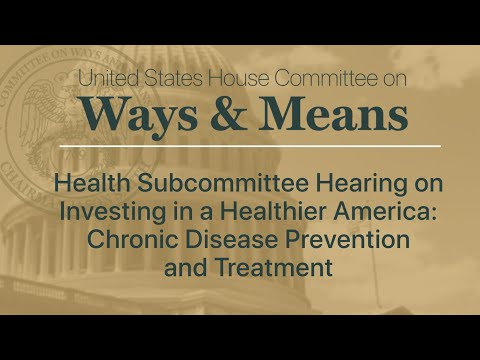
The House Ways and Means Committee's Subcommittee on Health convened a panel of physicians, researchers and plan executives to examine chronic disease prevention and treatment and to urge federal policy changes that would expand use of nutrition-based interventions.
Senator Bill Frist, a physician and former U.S. Senate majority leader, and physicians Mark Hyman, Anne Peters, Francesca Rinaldo and Ashley Gerhardt told the committee that diet — especially the rise of ultra-processed foods — is a leading, modifiable driver of obesity, diabetes, cardiovascular disease and other chronic conditions. "Nutritious foods are now recognized as being fundamental to prevention of disease," Frist said in his opening remarks. Several witnesses summarized evidence and pilot programs they said show that food-based interventions can prevent disease, improve clinical outcomes and reduce costs.
The witnesses described several policy approaches that they said merit congressional attention. Dr. Mark Hyman, who leads the Food Fix campaign, told the subcommittee that "food is medicine" and urged expanding demonstrations and reimbursement for medically tailored meals, produce-prescription programs, nutrition counseling and group-based lifestyle programs. Hyman cited research estimating that about 6,000,000 Americans qualify for medically tailored meals and that providing such meals could save roughly $14,000,000,000 annually, and he urged Congress to use demonstration authorities to test broader Medicare coverage for these services.
Dr. Anne Peters, a professor of clinical medicine at the University of Southern California, stressed inequities in access and the limited time and tools available to primary care clinicians: "Most primary care providers don't have the time or tools to help people achieve sustained lifestyle change." Peters and other witnesses urged aligning payment incentives toward prevention and value-based care so clinicians and plans have sustained incentives to deliver nutrition and prevention services.
Dr. Francesca Rinaldo, chief clinical innovation officer of SCAN Health Plan, described how Medicare Advantage plans use supplemental benefits to provide targeted nutrition services. Rinaldo said SCAN delivered about 41,000 meals per month in 2023 through a mix of post-acute and chronic-condition meal programs and recommended expanding eligibility for special supplemental benefits so more vulnerable beneficiaries could receive food and related supports.
Dr. Ashley Gerhardt, a clinical psychologist who studies food addiction, described research linking ultra-processed foods to addictive-like responses in the brain and said that products engineered for palatability resemble addictive substances. "Research shows that sugar, fat, and ultra processed foods can activate the brain's reward system at similar magnitudes as nicotine and ethanol," she told the committee, and she listed policy options modeled on tobacco control — taxes, front-of-pack warning labels, restricting marketing to children and tighter rules for school meals.
Committee members pressed witnesses on concrete levers: expanding Medicare demonstrations (including the medically tailored meals demonstration included in recent legislation), increasing NIH investment in nutrition research (witnesses noted NIH spending on nutrition is a small fraction of overall research funding), reforming SNAP to prioritize nutritional security as well as caloric access, sustaining telehealth flexibilities for chronic care management, and improving follow-up and care navigation after early diagnostic testing.
Witnesses and members emphasized the scale of the problem and the potential fiscal impact. Testimony cited that roughly 42 percent of U.S. adults have two or more chronic diseases and that poor nutrition drives large portions of the country's disease burden and health spending. Several witnesses framed the issue as both a public-health and national-security concern because poor nutrition affects workforce and military readiness.
The hearing recorded no formal votes. Members were given two weeks to submit written questions for the record; the chairman closed the hearing after questions and answers.
The committee's discussion pointed to a collection of near-term policy options for lawmakers: fund and expand demonstrations that reimburse medically tailored meals and nutrition services in Medicare; increase federal support for nutrition research; consider SNAP modifications that incentivize purchase of nutrient-dense foods; adopt targeted marketing restrictions and labeling to reduce children's exposure to ultra-processed products; and support telehealth and remote-monitoring tools to help clinicians manage chronic conditions.
Members and witnesses repeatedly differentiated discussion (options and evidence), direction (requests to consider pilots or legislation) and formal action (no votes were taken at the hearing). The hearing transcript and submitted testimony will be part of the formal record for any follow-up policy work.