
Planning commission hears wide public input and staff options on short‑term rentals; no action taken
Get AI-powered insights, summaries, and transcripts
Subscribe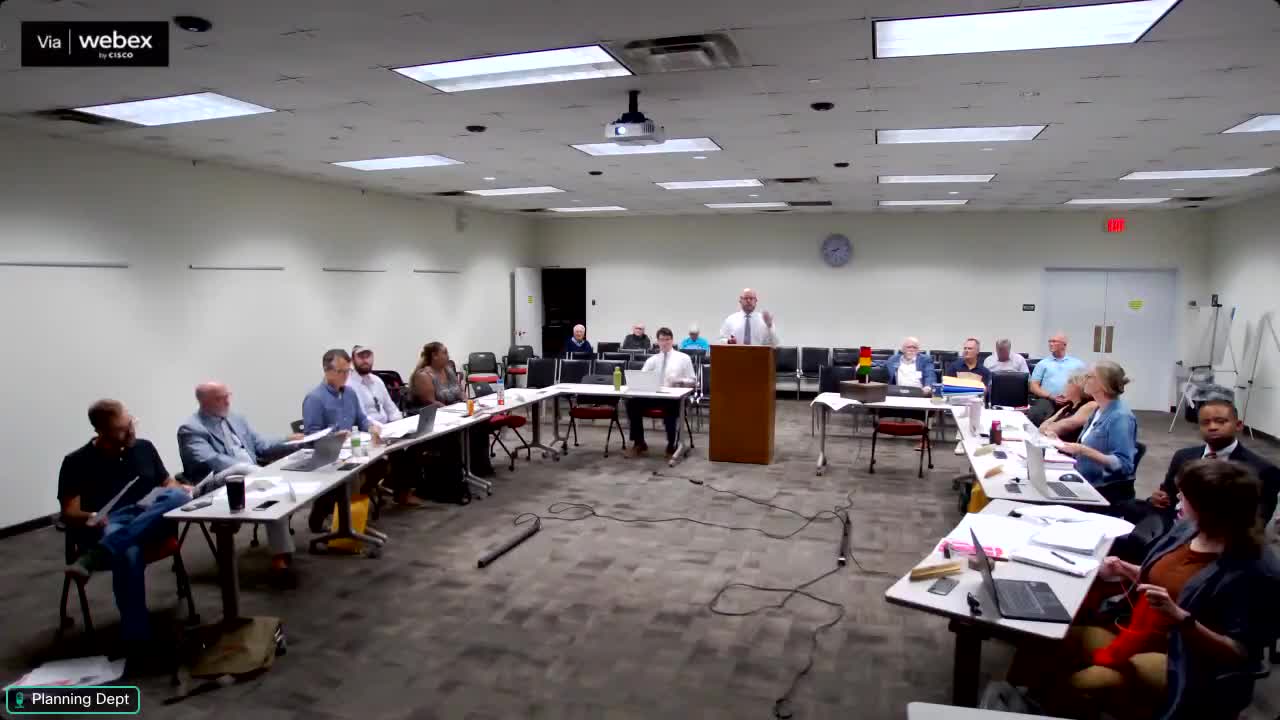
Summary
The planning commission heard hours of public comment on short‑term rentals, discussed extending the 24‑month sunset for legal nonconforming STRs and asked staff to return with further analysis on licensing, enforcement and potential by‑right allowances for some multifamily properties.
The planning commission held an extended discussion and public comment period Thursday on short‑term rentals (STRs), focused on five issues: the 24‑month sunset for legal nonconforming STRs, a proposed relief‑valve calculation for investment‑backed expectations, the idea of a licensing program, enforcement tools and special‑use or by‑right treatment for commercial STRs.
Staff reminded the commission that the STR ordinance adopted earlier established a 24‑month sunset for properties that were operating but not permitted (legal nonconforming STRs). That sunset period began March 1, 2025. Some commissioners and commenters urged extending or eliminating the sunset, while staff noted legal advice: a longer sunset reduces the risk of successful regulatory‑taking claims. Staff also described a “relief valve” methodology in the code that would allow property‑specific calculations of investment‑backed expectations; commissioners and many public speakers described that approach as complex and burdensome.
Several community and industry speakers urged eliminating the sunset clause or extending it substantially. Joey Tucker of the Athens Area Association of Realtors said STRs “bring visitors who spend local money” and argued against the sunset; other speakers from the real‑estate community echoed that point and warned against creating an onerous registry. Supporters also emphasized tourists, events and economic benefits.
Other public commenters and several commissioners emphasized neighborhood impacts — noise, parking, trash and safety — and asked for stronger enforcement tools and clearer mechanisms to remove repeat problem operators. Several commissioners and staff said licensing — a formal local permit or license for STR operators — was a promising area to study because licensing could create enforceable conditions and a revocation path for chronic violations; staff noted licensing sits outside the zoning title and would require separate code language and legal review.
On special‑use treatment, staff presented options that would allow some by‑right STR activity in undivided multifamily developments up to a threshold (discussion suggested 10% of units), a higher percentage subject to added public benefit (for example, a 1:1 inclusionary unit offset), and thresholds (for example 25%) above which the use would not be permitted. Commissioners asked staff to analyze administrability and fairness of such approaches.
No formal action was taken; staff said it will return with additional analysis, including modeling on sunset durations and a licensing feasibility review.