
Board reduces valuation on Hodge remnant after county labels it unbuildable
Get AI-powered insights, summaries, and transcripts
Subscribe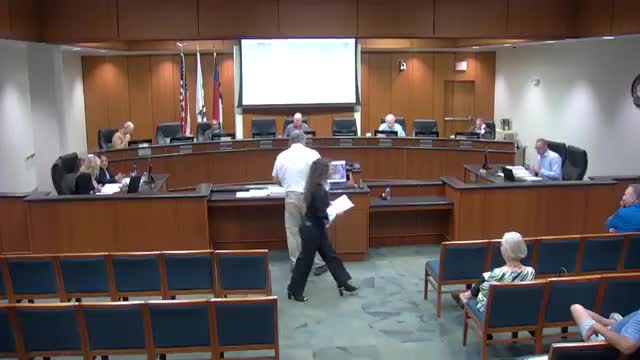
Summary
Taxpayer Derek and Karen Hodge appealed assessments on two small parcels. County staff recommended and the board accepted a 75% unbuildable reduction on a 1.4-acre remnant and kept other parcel values after offering the taxpayers options to combine parcels or apply for use-value farm status.
Derek and Karen Hodge appealed valuations on two adjoining parcels near Olive Branch and East Lawyers Road, telling the Board of Equalization that one 1.4-acre remnant is steep, in floodplain and has no road frontage or practical access, making it effectively unusable.
Hodge said the remnant was created when a neighbor drilled a well on what had been contiguous land; he described the lot as a 30-foot drop with creek, no ingress suitable for building and frequent contact with county planners over the years. He and county staff exchanged evidence that a percolation (perk) failure and topography severely limit the lot’s usability.
County staff reviewed plats, sales and topo, and recommended treating the remnant as unbuildable and applying a 75% reduction, reducing the parcel’s assessed value to $13.07. Staff told the panel they also had discussed combining the remnant with adjacent acreage and offered the Hodge family an application for the county’s farm/use-value program; staff said the larger tract could qualify if an application is filed.
The board voted to accept the county’s recommendation to classify the remnant as unbuildable with a 75% reduction; staff recorded that earlier reappraisals had placed the 1.4-acre parcel at a much lower value and that the 2025 change reflected countywide adjustments to vacant-land sales used in the revaluation.
Why it matters: The decision illustrates the county’s procedures for handling small, disconnect parcels created by prior boundary changes and demonstrates two administrative remedies taxpayers may use — combining parcels or applying for use-value farm classification — to reduce taxes on open acreage.
What’s next: County staff advised the Hodge family to consult with the register/appraisal staff (Brent Smith named in the hearing) about combining parcels and filing a use-value (farm) application; staff will post the adjusted valuation and notify the taxpayer in writing.