
Keller council reviews Sports Park user rules, proposes resident fees and new scheduling rules
Get AI-powered insights, summaries, and transcripts
Subscribe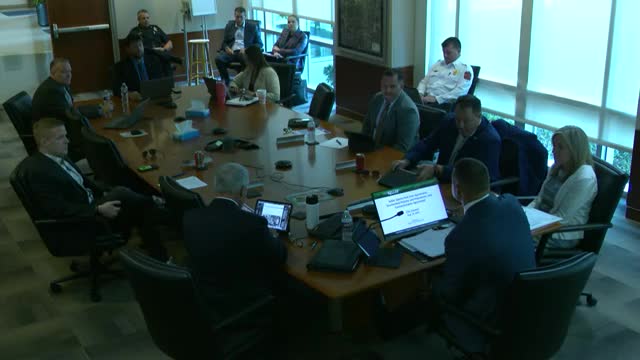
Summary
City staff and a council subcommittee presented revisions to user agreements for Keller Sports Park on Aug. 19, including new resident/nonresident fees, rental rates, scheduling deadlines and tournament rules; council discussed implementation timing and maintenance responsibilities and encouraged clearer resident-priority windows.
City staff presented a package of operating-policy changes for Keller Sports park on Aug. 19, outlining new registration fees, hourly rental rates, scheduling deadlines and tournament procedures as the renovated facility prepares to open.
The proposed fee structure would introduce a $10 resident fee per player per sport per season, capped at $40 per family, and raise nonresident fees to $50 per player per sport per season capped at $200 per family; staff said those fees would take effect Jan. 1, 2026. Staff also proposed rental rates to begin Oct. 1, 2025: grass fields, $50 an hour for residents and $150 for nonresidents; synthetic fields, $150 an hour for residents and $250 for nonresidents. "All the fees would go towards the general fund. So in theory, yes, it would offset the upkeep," a parks staff member said during the presentation.
The packet also proposed operational rules and priorities: youth (18 and under) would receive priority over adults for field access; games would take precedence over non-game activities during scheduling; two fields would be designated as multipurpose (for football, rugby, soccer, baseball or lacrosse); soccer and lacrosse fields would remain reserved for those sports where possible; synthetic turf fields would be protected from user modifications. Staff said associations will still be responsible for field lining and other routine tasks; the city can charge associations or users for repairs if fields are overused or damaged.
Staff said associations must submit a preliminary season schedule one month before the season starts and a detailed schedule and roster two weeks before the season begins; those dates will be loaded into CivicRec for public reservations. Staff also proposed programmable locks to provide access to paid renters. On tournaments, associations may host tournaments during their seasons and outside organizations may host tournaments outside season, with the hourly rental fee plus a flat fee to cover city costs (janitorial, electric, field crew). Staff said tournaments should not begin until Jan. 1 because "half the park is still under construction right now."
Council members pressed staff on several operational points. Councilman Green asked about resident notification and whether neighboring businesses had been told about lost parking on one sidewalk project; staff said associations will be required to provide detailed due dates and schedules so the city can verify resident eligibility and manage field access. Council members recommended a resident-only registration window (a short advance period before registration opens to nonresidents); staff said they will incorporate such a window "just like they do at the senior center." Council members also asked for usage metrics — how much of the park time is being consumed by existing associations — so the city can evaluate whether residents are being disadvantaged.
Staff listed five associations that will use the park this season: Miracle League (starting this fall), KYA, KSA, Keller Lacrosse and Alliance Rugby; staff said an equestrian group also programs at the site. Staff told council the associations occupy most field time during their seasons, and that staff will continue collecting schedules to identify open reservation windows for other users.
Council members raised concerns about the condition and appearance of Field 12 (the original KYA field, which was not part of the recent construction). Staff said associations had sought quotes to paint or replace fencing, and that fence repair estimates were approximately $20,000–$30,000. Council discussed whether the city should fund or require improvements if associations cannot afford repairs.
The parks packet also included a mural selection for the sports park concourses. A jury of park- and arts-board members selected Team Jenkins Scribe; artist Amy Brines was present. The mural set will be installed on concourse walls near Miracle Field and will include imagery representing multiple sports and local icons noted by staff.
Staff indicated the council will receive the fee ordinance and implementing language at a September meeting so the council can adopt the fee schedule and move toward the Oct. 1 rental implementation. Several council members and staff described the first season as a learning curve and said staff will return with refined scheduling windows, usage metrics and repair-cost policies.
Ending: Council did not take a formal vote on the user-agreement package on Aug. 19; staff said a formal fee ordinance will be returned to council in September for consideration.