
West Seneca superintendent proposes phased long-range facilities plan, recommends elementary redistricting for 2026
Get AI-powered insights, summaries, and transcripts
Subscribe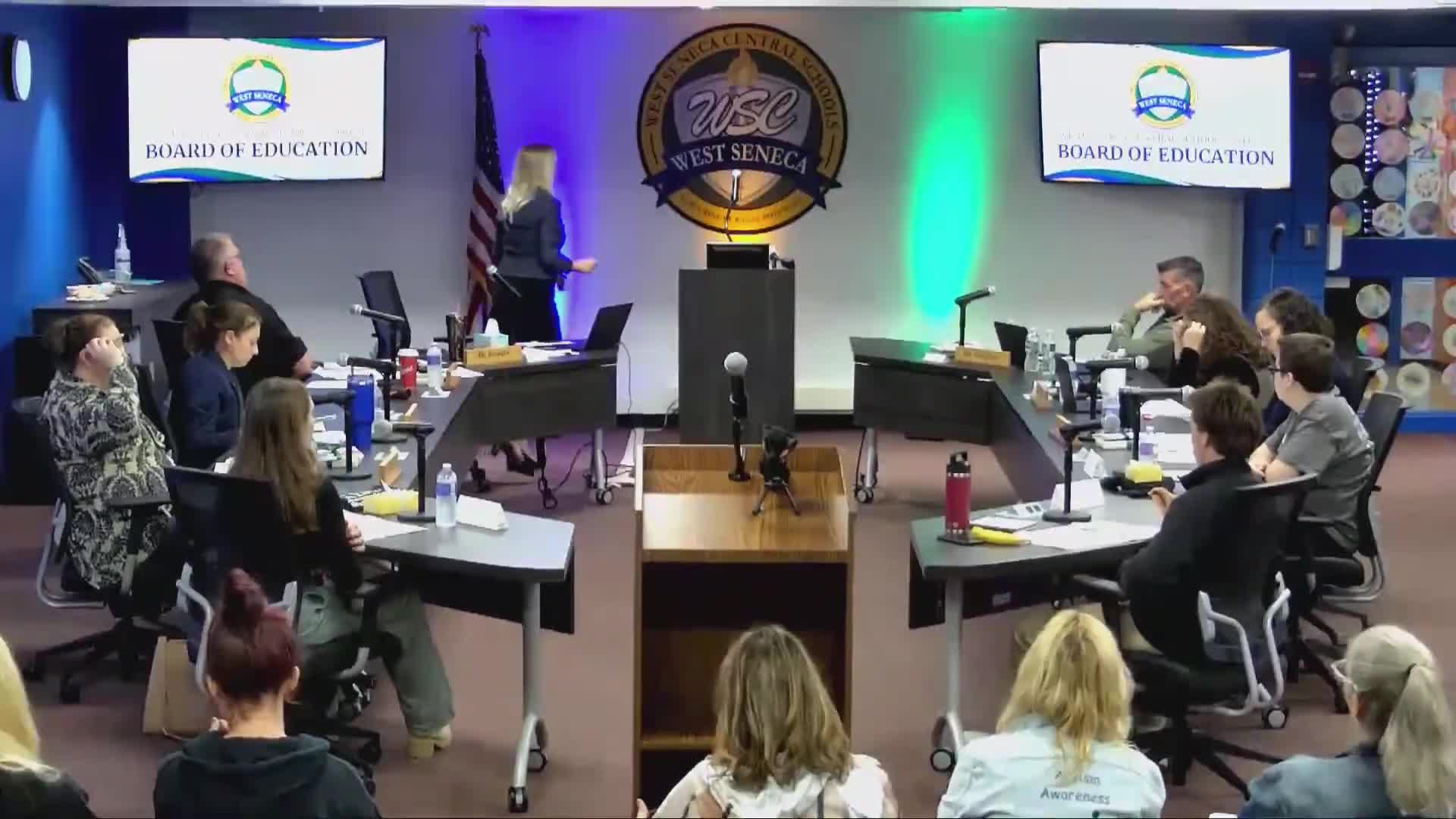
Summary
Superintendent Dr. Lisa Krueger recommended that the West Seneca Central School District adopt elementary‑based redistricting for September 2026 as the first phase of a multi‑year facilities plan to ease overcrowding and modernize district operations.
Superintendent Dr. Lisa Krueger recommended that the West Seneca Central School District adopt elementary-based redistricting for September 2026 as the first phase of a multi‑year facilities plan aimed at easing overcrowding and modernizing district operations.
Krueger told the school board on Oct. 7 that redistricting alone will solve immediate pressures at Clinton and Allendale elementaries but will not fix classroom shortages at West Middle School; she urged a phased approach that includes selling the district’s Ebenezer building, opening a family support center at Winchester Academy after BOCES reduces occupancy in 2027, relocating central offices to the East Middle campus, and studying a new transportation facility and middle‑school renovations over subsequent years.
The recommendation matters because the district faces uneven class sizes, aging facilities and land‑use constraints that limit options for buses, special education space and future capital projects. Krueger said the phased plan is designed to preserve East/West attendance boundaries where possible while repurposing space to win state aid for future improvements.
“We’ve studied redistricting in our district for years,” Krueger said in her presentation. She summarized four options reviewed this summer — elementary‑only redistricting; redistricting plus middle‑school boundary shifts; relocating fifth grade to the East Middle campus; and reconfiguring elementary grades into pre‑K–2 and 3–5 schools — and said the board asked staff to drill into the latter two during the summer.
Krueger recommended option 1 — elementary‑based redistricting — for September 2026 because it most directly addresses overcapacity at Clinton (where fifth‑grade classes ran 27–29 students during the year) and space shortages at Allendale, while keeping streets and neighborhoods intact. She told the board detailed street maps and schedules for transition supports will be made available before a Nov. 18 board vote on the matter.
For longer‑term work, Krueger proposed a set of linked actions: sell the Ebenezer building (900 Mill Road) and relocate district server and central offices to the former East Elementary wing on the East Middle campus; reclaim Winchester Academy as a family support center after BOCES reduces its footprint (BOCES is expected to move major programming to a new site in 2027); and study a new, larger transportation and buildings‑and‑grounds facility to replace the landlocked garage at West Senior High School.
Krueger described why selling Ebenezer is fiscally important: the building, which now houses adult‑facing district services and server infrastructure, is not student‑occupied and therefore ineligible for state aid for capital repairs. She showed photos of a persistent leak near the district’s server hardware and said the building condition survey projects more than $20 million in needed repairs to Ebenezer over five years. “No exaggeration—10 feet next to it is where we house the district’s network infrastructure,” she said.
The superintendent also addressed the district’s four pools. Repair estimates for secondary pools were shown in the presentation at roughly $12.1–$12.6 million; Krueger and staff recommended reducing the inventory from four pools to two, keeping two pools in service for athletics and community programs and converting the other two pool footprints into classroom or STEM spaces to relieve middle‑school capacity problems.
Krueger said a phased timeline would begin with the recommended elementary redistricting for September 2026, followed by targeted actions timed with BOCES’s moves in 2027 (reclaiming Winchester Academy and opening a family support center) and then longer‑range middle‑school renovations and transportation planning through 2028–2029 and beyond. She noted that any capital projects requiring state reimbursement will need architectural plans and SED approval, which lengthen timetables.
Board members and presenters discussed practical details: scheduling buses so elementary siblings get one pickup time, how repurposed spaces could host special‑education programs, and the operational limits of the existing bus garage. Krueger said the transportation facility on the West Senior campus is landlocked and the district condition survey identified about $10 million in needed repairs for that facility over five years; she described exploring off‑site options that would accommodate a larger fleet and bus‑maintenance area.
Public comment on the proposal opened at the meeting and will continue through the end of October via an online thought‑exchange survey and a QR link the district will distribute by email, social media and its website. One public speaker, Kenneth Thompson of Tudor Boulevard, urged the district to prioritize a long‑range plan rather than interim moves that would produce one extra transition for students.
Krueger closed by asking the community to weigh in during the comment window; she told the board staff will provide the full street‑level maps and transition plans before the Nov. 18 vote.
Next steps include a public comment period through late October, a board consideration and vote on Nov. 18 for elementary redistricting, and continued facility planning and capital‑project sequencing if the board approves the first phase.
Ending: The superintendent’s presentation framed the immediate redistricting measure as an initial, time‑limited action that would be followed by multi‑year work to consolidate properties, relocate administrative functions and pursue targeted capital investments; final decisions on larger construction or pool projects would require voter approval and New York State education department review.