
Public health director warns of deep state and federal cuts; highlights high return on fall-prevention program
Get AI-powered insights, summaries, and transcripts
Subscribe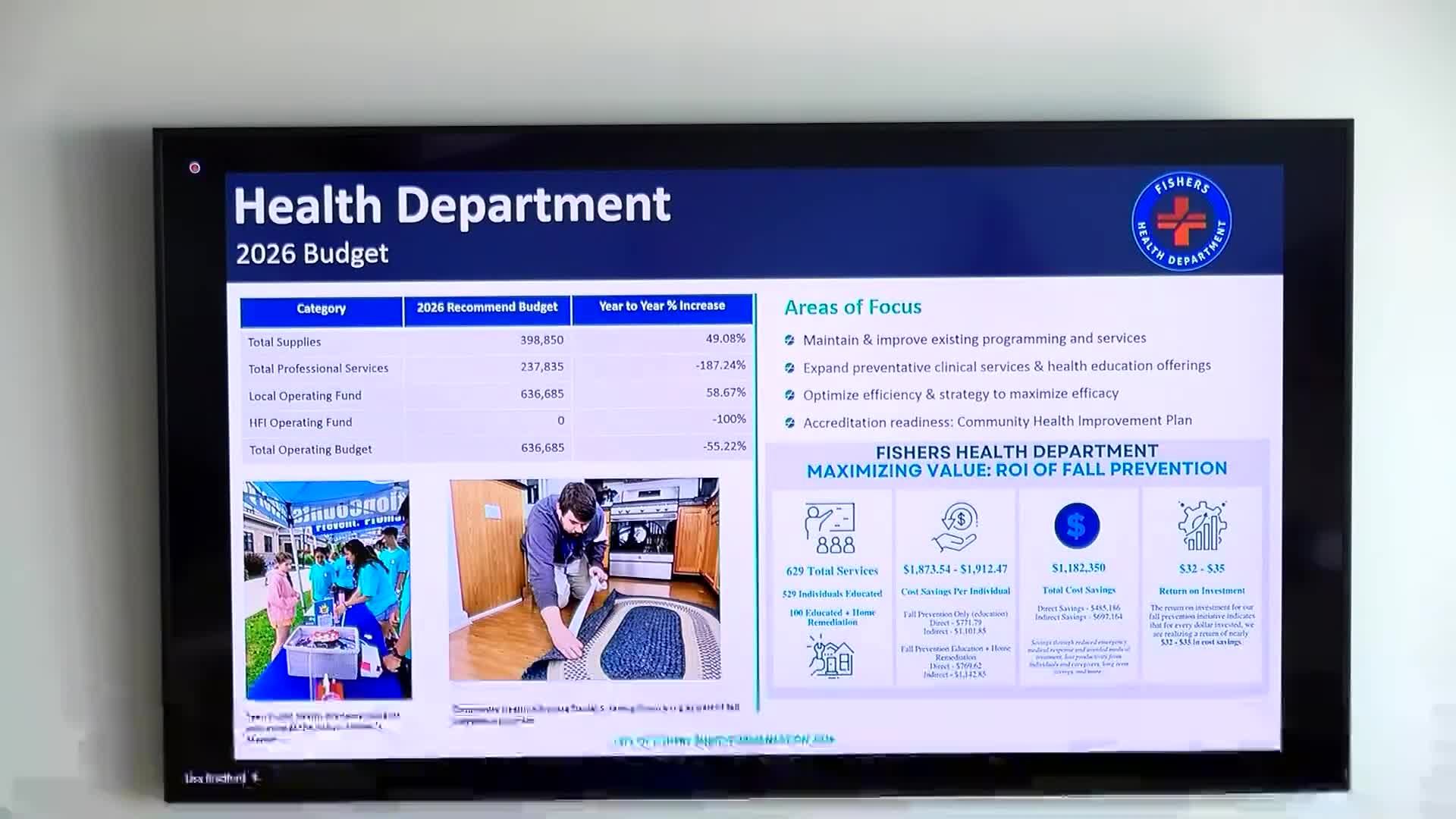
Summary
Monica, public-health director, told the committee that Help First Indiana funding has been reduced substantially and federal grants were cut; she outlined steps to stabilize revenue through in‑house billing and prioritized clinical and prevention services that show strong return on investment.
Monica, director of public health, told the finance committee that state and federal funding volatility is forcing program adjustments and that the department is pursuing revenue stability while protecting high-value prevention services.
“...what we're about to experience for 2026 is a 73% decrease from that HFI funding that comes from the state,” Monica said, describing sharp cuts to Help First Indiana allocations and other federal grants that supported immunization and clinical programs.
Why it matters: state and federal funding shortfalls can reduce services and require local general-fund support. Monica said the department shifted operating costs to local operating funds, reduced backfill of vacated positions, and began billing insurance in-house for clinical services to recover revenue for immunizations, STIs screening, travel vaccines and other billable services.
Program priorities and evidence: Monica said the health department is pursuing accreditation readiness and continuing programs such as fall prevention for older adults. She cited an IU Fairbanks School of Public Health analysis using 2024 services that estimated a $32–$35 return for every $1 invested in the department’s fall-prevention work (a downstream effect estimated at more than $1 million for services provided in 2024).
Service expansions under consideration include latent-TB infection treatment management, STI screening with clinical visits, titers for occupational schooling, and screening/health coaching tied to the planned community center foot traffic.
Ending: Monica asked the committee to consider general-fund support to sustain core public-health services; she said the department is in a comparatively strong position among state peers but needs stable local funding to weather grant volatility.