
Police chief seeks technology investments and expands mental-health support for officers
Get AI-powered insights, summaries, and transcripts
Subscribe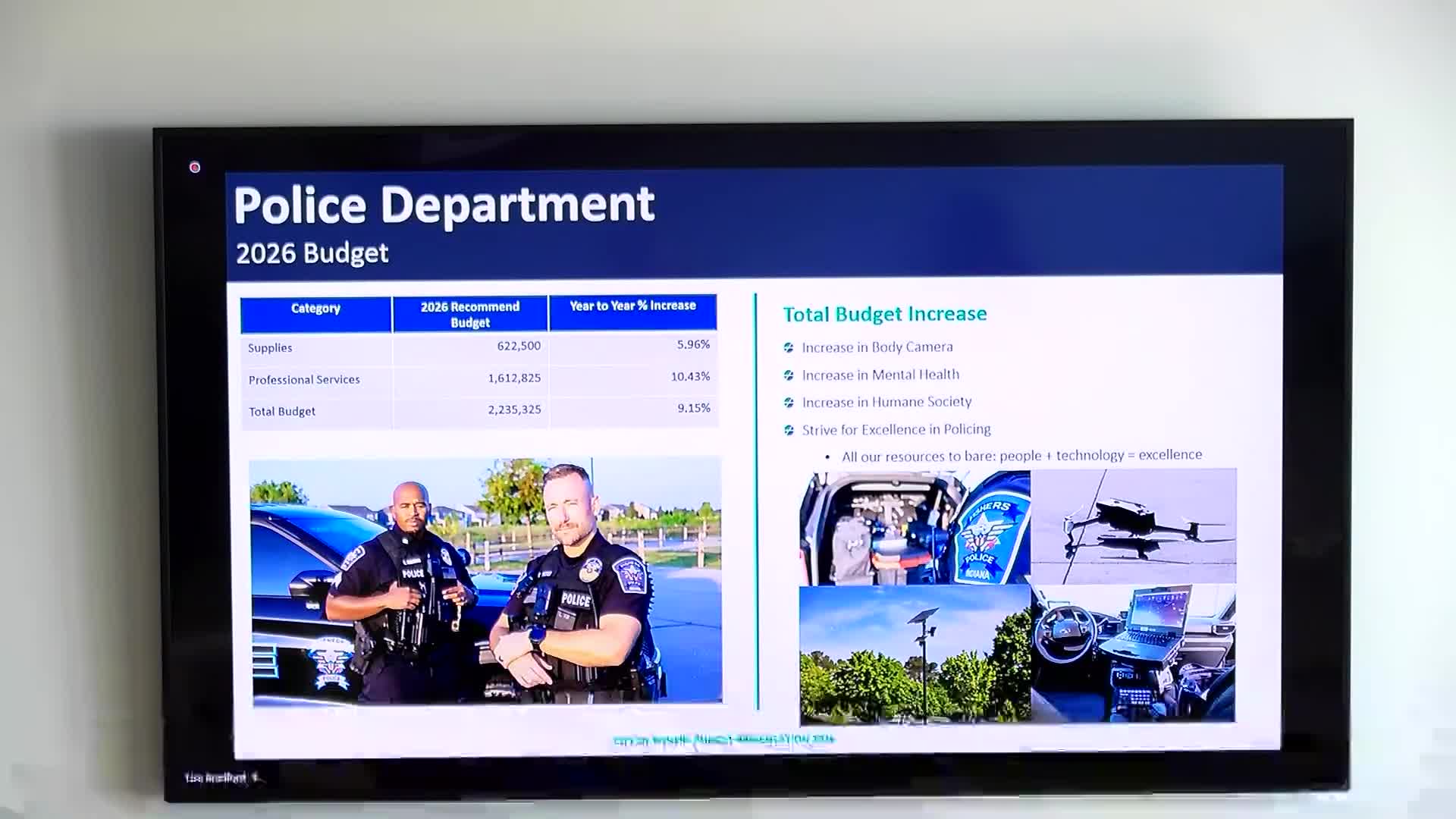
Summary
Fishers Police Department briefed the committee on a budget increase driven by five‑year contracts for body cameras, rising humane-society fees and investments in intelligence-led policing, license-plate readers, drones and mental-health contracts for officers.
The police chief told the finance committee the department’s budget increases reflect rising contract costs, humane-society fee increases and an intentional move toward technology-enabled, intelligence-led policing.
“If they're healthy, then we can be healthy when we respond to the community,” the police chief said while describing an expanded mental-health program for officers and a contract with ProTeam Tactical Mental Health to provide rapid access to counseling after critical incidents.
Why it matters: the department argued investments in technology (license-plate readers, flock cameras, in-car systems and drones) and a civilian intelligence unit help detect crime patterns and place officers proactively; the chief said the technology must be paired with trained officers to be effective.
Details presented: - Contract renewals and five‑year commitments are increasing costs, including body-camera programs and related services. - The department budgets for increased humane-society fees and said it is coordinating with the Humane Society and a new community‑safety officer unit to reduce costs where possible. - Mental-health support: the department has a contract with ProTeam Tactical Mental Health to provide immediate counseling and therapy; the chief said insurance typically covers initial consultations and most officers require about seven to eight sessions after critical incidents. - Regional task forces: the department participates in regional investigations (narcotics, crimes against children, gun‑crime initiatives) and receives some technology/services support through those partnerships. - Flock camera (LPR) coverage: the chief said roughly 50 LPR cameras are in Fishers and regional coverage to the south is far larger, and additional cameras provide marginal improvements but help investigations.
Committee members asked for clarification about mental-health contracting and humane-society cost drivers; the chief described immediate access options and said city officers are equipped with scanners to check animal IDs in the field to reduce trips to the humane society.
Ending: the chief said personnel levels and compensation remain under review; the department will return with recommendations to the finance committee.