Get Full Government Meeting Transcripts, Videos, & Alerts Forever!
Get email alerts on the Public Comments Housing Flooding 287g topic
No spam. Unsubscribe anytime.
Residents urge action on flooding, housing, ICE cooperation and homelessness during Kalamazoo public comment
Summary
Multiple residents at the Aug. 18 meeting called on the commission to address worsening flooding, high rents and displacement, to oppose local participation in 287(g) immigration enforcement agreements, and to expand shelter/winter preparedness and housing protections.
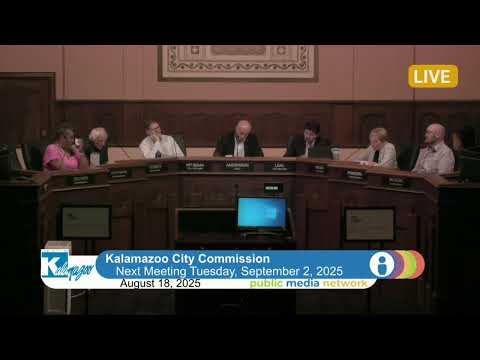
At the Aug. 18 Kalamazoo City Commission meeting, a string of public commenters urged the city to prioritize neighborhood flood mitigation, housing affordability and protections for unhoused residents — and several speakers urged the commission to denounce local participation in 287(g) immigration‑enforcement agreements.
Tina, who said she lives in the Lake Street/Edison/Southtown flood plain, told commissioners frequent rain now floods neighborhood streets, and said recent development and loss of natural green space worsened conditions: “Now 1.38 inches of rain floods our streets and our neighborhoods,” she said, urging residents to vote in November for candidates she said would prioritize residents over development.
Other speakers testified about rising rents and housing stress, with several urging stronger eviction protections and more resources for residents who face displacement. Jane Ghosh, president and CEO of Discover Kalamazoo, said she supports the city’s use of converted lodging properties for short‑term transitional housing and applauded the commission for pausing to make sure such housing is fit for purpose.
Multiple commenters urged the commission to denounce or refuse participation in 287(g) agreements between local law enforcement and federal immigration authorities and to halt sweeps of unhoused residents. Claire, who identified herself as a resident, told the commission “denouncing 287(g) is the bare minimum” and listed expanded protections and policies the community wants the commission to pursue.
Drew Duncan, a city resident and volunteer organizer, said volunteer training for winter warming centers is underway and asked the commission for a liaison to help connect faith institutions and other partners to shelter efforts ahead of winter. Jess Thompson, a downtown small‑business owner, praised an ongoing composting pilot and said the program has local demand from residents and businesses.
Why it matters: speakers tied immediate neighborhood impacts (flooding, rent increases) to development choices and urged the commission to use its policy levers to protect vulnerable residents and prepare for seasonal shelter needs. The comments also reflect wider local debate about immigration enforcement and municipal role in such agreements.