Get Full Government Meeting Transcripts, Videos, & Alerts Forever!
Get email alerts on the Urban Trees topic
No spam. Unsubscribe anytime.
City policy will prioritize removal of aging silver maples, Norways, Siberian elm and nonfruiting pears in right-of-way
Summary
Kalamazoo Department of Public Services is implementing an internal hazardous-tree removal policy targeting several overplanted species; the policy calls for removal when those trees become hazardous and for two-for-one replacement with approved species.
Kalamazoo — The Department of Public Services has implemented an internal hazardous-tree removal policy that will prioritize the removal of several overplanted, failure-prone species from city right-of-ways and replace removed trees with two new trees from the city’s approved list.
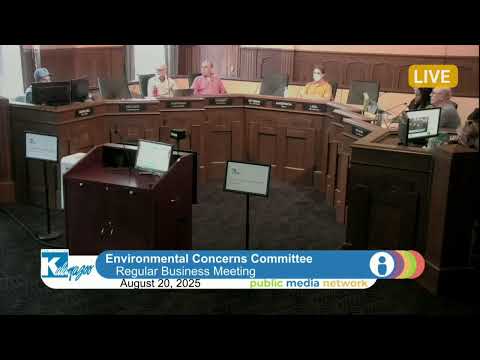
Thomas Twohurst, a committee member who presented the tree-committee update, said the department identified silver maple, Norway maple, Siberian elm, and nonfruiting ornamental pears (including Callery pear cultivars) as species that have caused disproportionate storm damage and infrastructure impacts. Twohurst told the committee those species represent “about 35% of the existing canopy” and estimated roughly 7,000 such trees are in the city.
The policy is internal and does not require city commission approval, according to the update. Under the new practice, the city will remove these trees when they sustain damage in storms or show structural failure and replace each removed specimen with two trees selected from an approved municipal tree manual. The stated goal is not wholesale removal but to replace failing specimens at a two-for-one rate as removals occur.
Committee members asked how residents report hazardous trees; Twohurst said the city responds to storm reports and utility company notifications and that residents can call the city’s 311 service or email the city arborist with photos and addresses. Twohurst also described a contract program the city uses to prune and remove trees across neighborhoods, with crews starting seasonal work in September on Douglas Avenue and moving east to Riverview Drive.
Members raised concerns about the pace of removals and public notification. The committee discussed that the city measures jurisdiction for removal from the centerline of the street (or engineering determinations), and staff said they would request precise jurisdictional rules for the committee at a future meeting.
Next steps: committee members asked staff to get the written DPS policy and clarification on measuring jurisdictional distance from the street centerline for inclusion with future committee materials.