
Committee approves sworn residency affidavits, directs city attorney to draft formal policy and challenge procedure
Get AI-powered insights, summaries, and transcripts
Subscribe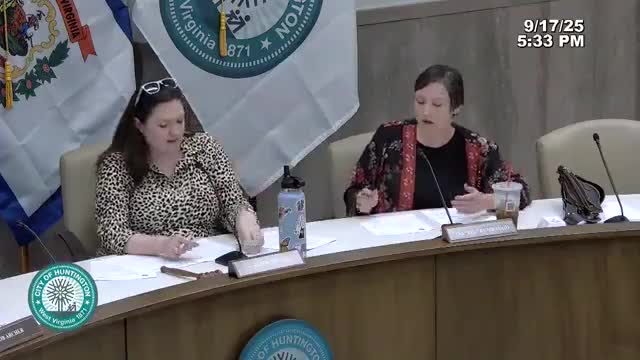
Summary
The Huntington City Council Rules & Ethics Committee voted to require council members to sign a sworn residency affidavit and asked the city attorney to prepare a residency policy that includes a signed-challenge process and documentation standards.
The Huntington City Council Rules and Ethics Committee voted on Sept. 17 to require every sitting council member to sign a sworn residency affidavit and directed the city attorney to draft a residency policy and an associated challenge procedure for referral to full council.
The change stems from recent public and council concern about repeated residency challenges and the absence of any residency rules in the council’s existing rules for the transaction of business. Committee members said a standardized affidavit and a written challenge process would reduce anonymous complaints and give clearer procedures for preliminary legal review and possible referral to council.
Committee Chair Sarah (Committee chair) opened discussion by noting the current rules do not address residency. Committee members reviewed a draft “residency policy” and an attestation/affidavit form circulated earlier by Holly Smith Mount. Council member Archer moved that every sitting council member sign a sworn affidavit attesting to residency; the motion was seconded by Council member Rumbaugh and was approved by voice vote.
Council and staff clarified several points the committee asked the city attorney to include when drafting the final affidavit and policy: - The affidavit should be notarized and acknowledged as an affidavit (the committee discussed use of the term “affidavit” rather than “attestation form”). Barbara, who was identified in the meeting as a notary, can notarize affidavits submitted to the City Clerk’s Office. The affidavit will be retained by the clerk’s office and treated as confidential because it will include identification documents. - Members who move must notify the city clerk in writing and sign a new affidavit. The draft policy calls for notification to the clerk "within 30 days" of an address change; the committee agreed the affidavit itself should be signed immediately and supporting documentary proof should follow within a short additional period (members discussed extending that window to 45 days in cases where official documents take longer to issue). - Acceptable supporting documents discussed include two forms from a list such as a driver’s license or state ID showing address; voter registration card; lease, deed or mortgage statement; utility bill (gas, water, electric, internet); and a USPS change-of-address confirmation. The affidavit itself counts as part of the record and may be required if other documentation cannot be produced promptly.
The committee also debated and revised the proposed challenge process. Key points the committee asked the city attorney to include in the draft policy are: - Any challenge must be a signed written submission that "sets forth the factual basis for the challenge" (the committee rejected allowing anonymous complaints). The challenger must identify the factual assertions or evidence on which the challenge is based. - The city clerk will forward a signed challenge to the city attorney for a preliminary legal sufficiency review. If the city attorney finds the challenge legally sufficient, the matter will be referred to city council for consideration at a public meeting; if insufficient, the challenge will be dismissed. - The challenger and the council member named in the challenge each will have the opportunity to present evidence at any council consideration of the matter. The committee discussed using the preponderance-of-the-evidence standard for council action, and noted that parties may appeal to circuit court if they wish. - Frivolous, harassing or politically motivated challenges may result in sanctions under council rules; the committee discussed but did not add a new definition for “politically motivated” beyond the requirement that challenges be signed and supported by factual allegations.
The committee then voted to accept the revisions discussed and asked the city attorney (Scott, City Attorney) to draft the affidavit and the residency policy consistent with the committee’s direction; the motion to direct the city attorney was seconded and approved.
What happens next: the city attorney will draft the affidavit and draft policy language for the committee’s review and comment. The committee asked that the affidavit be explicit about notarization, the 30-day notification requirement and the 45-day accommodation for supporting documents when needed. The committee set an effective date for the affidavit requirement in discussion as Jan. 1, 2025; the city attorney’s draft will reflect the committee’s direction for a final version to bring forward for council action.
Ending note: Committee members emphasized the draft policy and affidavit are intended to stop anonymous “rumor” challenges and to provide a predictable, legally grounded process that can be applied consistently over time.