
High Springs officials dissect state law SB 180 and its limits on post-storm land-use changes
Get AI-powered insights, summaries, and transcripts
Subscribe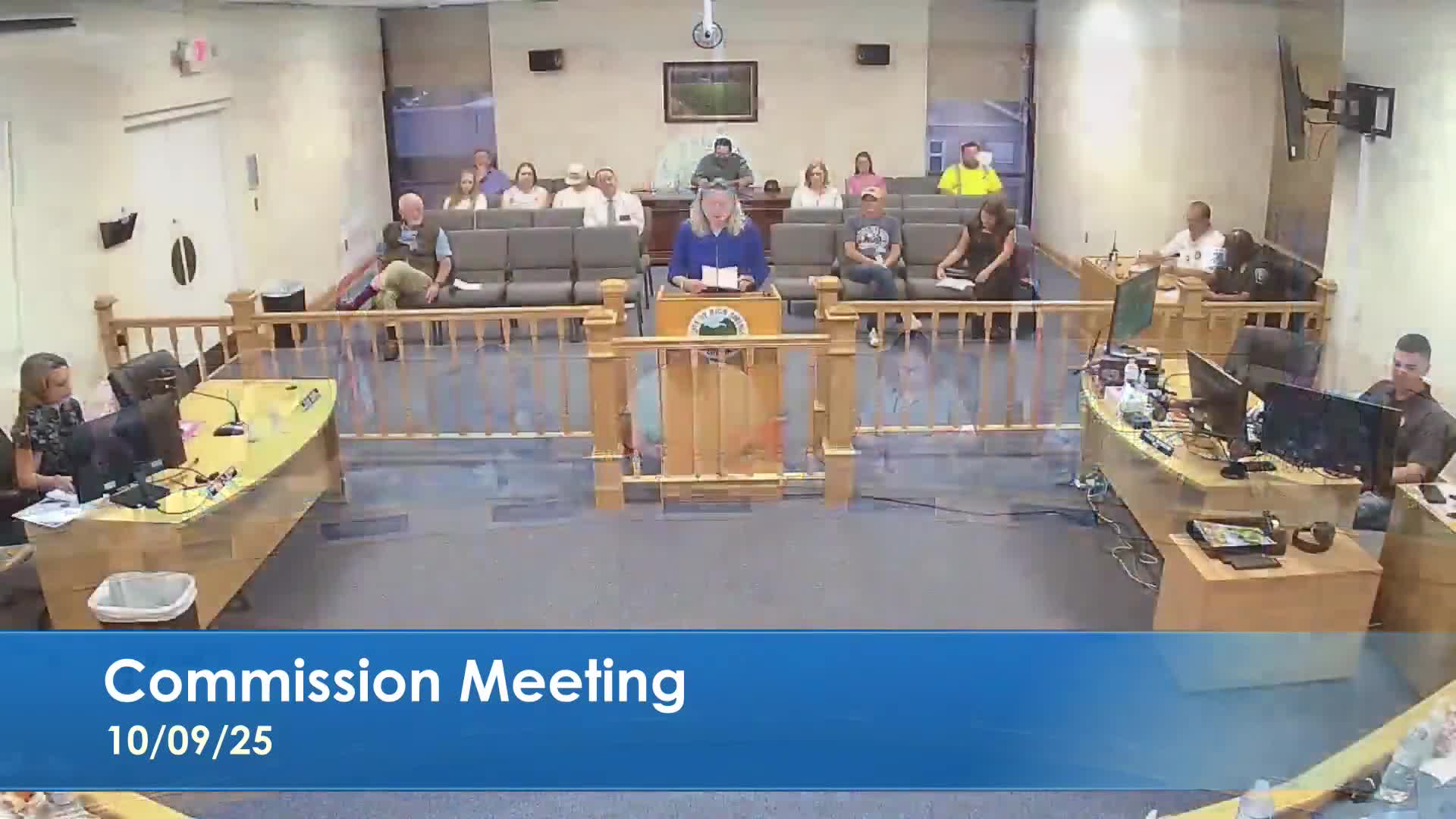
Summary
At the Oct. 9 High Springs City Commission meeting residents and the city attorney discussed SB 180, a recently enacted Florida law that restricts some local land-development regulatory changes after hurricanes and mandates administrative approvals for certain actions; commissioners said the law will affect the city's ongoing Land Development Code
SB 180 — the state law residents say was signed this year — could limit High Springs' ability to adopt more restrictive land-development rules after a hurricane, city officials said Tuesday night.
Resident Julie Tapio Ruano asked the City Commission for guidance on how the statute might affect the city’s pending Land Development Code (LDC) rewrite and whether High Springs should join a multi-jurisdiction lawsuit challenging the law on home-rule grounds. "It seems to me it might benefit builders more or developers in a time where the city is trying to help citizens rebuild individually," she said, and asked whether the city might contribute to legal costs to join other municipalities.
The city attorney and commissioners said the statute contains two types of restrictions that are important for High Springs. First, it requires administrative approval rather than board or commission approval for certain actions such as some replats and final plat approvals. Second, it restricts adopting more restrictive local development regulations (LDRs) in impacted areas for defined periods after adoption or after specified storm events.
City Attorney Danielle (first name used in the meeting) told the commission she would prepare a fuller presentation. She described the measure as "wordy and complicated," and said staff and consultants will analyze which of the consultant-recommended LDC changes might be limited by SB 180. "We will need to make sure that we are looking at the way that SB 180 would impact our ability to adopt any of the recommended changes by our consultant," Danielle said.
Commissioners asked whether the prohibition on stricter rules lasts only one year after a hurricane or longer. The attorney clarified that the statute includes a three-year period tied to adoption and additional timing tied to storm impacts; she warned that in practice the restriction could apply for multiple years depending on future storms.
Why it matters: High Springs is in the middle of updating its LDC. If SB 180 bars some of the sought-after changes, the city’s ability to require larger lot sizes, greater setbacks from water features, or similar measures could be limited in certain circumstances. The attorney recommended staff bring back a targeted briefing with specific examples of LDR changes that would — and would not — be limited by SB 180.
The commission did not vote or take formal action on litigation or an intent to join challenges; commissioners asked staff to return with detailed analysis and recommendations for how SB 180 would affect the LDC rewrite.
Evidence in the meeting: Resident Julie Tapio Ruano raised SB 180 and asked for the commission’s view and whether the city should consider joining a lawsuit. The city attorney summarized the law and said staff will prepare a more detailed presentation for a future meeting.
Ending: The commission directed staff to analyze SB 180’s specific effects on the city’s proposed LDC changes and to present options at a future meeting; no vote on legal action was taken.