Get Full Government Meeting Transcripts, Videos, & Alerts Forever!
Get email alerts on the Setback Variance topic
No spam. Unsubscribe anytime.
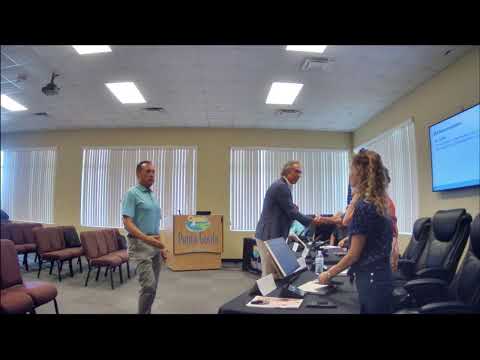
Punta Gorda board recommends 10-foot rear-setback reduction for San Rocco Drive multifamily project
Summary
The Punta Gorda City Board of Zoning Appeals on Sept. 22 voted 6–1 to recommend city council approval of a variance allowing an eight‑unit development at 3930 San Rocco Drive to use a 15‑foot rear setback instead of the 25 feet required by the city's land‑development regulations.
The Punta Gorda City Board of Zoning Appeals on Sept. 22 voted 6–1 to recommend that city council approve a variance allowing an eight‑unit multifamily development at 3930 San Rocco Drive to have a 15‑foot rear yard setback instead of the 25 feet required by the city land‑development regulations.
The applicant, Carlos Reyes, said he and his partners designed the project after multiple meetings with city staff and relied on written and recorded guidance from those meetings. "We were very clearly been told 5 times during the conversation that we could have 15 feet," Reyes told the board, saying the design and engineering work proceeded based on that guidance. He said the project team has invested roughly $363,000 in land acquisition, engineering and design and that denial would require abandoning the project.
Rachel Berry, the city zoning official, summarized the request and the approval criteria from the land‑development regulations, telling the board the application seeks a 10‑foot reduction to permit a 15‑foot rear setback in the GM‑15 (general multifamily) district. Berry noted the applicant bears the burden of persuasion under Section 16‑10(b) of the LDRs.
Reyes provided a two‑year timeline of design‑studio meetings and reviews by multiple city staff, then engineering and permitting steps. He described a December 28 design‑studio meeting that the applicant recorded and said the recording and written notes showed staff had indicated a 15‑foot rear setback would be acceptable. The team said they later spent additional time and money responding to a yearlong sequence of requests from the Southwest Florida Water Management District, and ultimately replaced one engineering firm before completing required materials.
During deliberations the board heard that the rear of the site backs to a Home Depot parking and loading area rather than the rear yard of a neighbor. Joe Como, a resident who lives across the street, addressed the board during public comment and noted the street is quiet and that the Home Depot loading dock is directly behind the site. "If you want to buy a unit backing up to the Home Depot Loading Dock, be my guest," Como said, adding he had not been officially notified by the homeowners association and that HOA litigation over deed‑restriction enforcement was ongoing.
Interim city attorney Steven Leskovich told the board that the recorded guidance put the city in an unusual legal position. "Can they demonstrate ... that they relied upon the advice of city officials?" Leskovich asked, and said if the applicant can show reliance and resulting harm the city "could be on the hook for costs." He also clarified the city is not opposed to granting the variance but that a homeowners association (Burnt Store Isles) could still raise separate private‑law issues.
Board members who voted in favor cited the applicants' reliance on city staff advice and the site's adjacency to a commercial parking/loading area as supporting an exceptional situation under the code's variance criteria. Several members said the request appeared unlikely to cause measurable harm to neighboring residential yards. At least one member opposed the recommendation, saying the applicant could redesign to meet the 25‑foot setback or pursue the by‑right option of increasing unit count within the existing setback.
The board formalized its recommendation in a motion "that we recommend the city council approval of this request." The motion carried on a 6–1 vote. The board asked staff to include in its transmittal to city council a written statement of the reasons for the recommendation.
Next steps: the Board of Zoning Appeals' action sends the variance recommendation to Punta Gorda City Council for final decision. The record includes the applicant's presentation, design‑studio audio recorded by the city, and multiple staff reviews that the applicant cited in support of its claim of reliance.