Get Full Government Meeting Transcripts, Videos, & Alerts Forever!
Get email alerts on the Water Rates topic
No spam. Unsubscribe anytime.
Punta Gorda officials outline water-rate increase, cite rising demand and meter system failures
Summary
City staff said peak-day water demand has risen faster than population growth, and that meter reporting equipment failure and regulatory withdrawal limits are factors driving proposed rate increases and workshops on higher impact fees.
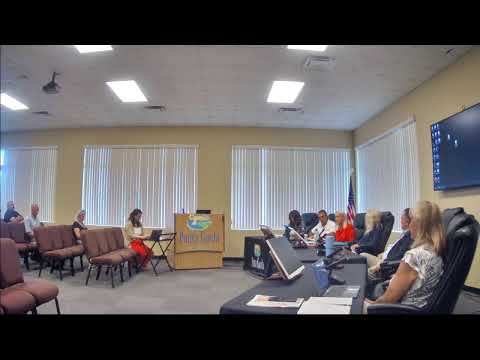
PUNTA GORDA, Fla. — City officials at a pre‑agenda meeting said they will bring proposed water‑rate increases and workshops on impact fees to the council after staff described rising water demand, equipment failures in the automatic metering infrastructure and limits on reservoir withdrawals.
Tom Spencer, Punta Gorda utilities director, told the council the service‑area population rose from about 39,900 residents in 2020 to roughly 41,600 today, an increase of about 4 percent, while peak‑day water demand climbed from just over 8,000,000 gallons in 2020 to more than 9,500,000 gallons by 2023. "It's outpacing our population growth," Spencer said, and added that minimum‑flow‑and‑level restrictions have reduced the city's flexibility to withdraw from Shoal Creek.
Spencer and city staff said those factors — higher per‑day demand, hotter and drier weather patterns and legal limits on withdrawals — mean rates must cover maintenance, operating expenses and depreciation, while impact fees are limited to capital facilities tied to growth. "Rates have to pay for maintenance. The impact fees must be tied to new or expanded capital facilities that are created to serve growth," Spencer said.
Council members and residents asked for details on wastewater billing and meter replacements. Kristen Simeone explained that residential wastewater billing is capped at 10,000 gallons to exclude most irrigation from sewer charges; commercial accounts do not have that residential cap. On meters, Spencer said the physical meters and registers still record usage when read manually but the AMI/AMI reporting equipment "does not work" and the city had stopped using the automated reporting. City staff said meter replacements are planned over a four‑year period but the AMI issue has slowed automatic reads.
Staff outlined the next steps: public hearings on ad valorem taxes and the budget; workshops on impact fees and rate increases (the utilities board is scheduled to meet jointly on Oct. 7 and staff said two additional workshops will follow); and continued annual review of rates and pursuit of grants to offset customer costs. City staff also said they will apply for CDBG funds and are preparing a support letter for HR 4961, a federal bill the city hopes would create a grant program to cover a portion of planning, design and construction costs for infrastructure.
The presentation included numerical clarifications from staff: the city reduced withdrawals from Shoal Creek by about 12 percent between 2022 and 2023 compared with 2020–21, while average annual demand increased by about 26 percent. City officials emphasized impact fees cannot be used for routine maintenance and repairs, only for new or expanded capital facilities created to serve growth.
Council members said the city will revisit rates yearly and continue to pursue grants to ease the burden on ratepayers. No formal vote was taken at the pre‑agenda meeting; staff will present ordinances, public hearings and workshops at regular council meetings for formal action.