Get Full Government Meeting Transcripts, Videos, & Alerts Forever!
Get email alerts on the Parks And Recreation topic
No spam. Unsubscribe anytime.
Livonia council committee sends Rotary Park pavilion back for redesign and rebid after sticker shock
Summary
After bids for a reconstructed Rotary Park pavilion came in far higher than expected, the city’s capital outlay committee recommended rescoping the project and a full rebid. Council members and Rotary volunteers discussed alternatives including prefab restrooms, timber kits and private fundraising; the item remains in committee.
The Livonia City Council’s Capital Outlay and Infrastructure Committee recommended that city staff rescope and rebid the Rotary Park pavilion project after contractor bids came back far above earlier estimates.
The committee report, given at the council’s regular meeting, said public bids ranged from $829,000 to $1.3 million and that the low qualified bidder was NRC Builders. Parks and Recreation and HRC (Hubbell, Roth & Clark), the project architect, told council the design replaces the prior pavilion with similar size and ADA-compliant restrooms and uses more durable materials such as brick, hardy board and a metal roof.
“The bids came in from $829,000 to $1,300,000 on and the low end bidder was NRC Builders with the lowest qualified bid,” the committee summary said. Committee members and residents pressed administration and the architect to look for cost-saving alternatives, including deleting an outdoor fireplace (estimated savings roughly $100,000), building a wood (stick-built) structure instead of masonry, or ordering precast/prefab restroom modules.
Why it matters: the project touches multiple budget sources. Committee materials show the city’s capital fund (referred to as the 4.18 fund) would supply remaining balances; the report said that fund has several million dollars available for capital projects but that spending must be weighed against other building and infrastructure needs.
Key details from the committee meeting and council discussion: - Bids and scope: public bids were open about four weeks and nine firms submitted proposals; HRC emphasized durability for a high-use park structure. - Restroom options: double-unit precast restrooms were cited at roughly $225,000 plus site/crane costs (about $300,000 total) and have long lead times (committee discussion gave figures from roughly 10 months down to 16 weeks, depending on supplier and procurement schedule). - Insurance and other funding: the city and its insurer disagreed over replacement cost; the council report stated the insurance payment was about $250,000. Committee members also discussed possible reallocation of other budgeted capital projects to cover portions of this work. - Private fundraising: Rotary volunteers Ron and Nancy reported about $50,000 in committed private donations at the time of the committee meeting and an additional $25,000 expected the next day; council members later said Rotary’s fundraising goal for the project is $300,000. - Design fees and next steps: design/architectural fees discussed were about $30,000. The committee recommended that administration rescope the project, seek value-engineered alternatives and return to council; the item remains in committee.
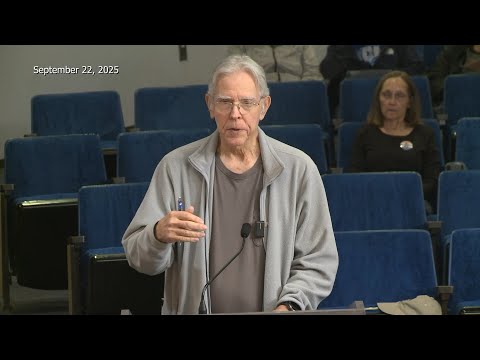
Council members and several residents urged exploring community-led or donated labor and modular kits as lower-cost options. Resident speakers included local union representatives and tradespeople who said they could help or volunteer expertise; some urged the city to consider timber-frame pavilion kits and to visit comparable precast restroom installations in other communities.
Council President McCullough also urged patience and more collaboration: “I think the administration come back and look for some cost saving measures, but then you ask yourself, are we building a subpar project?” he said during the report-out, asking administration to investigate alternatives and return with recommendations.
What the committee decided: the Capital Outlay and Infrastructure Committee’s recommendation to administration is to rescope and fully rebid the project so it complies with code while exploring lower-cost construction approaches. No final construction contract or budget appropriation was approved; the project remains under committee review.
Next steps: administration and the architect will examine alternate building methods and value-engineer the proposal, report back to the committee, and the council will consider any rebid or funding requests in a future meeting.