
Clinton County discusses I‑65 culvert lining with INDOT; no action taken
Get AI-powered insights, summaries, and transcripts
Subscribe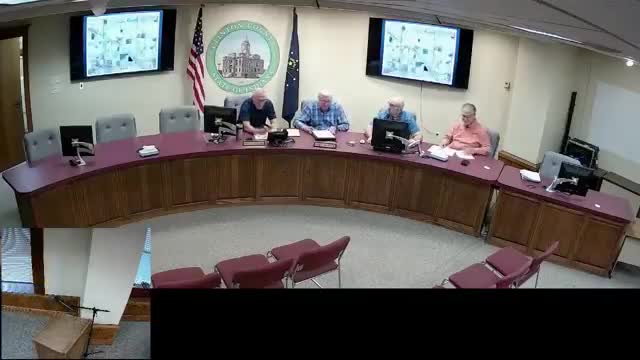
Summary
County staff updated the drainage board on ongoing negotiations with INDOT over lining an I‑65 culvert; staff said lining would reduce capacity and proposed a custom steel insert and parallel bore as alternatives.
County staff told the Clinton County Drainage Board on Oct. 7 that the Indiana Department of Transportation has proposed lining an existing corrugated metal culvert under I‑65, but staff said those lining options would reduce the pipe's hydraulic capacity and are unacceptable without additional mitigation.
Staff said INDOT calculated the drainage area as 1.68 square miles, while the county's calculation is 3.42 square miles, noting the state estimate did not account for drainage from the south side of State Road 28. "One of our big issues here is that INDOT has calculated the drainage area at 1.68 square miles. Our calculations of the watershed are considerably different. We're at 3.42 square miles," the staff speaker said.
County staff described a proposed compromise discussed in an online meeting: allow INDOT to install a welded steel culvert insert and to jack-and-bore an additional parallel pipe (the staff said model runs show a 24-inch bore would be sufficient, though 30 inches would be better). The staff cautioned that lining an existing pipe always reduces internal diameter and thus capacity. "While lining does work in some cases, no matter what you do, it's always going to reduce the size of the whole amount of water that can go through that pipe," the staff speaker said.
Staff said fully replacing the culvert by closing the interstate and removing the pipe could take roughly six months and would cost well over $1 million; jack-and-bore work was estimated by staff at about $500,000. County staff said they are continuing discussions with INDOT, are pushing for a steel solution that minimizes invert elevation changes, and will await INDOT's final analysis. No vote or formal county action was taken at the meeting; the presentation was an update.
Board members asked staff to seek the largest practicable bore and to avoid any solution that reduces existing drainage capacity. Staff indicated they will continue negotiations and provide further analysis when available.