Get Full Government Meeting Transcripts, Videos, & Alerts Forever!
Get email alerts on the Elections Facility topic
No spam. Unsubscribe anytime.
Dade County holds public hearing after bids return well above earlier cost projections for new elections facility
Summary
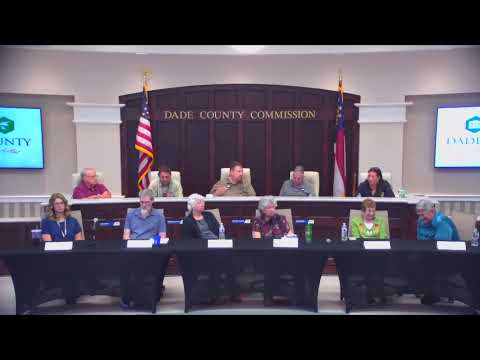
Dade County commissioners and the county Board of Elections held a public hearing to discuss plans for a new elections facility after contractors’ bids came in substantially above earlier cost estimates.
Dade County commissioners and the county Board of Elections held a public hearing to discuss plans for a new elections facility after contractors’ bids came in substantially above earlier cost estimates.
County leaders told residents the project stems from changes in state election law and growing storage, security and workspace needs for ballot-marking devices, scanners and election records. Commissioners said the county released RFP 2025-01 in May and opened seven proposals on Aug. 7; six were valid and ranged roughly from $2.9 million to $3.4 million.
Why it matters: Local election administrators say current space is scattered and insecure for modern elections operations that include multiple weeks of early voting, expanded equipment and preservation of paper records. Residents at the hearing pressed commissioners about the building’s size, whether a basement is necessary, whether a cheaper metal building would meet requirements, and how the project would be paid for from Dade County’s SPLOST proceeds.
Officials traced the need to past legal and operational changes. Commissioners and election staff described a history in which the county moved from a probate-judge–run system to an elected Board of Elections under state law (Senate Bill 354, mid-2000s), followed by expanded early voting and a 2019 state requirement to adopt uniform ballot-marking devices and scanners with paper ballots. Commissioners said the 2021 Elections Integrity Act (referred to in testimony as SB 202) and subsequent court rulings further increased training, oversight and storage requirements for counties.
Bids and budget: Commissioners said early internal cost projections were in the $1.2 million to $2 million range depending on whether a basement was included; one earlier estimate for a 6,000-square-foot footprint was cited in the $1.2 million–$1.5 million range if done at lower per-square-foot rates. The six valid construction proposals the county opened on Aug. 7 came back in the approximate $2.9 million–$3.4 million range. County officials told the hearing they plan to pursue negotiations with contractors, ask the selected bidder to value-engineer the plans and consider other cost-saving adjustments before making any award.
Residents’ questions and concerns: Dozens of residents expressed worry about cost and scale, urging a simpler building and asking whether a metal or warehouse-style building could meet state security and environmental requirements. Multiple speakers said they did not want an ornate structure and preferred a functional, lower-cost option. Some residents urged keeping a basement or portion thereof to reduce future costs; others said adding a basement raised construction costs and could impede use of metal building options.
Funding and process: County leaders said the project would be funded from SPLOST (special local option sales tax) allocations and other local sources already identified; they said the county has about 18 months of remaining SPLOST collections and that current projections show sufficient funds to cover both the proposed election facility and a planned animal shelter. Commissioners noted that SPLOST funds can be reallocated among capital projects and that the county’s referendum language included capital construction and administration categories covering projects such as county buildings. No formal contractor selection or construction contract award occurred at the hearing; commissioners said they will continue deliberations and could take the item up at a regular meeting or a special called meeting after further discussion with prospective contractors.
Board of Elections perspective: Donna Street of the Board of Elections urged public trust in local election procedures and described ongoing training and compliance with guidance from the Georgia Secretary of State. “We follow this book. It’s put out by the Secretary of State,” Street said, saying the office routinely consults the Secretary of State’s guidelines and recruits poll workers locally.
Contractor comments: Jamie Blevens, representing one bidder, advised the county to build for longevity. “You guys gotta build a hundred-year buildings,” Blevens said, warning that lower-end construction can lead to repeated replacements and higher long-term costs. He also said the drawings do not include “anything over the top” in finishes and that builders priced only what was specified on the plans.
Next steps: Commissioners said they had narrowed the bidders to a small group and would meet with architects and prospective general contractors to determine whether the project can be redesigned or value-engineered to reduce cost. They said they prefer to use local subcontractors where possible and will consider reducing scope (for example, dropping a basement or changing finishes) if contractors can still meet election security and ADA requirements. The county has not yet voted to award a contract.
Votes at a glance (actions noted in hearing): the commission previously (Nov. 2023) unanimously approved a roughly $100,000 purchase of 3 acres behind the Bank of Dade (Dyer property) as the planned site for the election facility; RFP 2025-01 for construction was released May 22, 2025 and opened Aug. 7, 2025 (six valid bids). No contract award was recorded at the hearing.
Community context and impact: Commissioners and election staff said the county’s registered-voter roll stood at about 13,758 as of the most recent state cleanup, and that equipment counts have grown from a few dozen machines historically to roughly 50–60 machines today as ballot-marking device requirements rose. Officials said an adequately secure, climate-controlled and ADA-compliant facility is required to store electronics, maintain records and host election night activities without disrupting other county functions.
Ending: Commissioners closed the hearing saying they would take the public comments under advisement, continue discussions with architects and shortlisted contractors, and could consider a decision at a forthcoming regular meeting or a special called meeting. No contract award or budget reallocation was announced at the hearing.