
Denver council approves Rock Drill redevelopment plan, rezoning and TIF package
Get AI-powered insights, summaries, and transcripts
Subscribe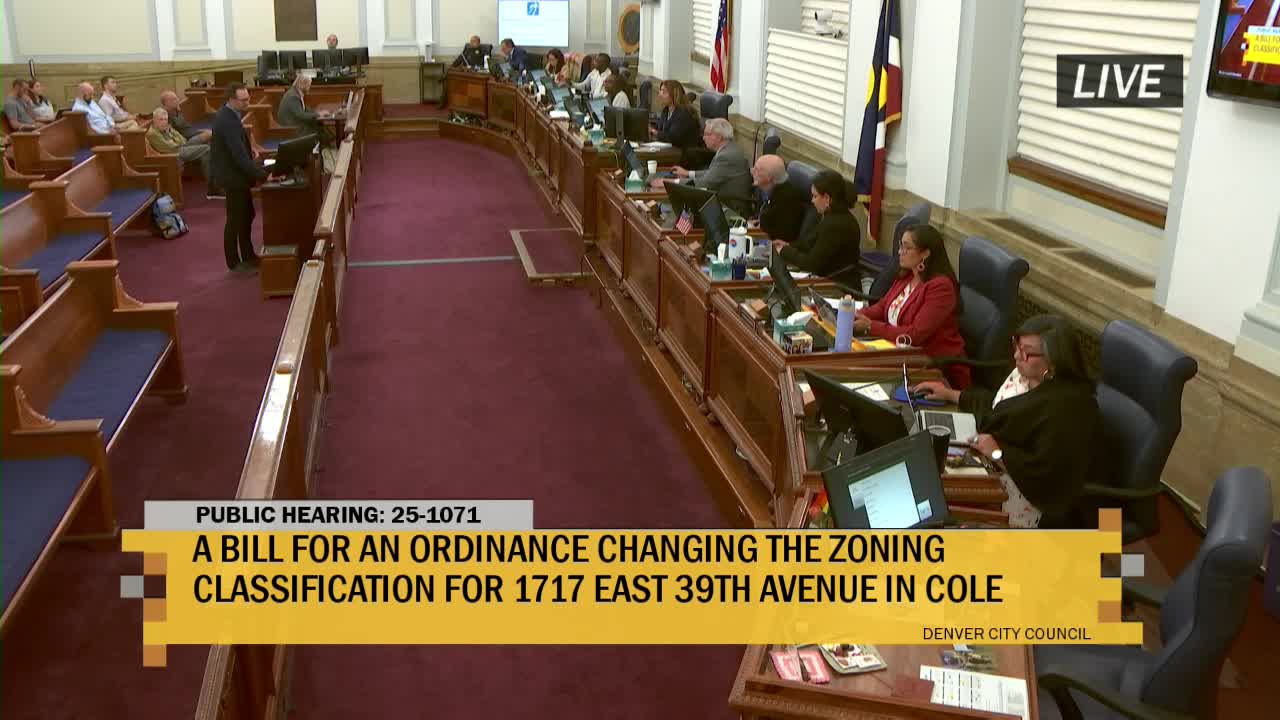
Summary
Denver City Council approved rezoning, a development agreement and an urban-redevelopment plan for the long-vacant Rock Drill site in the Cole neighborhood, clearing the way for adaptive reuse of historic industrial buildings, roughly 700–800 new housing units, and tax-increment financing to help pay for remediation and preservation costs.
Denver City Council on Sept. 15 approved a package of actions to enable redevelopment of the former Rock Drill manufacturing site at 1717 E. 30th Avenue, including a rezoning, a development agreement that secures affordable housing commitments and landmark preservation, and an urban-redevelopment plan authorizing tax-increment financing for remediation and adaptive reuse.
City planners and the developer told council the site — roughly 6.7 acres with several historic sawtooth-roof buildings — has been vacant and under‑utilized for years. The project team said the development will likely include 700–800 residential units, 40,000–60,000 square feet of office space, 100,000–150,000 square feet of retail (including pursuit of a grocer), public open space and a preservation program for the existing historic buildings.
Why it matters: The approvals let the developer access Denver Urban Renewal Authority (DURA) tools, including property- and sales-tax increment to reimburse eligible remediation and historic-preservation costs. City and community leaders said the package balances new housing and jobs with preservation and neighborhood benefits in an area targeted for higher growth near transit.
What council approved: Council passed the rezoning (council bill 25-10-71), a development agreement between the city and the developer (25-10-79), the Rock Drill urban redevelopment plan (25-12-22) and the city–DURA cooperation agreement that authorizes tax-increment financing (25-12-21).
Developer and city presentations outlined three linked priorities: preserve the historic sawtooth buildings; deliver a significant number of housing units and a minimum on-site affordable set-aside; and generate neighborhood-serving retail, including work to recruit a grocer. "The preservation is a big one for us," said Reid Raskin of the Cole registered neighborhood organization, which supported the project. "The activation on the greenway will breathe life into it."
Affordable housing and preservation specifics: The development agreement includes an HDC high‑impact compliance plan requiring 10% of units to be income‑restricted at up to 50% of area median income (AMI), and minimum shares of family‑sized units (at least 15% two‑bedroom and 5% three‑bedroom among the affordable units). City housing staff said the developer has estimated roughly 700–800 units overall, which would translate to about 70–80 income‑restricted units under the agreement. DURA’s preliminary project budget allocates roughly $39.1 million of tax‑increment support to reimburse eligible costs, and city and DURA presentations said the largest share of that reimbursement — roughly 80% of the TIF request — is tied to rehabilitation of the major historic structures.
Community benefits and commitments: The developer and neighborhood negotiators produced a community benefits agreement that the Cole neighborhood association endorsed. Among the items cited in the community benefits agreement and development agreement are a pursuit of a local grocer, publicly accessible indoor and outdoor community space, commitments to support local artists and public art, and coordination on small‑business and local‑hire plans. DURA and the developer also committed to a small‑business enterprise goal and First Source hiring outreach; DURA told council the SBE goal is 23% of the construction‑contract value and First Source will prioritize hiring local residents for permanent jobs created by the project.
Environmental and regulatory steps: The project team said it has engaged Colorado Department of Public Health and Environment’s voluntary cleanup program and will perform a site remediation plan and construction‑era environmental controls. The city stressed that environmental review and local landmark designation steps remain part of the forthcoming building‑permit and site‑development processes.
Council reaction and vote: Council members who represent the area or who worked with the neighborhood emphasized the long community engagement process. Councilmember D. Watson noted the work "to inform community and to get informed by community." The rezoning and related agreements passed in separate votes. (See 'Votes at a glance' for tallies and item numbers.)
What happens next: With the rezoning and DURA approvals in place, the developer will proceed through design, remediation, local landmark designation for the preserved buildings, and phased site development. DURA will only reimburse eligible costs as outlined in the redevelopment plan and cooperation agreement; DURA staff told council tax‑increment reimbursements would be limited to the statutorily allowed term and subject to final negotiated terms in the redevelopment agreement.
Council and city staff said they will monitor DURA compliance and ensure the project’s affordable housing and community commitments are tied to the redevelopment agreement and DURA contract so the benefits remain enforceable beyond the zoning change.
Ending: Supporters and neighborhood leaders called the approvals a long‑awaited chance to activate and preserve a signature industrial site while creating new housing and neighborhood services. The project will now move into site‑level design, environmental cleanup and the landmark‑designation steps needed before major construction.