Get Full Government Meeting Transcripts, Videos, & Alerts Forever!
Get email alerts on the Traffic Calming topic
No spam. Unsubscribe anytime.
Engineer recommends driver-feedback signs and RRFB for Oakview; committee discusses speed cushions and costs
Summary
An engineer's review of Oakview Street recommended a driver-feedback speed sign and a rapid rectangular flashing beacon; committee members pressed staff for cost estimates and guidance about speed cushions on steep hills.
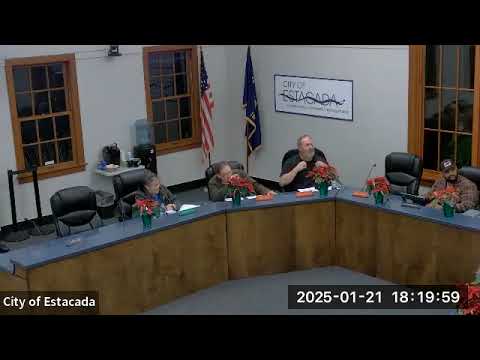
The Estacada Traffic & Public Safety Committee reviewed an engineer’s analysis of Oakview Street and discussed options for traffic calming, including driver-feedback signs, a rapid rectangular flashing beacon (RRFB) and speed cushions.
City staff shared an email from the engineer with two specific recommendations for Oakview: a permanent driver-feedback speed sign and a hill advisory device (described in the report as a rectangular rapid-flashing beacon or RRFB). The committee discussed other traffic-calming options that were listed in a Nov. 12 memo, including vertical deflection devices such as speed humps, speed cushions, raised sidewalks and speed tables, but were told the engineer evaluated Oakview specifically and recommended the two measures listed in his report.
Committee members asked staff to obtain cost estimates and to identify whether the city already owns movable driver-feedback units that could be deployed temporarily. Staff said the city has one portable feedback unit available but that a permanent installation would be part of next fiscal year budgeting. Staff also agreed to ask Don to supply cost estimates for two driver-feedback signs, two permanent advisory RRFBs and (separately) the cost and feasibility of speed cushions for steeper hills.
The engineer’s Oakview assessment included technical limits: the report’s recommendation referenced an 8% grade limit for speed-cushion installations on hills. Committee members pressed staff for information about how other jurisdictions handle steeper grades and how snow-plow and maintenance operations would interact with cushions. City staff said they would ask the engineer whether there are design or equipment changes that would permit cushions on steeper streets and would bring back comparisons and budget figures for council consideration.
Members emphasized consistent application of any hill policy across neighborhoods and the need for clearer communications from staff about project status and timelines. The committee said they want staff to return with explicit recommendations showing what would be required to place cushions on steeper hills and associated costs, rather than general guidance.