Get Full Government Meeting Transcripts, Videos, & Alerts Forever!
Get email alerts on the Water Sewer Infrastructure topic
No spam. Unsubscribe anytime.
Boston councilors, utilities address repeated water-main breaks, heated groundwater in Chinatown and Leather District
Summary
City councilors, utility operators and residents met Sept. 16 in Chinatown to address repeated water‑main breaks, flooding and unusually hot groundwater and steam affecting buildings and sidewalks in Chinatown and the Leather District.
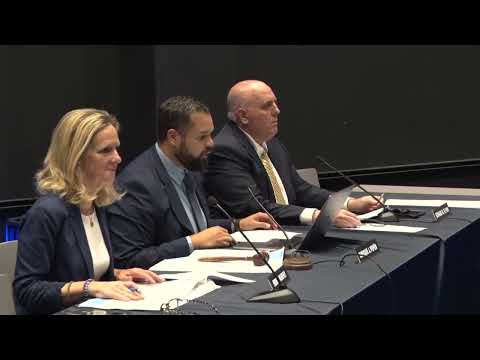
BOSTON — City councilors, utility operators and residents met at Josiah Quincy Upper School on Sept. 16 to review repeated water‑main breaks, flooding and reports of unusually hot groundwater and steam in Chinatown and the Leather District.
"Water and sewer pipes in our infrastructure are critical to our safety, quality of life, and growth of Boston," Councilor Ed Flynn said as he opened the hearing on docket 0768, which he and Councilor Julio Mejia sponsored. Flynn said a recent burst sprinkler pipe flooded buildings, displacing six units and affecting three properties.
The hearing combined testimony from residents who described repeated flooding and hot tap water with technical briefings from the Boston Water and Sewer Commission, the Boston Groundwater Trust, Vicinity Energy (the district steam operator), National Grid and Comcast.
Residents described concrete and sidewalk surfaces heated by steam, intermittent steam venting from manholes, and tap water temperatures they said reached roughly 100 degrees Fahrenheit in some units. "The Leather District faces 2 underground challenges that are increasingly converging," resident and Reggie Wong Park board member Catherine Friedman said, describing rising groundwater and uninsulated steam pipes near the plant.
John Sullivan, chief engineer at Boston Water and Sewer, described the commission's ongoing capital program and monitoring work. "We are open all the time for any complaints. You get them to us, we investigate them," Sullivan said, adding that the commission has been televising sewers in Chinatown and has replacement plans for water mains in the area. He told residents the commission averages about 35 breaks per year across Boston over the last decade and acknowledged Chinatown's local rate is higher than the city average.
Christian Simonelli, executive director of the Boston Groundwater Trust, said the trust maintains a network of observation wells and temperature sensors. He reported a heated groundwater measurement in a well near South Street of about 160 degrees Fahrenheit and said the trust has installed additional monitoring in the area to understand the phenomenon.
Vicinity Energy's regional operations vice president, Dawn Sylvia, said the company has taken mitigation steps near the plant and is coordinating with other utilities. "Our mission now is to decarbonize," Sylvia said, adding that Vicinity is studying longer‑term changes to the system and short‑term actions to reduce heat transfer and maintain safety.
Panelists agreed that short‑term mitigation has included temporary dewatering and localized monitoring; they said further analysis and a design‑level fix will require coordinated work among utilities. Sullivan said water in municipal mains typically measures about 55 degrees Fahrenheit and can reach the low 70s in very hot weather; he and other panelists said readings above those levels indicate an external heat source and prompted ongoing investigations.
Agencies and utilities urged residents to report incidents through 311 and to alert council offices. Panelists said they will share maps and planned capital work; Sullivan offered to provide the commission’s plans and charts to residents and council staff.
Councilor Flynn said he will convene a follow‑up meeting with residents, utilities and relevant agencies, "probably in the next maybe in the next 30 days or so," to establish short‑term remedies and long‑term design options. No formal votes or legislative actions took place at the hearing.
The hearing record includes resident statements describing business closures and property damage after past breaks, and agency statements about continuing monitoring, televising sewers, and coordinating planned capital work to reduce future incidents. Panelists also noted coordination challenges in dense streets where multiple utilities share limited underground space.
The councilors and panelists said the issue will remain under review and emphasized reporting incidents, continuing monitoring, and joint planning among utilities and city agencies. Councilor Flynn said he will provide residents with meeting details and agency materials at the follow‑up session.