Get Full Government Meeting Transcripts, Videos, & Alerts Forever!
Mass. Xylazine commission hears research tying drug contamination to wounds, urges expanded harm-reduction care
Summary
At a virtual meeting of the Special Commission on Xylazine, researchers and clinicians described rising wound complications linked to xylazine in the drug supply and recommended expanded wound care, drug checking and low-barrier treatment access; commissioners set working-group schedules and approved minutes.
BOSTON — At a virtual session of the Special Commission on Xylazine, public-health researchers and clinicians described evidence tying the veterinary drug xylazine to prolonged sedation, severe skin and soft-tissue wounds and — in one study cited — an increased risk of amputations where the drug became common in the local supply.
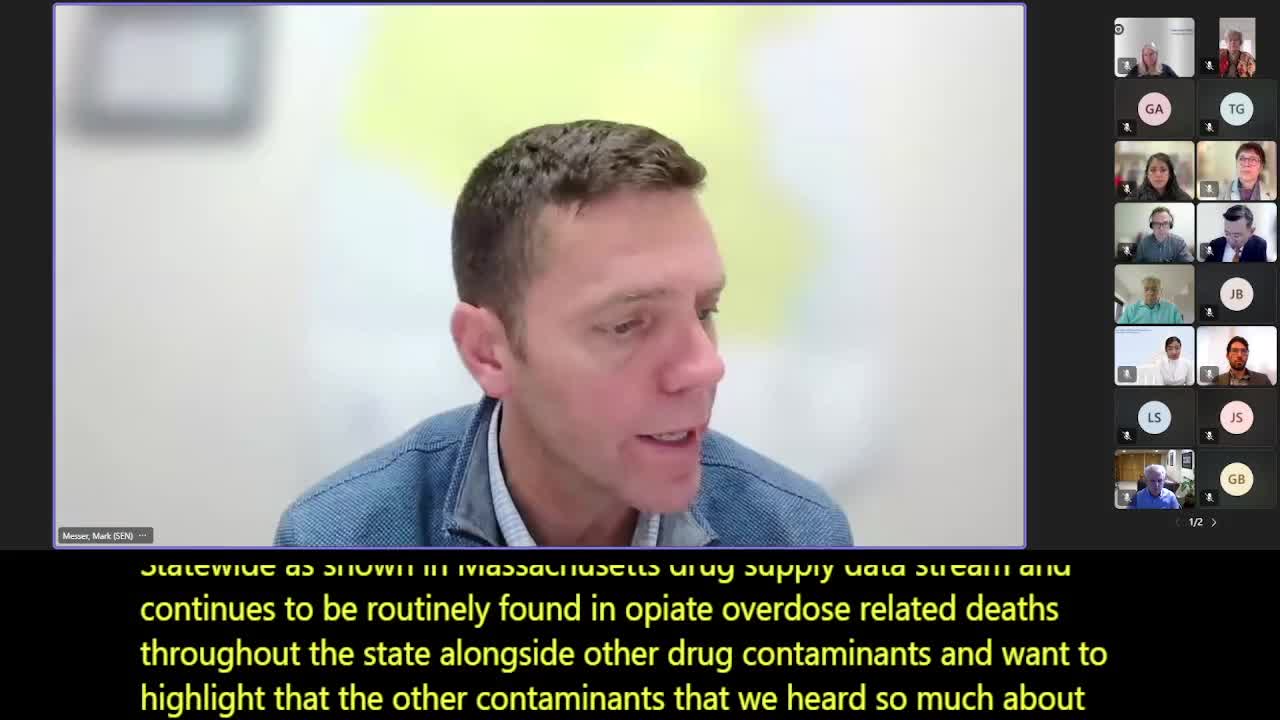
Senator John Vilas, the Senate chair of the commission, opened the meeting by noting that “xylazine continues to be found in opioid samples statewide as shown in Massachusetts' drug supply data stream and continues to be routinely found in opioid overdose related deaths throughout the state alongside other drug contaminants,” and said that identification, treatment and prevention work by the commission is “vitally important.”
The panel included epidemiologist Tracy Green, who summarized several recent studies; Tayah (Tayah/Tia) Johnson, a nurse practitioner with Boston Medical Center and the Grayken Center training program, who described clinical and outreach experience treating xylazine-associated wounds; and a range of commission members who asked questions about testing, treatment access and harm-reduction strategies.
Dr. Tracy Green summarized published and ongoing analyses she said show a rise in severe infections and limb loss in settings where xylazine became common. Citing a retrospective hospital analysis from Philadelphia, Green said the amputation rate among patients with opioid-related disorders rose from 0.8% in 2018 to 1.5% in 2020 and that “the odds of having an amputation were twice, or 2.08 times greater, ... in the later years.” She said the findings underscore the need for earlier…
Already have an account? Log in
Subscribe to keep reading
Unlock the rest of this article — and every article on Citizen Portal.
- Unlimited articles
- AI-powered breakdowns of topics, speakers, decisions, and budgets
- Instant alerts when your location has a new meeting
- Follow topics and more locations
- 1,000 AI Insights / month, plus AI Chat